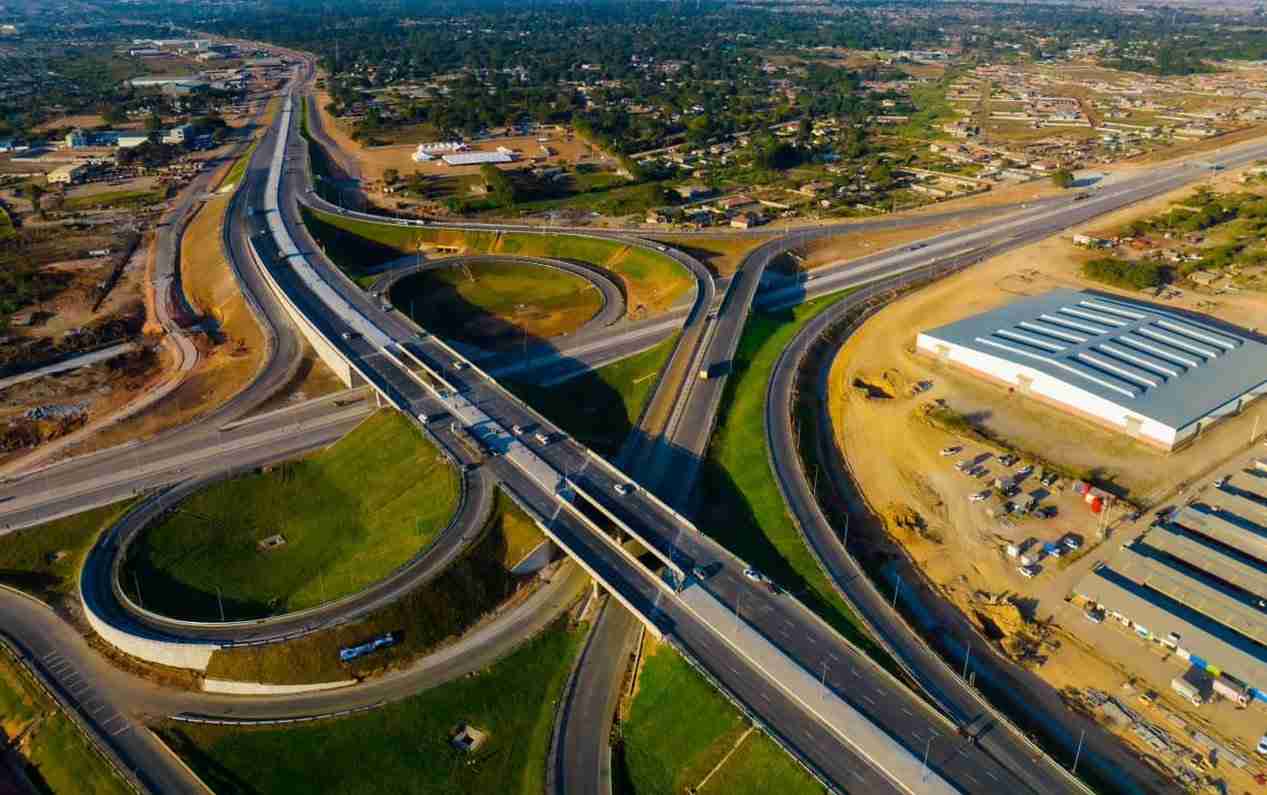
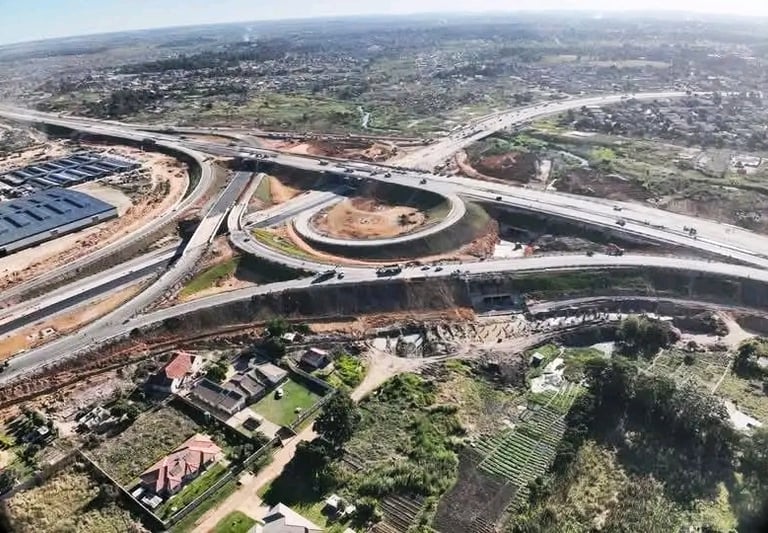
In the heart of Harare, Zimbabwe, where the Simon Mazorodze, Chitungwiza, and High Glen roads converge, a massive infrastructure project has been taking shape for years. Once known as the Mbudzi Interchange, this critical junction along the Harare-Beitbridge Highway is now called the Trabablas Interchange, a name that pays homage to President Emmerson Mnangagwa’s liberation war nickname. Touted as a game-changer for easing traffic congestion and boosting regional trade, the project has captured both public imagination and scrutiny. Its nears completion in 2025, the Trabablas Interchange stands as a symbol of Zimbabwe’s developmental aspirations—but also as a lightning rod for debates about cost, quality, and political priorities.
A Solution to Harare’s Traffic Woes
The Trabablas Interchange was born out of necessity. The Mbudzi Roundabout, as it was previously known, was a notorious bottleneck in Harare. During peak hours, commuters faced agonizing delays as vehicles from western Chitungwiza, surrounding suburbs, and the Harare-Masvingo Highway converged in a chaotic snarl. Heavy regional traffic heading to and from South Africa only worsened the gridlock. For years, the roundabout was a daily frustration for motorists and a barrier to efficient transport along one of Zimbabwe’s most vital trade corridors.
The solution? A modern, multi-level interchange designed to streamline traffic flow, improve road safety, and support Zimbabwe’s Vision 2030 goal of becoming an upper-middle-income economy. Initiated under President Mnangagwa’s administration, the project aimed to transform the junction into a “signature infrastructure development” that would not only ease congestion but also showcase the country’s commitment to modernization.
The project, undertaken by Tefoma Construction—a consortium of Tensor Systems, Fossil Contracting, and Masimba Construction—began in 2022 with an estimated cost of US$85 million, later reported to have risen to US$88-90 million. The scope was ambitious: 15 bridges, multiple lanes, and detour routes to accommodate construction while keeping traffic moving. By December 2024, 13 of the 15 bridges were complete, and the project was 91% finished, with an expected completion date of May 31, 2025.
For many Zimbabweans, the promise of a smoother commute and a more efficient trade route is tantalizing. The Harare-Beitbridge Highway is a lifeline for commerce with South Africa, and an upgraded interchange could reduce travel times, lower transportation costs, and enhance safety for both local commuters and long-haul truckers.