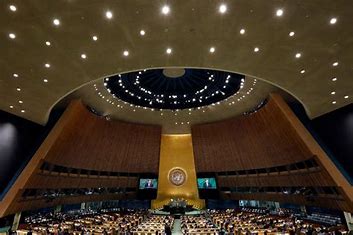
Leaders from the United Nations (UN), African Union (AU), and European Union (EU) met at UN Headquarters on Sunday in New York, reaffirming their collective commitment to fostering peace and sustainable development across Africa.
The sixth trilateral meeting, held on the sidelines of the UN General Assembly, concluded with a joint communiqué pledging intensified cooperation to resolve ongoing conflicts and address major global challenges, from climate change to unsustainable debt.
The leaders emphasized a unified approach to crises, calling for an immediate cessation of hostilities in Sudan and endorsing the UN roadmap to restart the political process in Libya.
They also committed to stronger coordination in the Sahel to combat violence by armed groups and reiterated support for peace initiatives in the Democratic Republic of the Congo (DRC) and the AU Support and Stabilization Mission in Somalia.
Their discussions underscored a shared belief in multilateralism and adherence to the UN Charter as the most effective means to tackle modern challenges.
The joint communiqué represents a significant symbolic and strategic alignment among the world’s most influential political and economic blocs. By focusing on African-led solutions, the UN, AU, and EU are attempting to move beyond traditional aid paradigms toward a more collaborative and respectful partnership.
This shift is highlighted by their mutual commitment to the AU’s Agenda 2063 and the UN’s 2030 Agenda for Sustainable Development, signaling a convergence of long-term goals.
However, the true measure of this commitment will lie in the implementation of practical solutions. The communiqué’s emphasis on financing, particularly the call for the full implementation of the Sevilla Commitment, is critical.
Without substantial investment and a fundamental reform of multilateral development banks, Africa will struggle to address its debt burdens and unlock its full economic potential.
UN Secretary-General António Guterres’s address to the “Unstoppable Africa 2025” forum further reinforced this point, highlighting the continent’s paradox of immense resources and youthful population, yet persistent economic challenges.
The call for permanent African representation on the UN Security Council is a particularly potent demand, signaling that true partnership requires a rebalancing of global power structures. The success of these pledges will ultimately be determined by the political will to translate words into action, providing Africa with the necessary tools and a stronger voice on the world stage.