Zimbabwe Foundation for Education with Production (ZIMFEP) National Director, Cde Gideon Chiukira, has hailed Zimbabwe’s heritage-based Education 5.0 model as a transformative approach that equips learners with practical skills while preserving cultural identity.
Speaking at the just-ended 5th International Quality Education Conference (IQEC), held at the Julius Nyerere International Convention Centre in Dar es Salaam, Tanzania, Cde Chiukira said the model provides a blueprint for linking education to national development.
“Heritage-based Education 5.0 is more than a curriculum; it is a philosophy that ensures our education speaks to the needs of our people. It empowers students to create, innovate and produce, while remaining rooted in our history, culture and values. Through this model, universities are no longer ivory towers but engines of industrialisation and modernisation,” said Cde Chiukira.
Cde Chiukira explained that Zimbabwe’s Education 5.0 policy moves beyond the traditional teaching and research pillars by adding community service, innovation and industrialisation. He said this approach enables graduates to generate employment, manufacture goods and provide solutions to real-life challenges.
His remarks resonated with fellow delegates, including Malawian education expert Dr Thoko Banda, who praised the concept for balancing modern technological needs with the preservation of indigenous knowledge systems.
“What Zimbabwe is doing is remarkable. Heritage-based education allows African nations to produce graduates who are not only globally competitive but also conscious of their roots. It ensures development is authentic and sustainable,” said Dr Banda.
Other participants from across Africa echoed these sentiments, noting that the Zimbabwean model provides a viable alternative to purely Western-oriented education systems.
They highlighted the importance of fostering a curriculum that promotes innovation while safeguarding cultural heritage.
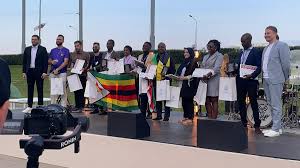
The 5th International Quality Education Conference brought together education policymakers, scholars and development partners from more than 44 countries. The meeting focused on strategies to improve the quality, relevance and inclusivity of education systems on the continent.
Over three days, delegates discussed the integration of science and technology into African education, financing models for schools, and the role of cultural identity in shaping future curricula. The conference concluded with a call for African nations to adopt home-grown education models that respond to local realities while positioning learners for global competitiveness.
The success of the event underscored growing recognition that Africa’s development lies in educational systems that blend heritage with innovation—a balance that Zimbabwe’s Education 5.0 seeks to achieve.