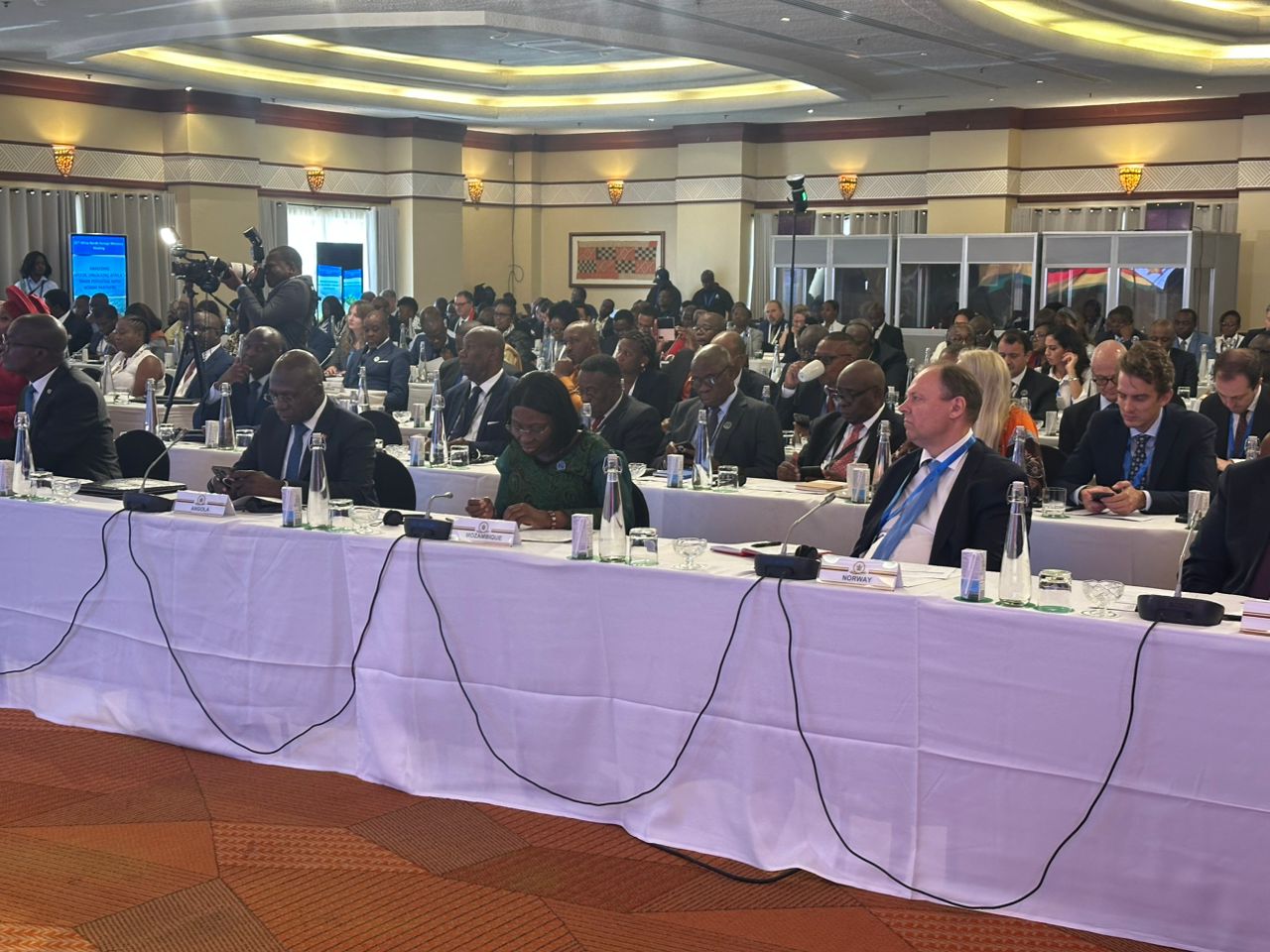
As Zimbabwe hosts the 22nd Africa-Nordic Foreign Ministers Meeting in Victoria Falls, it offers a rare moment to step back and consider what international cooperation could truly mean in the 21st century. While such events are often framed in terms of trade agreements, bilateral investments, and political signaling, their significance can be far deeper.
They are not merely formalities or photo opportunities they are potential catalysts for reimagining the ways in which Africa engages with the global community, how it defines progress, and how it asserts its place in a rapidly changing world.
Africa has long been portrayed in global discourse through narrow lenses: as a continent of challenges, of poverty, of underdevelopment. For decades, the dominant model of engagement has been framed in terms of aid and assistance, with partnerships often structured around external priorities rather than local agency.
This summit, however, exemplifies a shift toward mutually beneficial collaboration, where African nations are not passive recipients but active architects of development strategies. The notion of reciprocity, where resources, knowledge, and innovation flow in both directions, represents a fundamental departure from traditional paradigms of international relations.
Central to this rethinking is the role of technology and innovation. Africa’s future cannot be built by importing solutions developed elsewhere without adaptation. True progress requires technology that is context-sensitive, designed to address local challenges and leverage unique opportunities.
This is not merely a matter of efficiency it is a statement about sovereignty and agency. By fostering homegrown innovation hubs, supporting youth entrepreneurship, and prioritizing industrialization that meets local needs, African nations can assert control over their developmental trajectory rather than remaining dependent on external models.
Industrialization, in particular, deserves careful consideration. Beyond economic output, industrialization is about empowerment: creating systems that allow communities to produce goods, create employment, and restore dignity through meaningful work.
When local resources are transformed within the continent, rather than extracted and exported for foreign profit, industrialization becomes a tool for equitable growth, sustainable development, and resilience. Such approaches can also help Africa move beyond extractive trade models, which have historically limited the continent’s economic independence.
The summit also highlights the importance of multilateralism in a world that often gravitates toward unilateralism and zero-sum competition. International cooperation is no longer optional; it is a necessity.
Challenges such as climate change, energy transitions, food security, and global health cannot be addressed in isolation. By engaging in dialogues that emphasize shared responsibility and collective action, African nations and their partners can build systems of governance and economic cooperation that are forward-looking and sustainable, rather than reactive.
Yet the significance of the meeting extends beyond economics or diplomacy it speaks to identity, confidence, and the global perception of Africa. Historically marginalized voices can leverage such platforms to redefine narratives, asserting Africa’s agency, resourcefulness, and innovative capacity.
Engaging in partnerships on equal footing allows the continent to position itself not as a problem to be solved, but as a hub of opportunity, talent, and creativity. This is crucial for fostering both regional cohesion and global credibility.
The meeting also underscores a need to move away from narrow metrics of development. Gross domestic product, investment flows, and trade balances are important, but they do not capture the essence of sustainable growth.
A forward-looking vision must include human dignity, education, creativity, and societal resilience. Industrialization, technological adaptation, and cross-continental cooperation should ultimately serve to enhance the capacity of societies to define and pursue their own aspirations, rather than simply comply with externally imposed goals.
Moreover, the summit points to the importance of long-term thinking. Short-term gains in trade or investment can be alluring, but the most meaningful partnerships are those that consider intergenerational impact.
Africa’s youthful population, abundant natural resources, and growing institutional capacities offer enormous potential. By pairing these with Nordic expertise in sustainable development, energy transitions, and innovation ecosystems, the summit can help chart a course for durable and inclusive growth.
This is also a moment to challenge assumptions about global hierarchies. Partnerships that prioritize equality, co-creation, and local relevance are transformative because they disrupt traditional notions of aid dependency.
They encourage a mindset where African countries are seen not as beneficiaries, but as co-creators of knowledge, industry, and innovation. Such partnerships have the potential to reshape international norms, demonstrating that collaboration built on respect and shared interests can achieve far more than unilateral approaches or purely transactional relationships.
Finally, the meeting serves as a reminder that diplomacy is not just about agreements on paper; it is about vision. It is about creating the conditions for societies to flourish in ways that are culturally, economically, and environmentally sustainable. It is about cultivating confidence, agency, and resilience at every level.
By framing international engagement through the lens of opportunity, mutual growth, and dignity, Africa and its partners can redefine what development looks like in the 21st century.
In conclusion, the 22nd Africa-Nordic Foreign Ministers Meeting is more than a gathering of diplomats and officials. It is an invitation to rethink international partnerships, to prioritize co-creation over dependency, and to envision a world where Africa’s potential is fully realized.
Beyond trade deals and technical cooperation, the summit challenges all stakeholders to imagine a future defined by agency, innovation, and shared prosperity, where Africa stands as an equal and confident actor on the global stage. If approached with foresight and creativity, this meeting could mark a pivotal moment in reshaping the continent’s trajectory for decades to come.