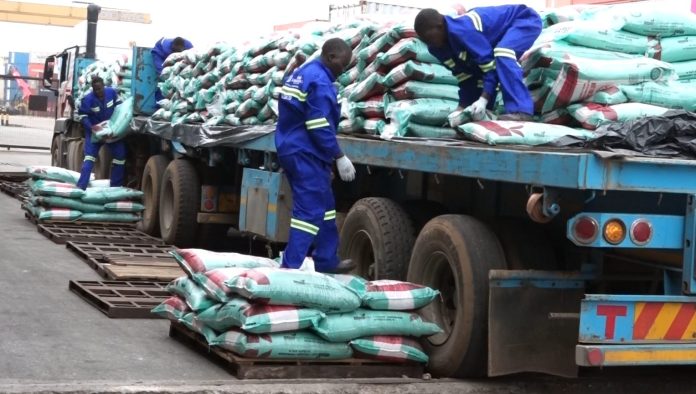
Government has commenced the distribution of agricultural inputs, particularly fertilizers, to Grain Marketing Board (GMB) depots nationwide as part of the Pfumvudza/Intwasa Presidential Inputs Programme, setting the stage for a productive 2025–2026 farming season.
With the summer cropping season fast approaching, authorities are ramping up preparations to ensure smallholder farmers receive inputs on time.
The initiative forms part of the Second Republic’s broader agenda to boost national food security, enhance agricultural resilience, and empower rural communities.
Speaking during a fertiliser delivery exercise at a GMB depot recently, the Permanent Secretary in the Ministry of Lands, Agriculture, Fisheries, Water and Rural Development, Professor Obert Jiri, said all logistics were in motion to ensure smooth and timely distribution.
“We have started moving inputs to various GMB depots in preparation for the season, targeting three million beneficiaries. We are distributing both Compound D and Ammonium Nitrate fertilizers, as you can see here. We expect this process to be completed by early November, just before the onset of the rainy season,” said Professor Jiri.
He highlighted that the Government’s proactive approach demonstrates its commitment to supporting farmers through the timely provision of essential agricultural inputs, including seeds, fertilizers, and agrochemicals.
“We have retained 10 000 tonnes of top-dressing fertilizer from the previous season and received an additional 15 000 tonnes. This ensures adequate supplies for all beneficiaries under the presidential input scheme. We have also established mechanisms to ensure fair, transparent, and equitable distribution across all provinces,” he added.
The Pfumvudza/Intwasa Presidential Inputs Programme, introduced under President Emmerson Mnangagwa’s administration, has been instrumental in strengthening the resilience of smallholder farmers against the effects of climate change.
The conservation-based farming model promotes efficient use of inputs, water conservation, and sustainable crop production, even under erratic rainfall conditions.
According to the Ministry of Agriculture, over six million of the targeted nine million Pfumvudza plots have already been prepared nationwide, reflecting strong farmer participation and readiness for the upcoming season.
The timely input distribution not only ensures that farmers are adequately equipped before the rains begin but also underpins the government’s vision of achieving a food-secure and self-sufficient Zimbabwe by 2030.
As Professor Jiri noted, this year’s preparations reaffirm the Second Republic’s dedication to empower the agricultural sector as the backbone of Zimbabwe’s economy and ensuring that every farmer, regardless of location, has access to the resources necessary to produce, prosper, and contribute to national development.