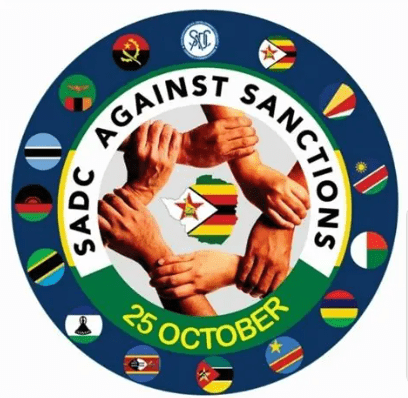
Harare — Zimbabweans will tomorrow commemorate SADC Anti-Sanctions Day, with President Mnangagwa expected to lead national proceedings through an address that underscores Government’s people-centred policies and the progress made in transforming the economy despite persistent external pressures.
The President’s message will also be shared by Zimbabwean embassies worldwide, which will engage host governments and international partners in solidarity efforts. In addition, the SADC Secretariat is set to issue a regional statement reaffirming its support for Zimbabwe and calling for the unconditional lifting of sanctions imposed by Western nations.
To mark the day, the Ministry of Information, Publicity and Broadcasting Services will host an Anti-Sanctions Solidarity Gala at the Heritage Village, featuring performances from top local artistes. The celebrations aim to highlight the resilience and unity of Zimbabweans in the face of economic challenges caused by the embargo.
The Ministry of Women Affairs, Community, Small and Medium Enterprises Development will release a documentary showcasing the achievements of Zimbabwe’s SMEs sector, a vital pillar of inclusive economic growth and empowerment.
Similarly, the Ministry of Higher and Tertiary Education, Innovation, Science and Technology Development, through the University of Zimbabwe, will host a public lecture and student-led panel discussions to promote awareness and dialogue among young people on the impact of sanctions and the importance of regional solidarity.
A major public gathering has also been planned for Rufaro Stadium, where thousands are expected to converge to denounce the sanctions that have affected the country for over two decades.
Economists estimate that sanctions have cost Zimbabwe more than US$150 billion over the years, severely undermining its economic growth and development.
In 2021, United Nations Special Rapporteur on Unilateral Coercive Measures, Professor Alena Douhan, conducted a two-week visit to Zimbabwe to assess the impact of the sanctions. In her subsequent report, she called for the unconditional lifting of the embargo and urged the international community to pursue structured dialogue on political reform, human rights, and the rule of law.
Prof Douhan noted that the sanctions and related over-compliance had exacerbated existing social and economic hardships, particularly affecting vulnerable groups such as women, children, the elderly, and persons with disabilities.
“Sanctions on Zimbabwe imposed by Britain and the United States must go. They are hurting human rights,” she said.
In a solidarity statement issued yesterday, the Southern Africa University Debate Championship (SAUDC) expressed its unwavering support for the people of Zimbabwe, condemning the continued imposition of what it described as illegal economic sanctions.