
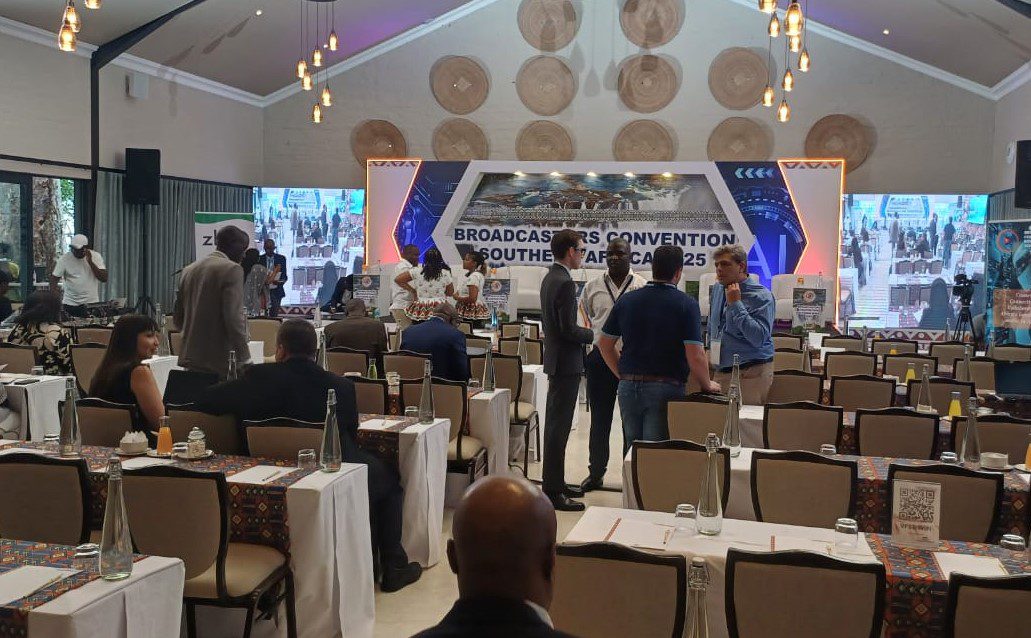
African media leaders have dismissed fears that artificial intelligence (AI) will replace human storytellers, saying the technology should instead be viewed as a tool to enhance creativity and audience engagement.
Speaking at the Southern Africa Broadcasting Association (SABA) Convention, Thabhitha Muthemi, Chairperson of the Association of Professional Broadcasters Kenya, said AI is transforming broadcasting but cannot substitute the human element of storytelling.
“AI is not replacing storytellers. We are moving away from who can tell the story to who has a story to tell,” she said.
Muthemi noted that Kenya has made significant progress in integrating AI into media operations, with over 70 percent of television, radio, and online outlets now using AI-driven processes for content creation, audience analytics, and distribution.
She said the rapid penetration of mobile technology has also changed how Africans consume news and entertainment.
“Audiences no longer sit behind a television to watch a full bulletin. They access short, relatable content on their phones and tablets. Broadcasters must adapt to that reality,” she said.
Muthemi emphasised that the traditional concept of scheduled broadcasting is giving way to online demand, mobile-first viewing. She urged media houses to create content tailored to new platforms while maintaining professional standards and ethical responsibility.
“AI helps us understand our audiences in real time. We can now identify their interests instantly something that used to take months of research. But technology should enhance, not erase, the human touch in storytelling,” she said.
Director-General of the Voice of Nigeria, Mallam Jibrin Baba Ndace, told delegates that technological anxiety is not new but can be overcome through adaptation.
“Every new technology in history from print to digital brought fears of replacing humans. Yet people always adapt,” he said.
Regional Director for Africa at TVU Networks, Dheshinie Naidoo, said AI presents major opportunities for African media to innovate, cut costs, and expand reach through live streaming and mobile journalism.
“AI-powered tools are making it possible to produce and distribute content faster and smarter. Broadcasters can now create personalised experiences for audiences and develop new revenue models based on digital engagement,” she said.
Naidoo added that cloud-based production systems are enabling smaller stations to compete globally without expensive infrastructure.
While participants agreed that AI offers immense opportunities, they also raised concerns about regulation, ethics, and digital inequality. Many called for continuous training of journalists and the development of local policies to guide responsible AI use in broadcasting.
Muthemi concluded by urging African broadcasters to collaborate and share knowledge across borders, saying technology should strengthen — not fragment — the continent’s storytelling tradition.
“When we think of Africa, we think of peace, hope, and humanity. Technology should help us tell our stories better, not replace the people who tell them,” she said.