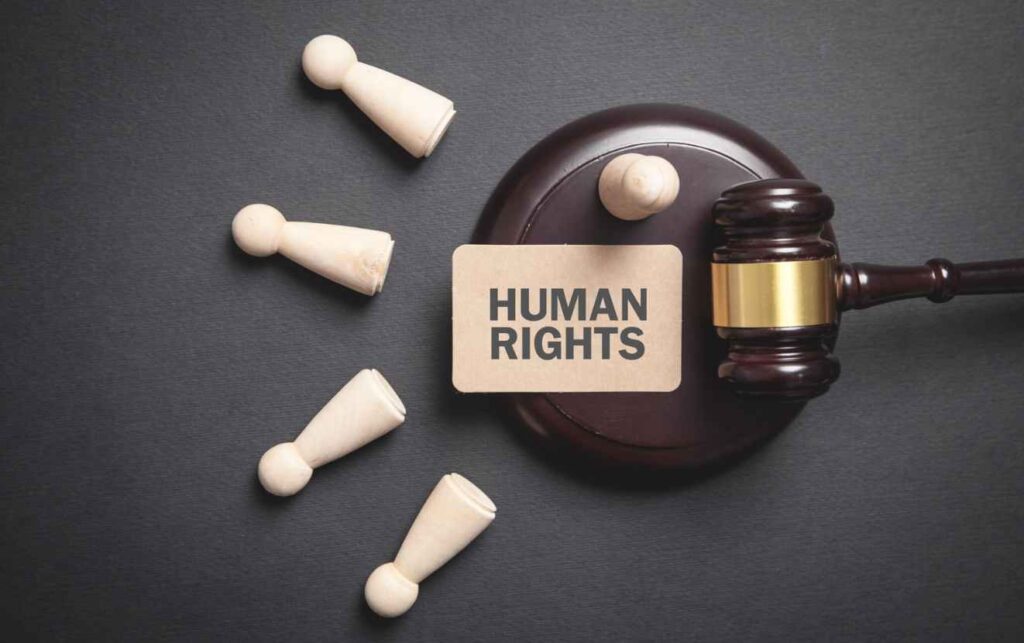
Each year, on the International Day to End Impunity for Crimes Against Journalists, the Zimbabwe Lawyers for Human Rights (ZLHR) emerges from its donor-funded echo chamber with predictable accusations against the Government.
This year’s statement is no exception, a tired, exaggerated indictment claiming that Zimbabwe is unsafe for journalists and that the State promotes impunity. The truth, however, tells a completely different story.
Zimbabwe today stands as one of the most democratic and media-open nations in the region, a country where diverse political voices coexist, journalists operate freely, and even the most critical commentaries find space in print, broadcast, and online media.
The ZLHR’s misrepresentation is not about protecting rights. It is about preserving its relevance in a rapidly changing political and funding landscape.
The Second Republic’s Genuine Reform Path
Since 2018, the Second Republic under President Emmerson Mnangagwa has consistently prioritized democratic consolidation and media freedom. The Government repealed the widely criticized Access to Information and Protection of Privacy Act (AIPPA), a demand long championed by media advocates, replacing it with the Freedom of Information Act and the Zimbabwe Media Commission Act.
These laws were crafted through extensive public consultation, engaging journalists, civil society, and legal experts. Their enactment marked the most significant reform to Zimbabwe’s media landscape since independence. Far from suppressing voices, these reforms enhanced access to information, professionalized journalism, and strengthened accountability through lawful transparency.
Today, independent newspapers and countless digital outlets publish freely, including articles sharply critical of Government.
State media platforms also host debates that feature opposition figures, proof of political maturity, not repression. If Zimbabwe were the authoritarian caricature ZLHR describes, such vibrant media plurality would not exist.
Freedom in the Age of Citizen Journalism
Perhaps the strongest rebuttal to ZLHR’s claims lies in the rise of citizen journalism. Across Zimbabwe’s towns and villages, ordinary people are documenting stories, livestreaming events, and posting opinions online often challenging authority without interference.
Social media platforms like X (formerly Twitter), Facebook, and TikTok have become powerful civic spaces. Bloggers and influencers openly debate Government policies, corruption allegations, and economic issues. In this environment, dissenting voices thrive. This digital transformation has empowered citizens in ways unimaginable a decade ago.
No journalist is censored for owning a smartphone or for livestreaming political commentary. The Government has, in fact, supported digital inclusion through investments in ICT infrastructure, recognizing that an informed citizenry is vital for national development.
The continued existence of hundreds of online platforms criticizing the State daily is proof that claims of “media persecution” are hollow.
If intimidation were State policy, Zimbabwe’s digital space, one of the liveliest in Southern Africa would not exist.
ZLHR’s Manufactured Crisis and Donor Desperation
The ZLHR’s statement smacks of opportunism rather than advocacy. Once lavishly funded by Western donors during the peak of Zimbabwe’s isolation, the organization now faces diminishing relevance.
As international partners pivot towards engagement with the Second Republic, NGOs that thrived on crisis narratives are struggling to justify their budgets.
This explains the sensationalism. By portraying Zimbabwe as repressive, ZLHR seeks to rekindle foreign sympathy and unlock donor funds that have largely dried up. Their annual reports have become fundraising brochures disguised as human rights advocacy, recycling outdated tropes about “attacks on journalists” while ignoring facts on the ground.
Yet, when pressed for verifiable evidence, ZLHR rarely produces concrete data, only anecdotal claims and generalized assertions. They refuse to acknowledge the operational independence of the Zimbabwe Media Commission, the growing number of accredited journalists, or the consistent training programs aimed at improving safety and professionalism in the sector.
Such selective reporting undermines their credibility and exposes a troubling hypocrisy: while accusing Government of politicizing institutions, ZLHR itself has become a political actor, using human rights language as a weapon to score ideological points.
Rule of Law and Accountability
The Government’s stance on law enforcement is clear. No one, whether journalist or civilian, is above the law. When journalists face legal scrutiny, it is not because of their profession, but because of violations such as incitement, defamation, or spreading disinformation. These laws are not unique to Zimbabwe; they exist in virtually every democratic society.
Moreover, the judicial system remains independent. Several journalists have successfully challenged arrests and prosecutions, with courts ruling in their favor. This judicial independence is precisely what defines a constitutional democracy.
The notion that Zimbabwe promotes “impunity” is therefore misleading. Allegations of violence or harassment are investigated, and the responsible authorities are held accountable through established procedures. The country’s commitment to due process is grounded in its Constitution and reinforced through continuous human rights training for security agencies.
A Democracy in Motion
Zimbabwe is not a perfect democracy. No nation is. But it is a democracy in motion: reforming, expanding participation, and deepening transparency. The Government’s open-door engagement with the African Commission on Human and Peoples’ Rights (ACHPR) and the United Nations Human Rights Council (UNHRC) illustrates its willingness to evolve through dialogue, not confrontation.
What ZLHR fails to acknowledge is that Zimbabwe’s democracy is not externally manufactured; it is domestically built, driven by the people’s will for progress. NGOs seeking to undermine this reality only reveal their detachment from the everyday freedoms Zimbabweans enjoy.
In a country where journalists broadcast live from rallies, bloggers critique ministers, and opposition leaders address national television, claims of “repression” collapse under their own contradictions.
The ZLHR’s theatrics may serve short-term donor interests, but they cannot erase the undeniable truth: Zimbabwe is democratic, open, and committed to press freedom, and its people, not foreign-funded activists, are the ultimate custodians of that progress.