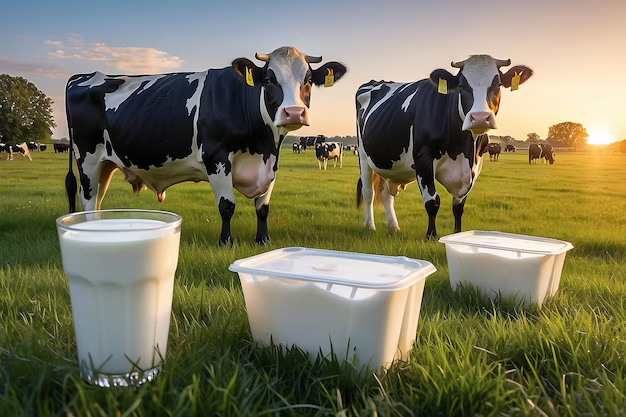
Zimbabwe has achieved a significant milestone in its drive for self-sufficiency, cutting its dairy import bill by more than 20 percent following a surge in local milk production. Official figures reveal that milk output rose from 80 million litres in 2023 to 90 million litres this year, marking a 12.5 percent growth in domestic production.
This increase has translated into tangible economic benefits, with the country’s import bill for dairy products falling from over US$15 million in the first nine months of last year to below US$10 million during the same period in 2025. The development reflects the growing strength of Zimbabwe’s dairy sector under the Second Republic’s agricultural transformation agenda.
Zimbabwe Dairy Industry Trust Chairperson, Mr. Themba Mutsvairo, attributed the positive trend to improved on-farm productivity, government support to smallholder farmers, and investments in local processing capacity. He noted that the national target of producing 130 million litres per year is now within reach.
“Increased output helps reduce the national milk deficit, decreasing reliance on imports to close the gap. This puts Zimbabwe on course toward self-sufficiency and even positions us to become a net exporter of dairy products, contributing to the national goal of attaining an upper middle-income economy by 2030,” said Mr. Mutsvairo.
Mutsvairo further highlighted that the benefits of this growth extend beyond the economic sphere. Greater milk availability in local markets is improving household nutrition and food security, particularly in rural areas where dairy consumption has been limited by supply shortages and high prices.
“Increased local milk production improves nutrition and health outcomes, while boosting per capita milk consumption. This, in turn, enhances human development indicators across communities,” he explained.
The expansion of the dairy sector is also stimulating industrial growth. Local processors can now operate at higher capacity, creating stable markets for farmers and ensuring more predictable prices for consumers. For smallholder farmers, dairy farming has become a viable and steady source of income, improving rural livelihoods and helping reduce poverty.
Beyond farm-level benefits, the thriving dairy value chain is creating employment and empowerment opportunities. Women and youth are increasingly participating in activities such as milk collection, feed processing, and technical services, strengthening inclusivity within the agricultural sector.
With continued support from government programmes and private sector partnerships, Zimbabwe’s dairy industry is poised for sustained growth. The steady increase in milk production not only saves foreign currency but also drives the country closer to achieving food security and economic resilience in line with Vision 2030.