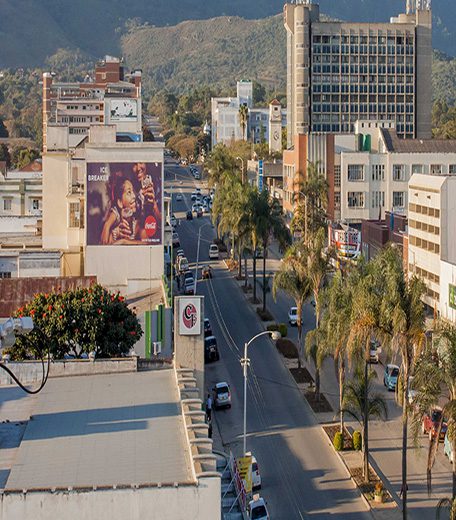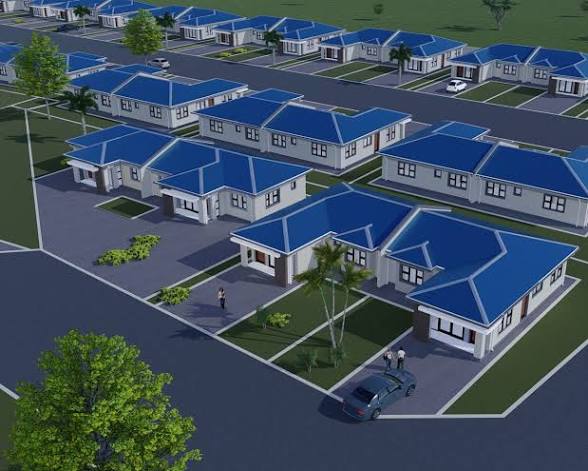
Zimbabwe has made significant strides in infrastructure development over the past five years, delivering major projects in transport, energy, water and sanitation largely without concessional external financing. The shift reflects a deliberate move away from reliance on international lenders, as the country turns to domestic resource mobilisation and local expertise to drive economic modernisation.
According to the latest review of the National Development Strategy 1 (NDS1), implemented from 2021 to 2025, Zimbabwe managed to roll out transformative infrastructure initiatives driven mainly by home-grown funding mechanisms and enhanced participation of local contractors. Commercial financing arrangements were used selectively to complement domestic efforts.
“On infrastructure, development of most projects was successfully undertaken during NDS1, notwithstanding absence of concessional development financial support to Zimbabwe. This was underpinned by leveraging domestic resources and participation of local contractors, complemented by commercial financing arrangements,” the review noted.
Among the flagship achievements is the US$140 million Trabablas Interchange, completed in 2025, which has significantly improved traffic flow along Harare’s busiest transport corridors. Similarly, the US$153 million expansion of Robert Gabriel Mugabe International Airport, commissioned in 2023, enhanced passenger handling capacity and strengthened Zimbabwe’s status as a regional aviation hub.
In the energy sector, the commissioning of Hwange Units 7 and 8 in 2023 added a massive 600 megawatts to the national grid, one of the most notable power generation milestones in recent decades.
The review highlights that “notable infrastructure projects were completed in the transport, energy, water and sanitation sectors, as well as extensive road rehabilitation undertaken through the Emergency Road Rehabilitation Programme I and II.”
Indeed, the national road network received substantial upgrades. Progress on the Harare–Masvingo–Beitbridge Highway reached 85% completion by October 2025, strengthening one of Southern Africa’s most important trade routes.
Water security also advanced, with Gwayi-Shangani Dam reaching 72.5% completion and Kunzvi Dam rising to 65%, both crucial for urban supply and agricultural expansion.
Beyond infrastructure, the manufacturing sector continued to register strong recovery. Capacity utilisation rose from 36.4% in 2019 to 54.7% in 2024, supported by increased investments in value addition for agricultural and mineral commodities.
With NDS1 nearing its conclusion, the review confirms that Zimbabwe’s strategy of building using its own resources is not only feasible but delivering visible, long-term national development gains.