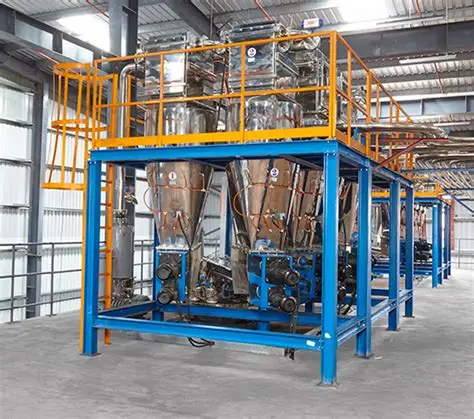
The establishment of Komo United Resins, a new rubber manufacturing plant in Mutasa District, Manicaland Province, is now in its final stages, with construction expected to be completed next month. The project marks a major milestone in the province’s accelerating industrialisation agenda.
The factory developed through a partnership between Government and development partners will produce rubber derived from pine tree resins. By tapping into Manicaland’s abundant forestry resources, the plant aims to boost value addition, strengthen local manufacturing capacity, and reduce reliance on imported rubber products.
During a tour of the site, yesterday, Manicaland Minister of State for Provincial Affairs and Devolution, Advocate Misheck Mugadza, said the project is a direct dividend of President Emmerson Mnangagwa’s engagement and re-engagement policy, which continues to channel investment into the province.
“We are happy as Manicaland that in terms of investment, we have moved in strides, and we have our President to thank. His stewardship and leadership have taken Manicaland to another level.
“At the start of the National Development Strategy 1 (NDS1), in 2021, the province recorded US$50 million in investments, but by the end of 2025 the figure had grown to US$171 million and more is expected this year. Komo United Resins is one of the many companies that have come to invest,” he said.
Once operational, the plant is poised to create significant employment opportunities, especially for communities in and around Mutasa.
Komo United Resins General Manager, Ms Li Kuan, said the project will generate jobs both at the factory and throughout the pine resin supply chain.
“Our by-product is pine resin from pine trees. We will employ close to 2,000 workers to harvest resins and around 100 within the factory. When the plant is fully operational, we expect about 300 locals to be employed here. We expect to become operational in February 2026,” she said.
Local residents have warmly welcomed the development, highlighting its potential to uplift livelihoods and curb social challenges.
“We were struggling without employment, so we are happy to have this factory here. Most youths will now have jobs,” said one resident.
Another added: “This factory will help end illegal gold mining, which was common in these parts, because people will have something constructive to do. As women, we are excited because we now have opportunities to get employed, something that was almost impossible before.”
The Komo United Resins project joins a growing list of industrial investments in Manicaland under the Second Republic, including the Mega Flour Milling Company and Willowton Cooking Oil Manufacturing Company. Together, these developments continue to reinforce the province’s rising role in Zimbabwe’s broader industrial and economic transformation.