Zimbabwe has reaffirmed its commitment to clean energy as a central pillar of economic growth and climate resilience after participating in a high-level clean energy dialogue held yesterday on the margins of the World Economic Forum (WEF) in Davos, Switzerland.
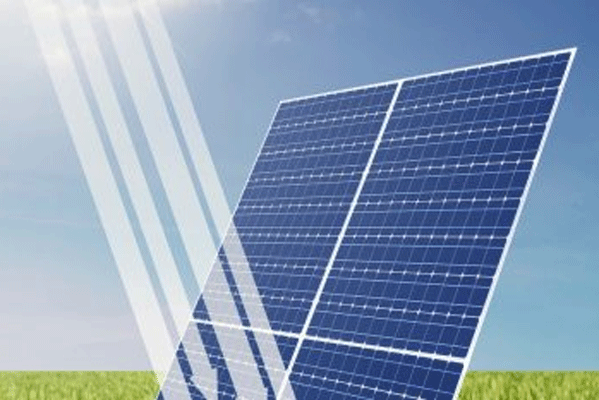
The country was represented by the Minister of Foreign Affairs and International Trade, Professor Amon Murwira who contributed to discussions on rooftop agriculture and decentralised solar energy, highlighting them as scalable solutions for expanding energy access, strengthening rural development and building climate resilience.
“Clean energy is no longer a peripheral climate concern; it has become a central development strategy for the Global South.
“As climate pressures intensify and global energy demand continues to rise, countries like Zimbabwe must pursue growth models that deliver economic transformation without undermining environmental sustainability,” said Prof Murwira.
He said decentralised solar energy offers immediate opportunities for inclusive development, particularly in rural communities.
“When decentralised solar systems are integrated with agriculture and local enterprise, they unlock productivity at household and community level.
Rooftop agriculture powered by clean energy can directly support food security, reduce energy poverty and create income opportunities where people live,” he added.
Minister Murwira said Zimbabwe is already moving to adapt these models within its national development framework, with clean energy increasingly shaping policy planning.
“We are planning the solarisation of village business units, agricultural value chains and rural infrastructure. This is about building resilience, supporting industrialisation and ensuring that no community is left behind in our development agenda,” he said.
He also underscored Zimbabwe’s strategic importance in the global clean energy transition through its mineral endowment.
“Zimbabwe’s lithium resources are critical for global energy storage needs. This positions our country not only as a consumer of clean energy technologies, but as a key partner in the global value chain supporting the transition,” said Prof Murwira.
The dialogue underscored a broader message for developing countries, according to the minister.
“Clean energy allows us to pursue growth, resilience and sustainability together. That is the future the Global South must embrace,” he said.
India currently holds the International Solar Alliance (ISA) presidency and has been using global platforms such as the WEF to advance clean energy cooperation among developing nations facing rising energy demand and increasing climate-related risks.