
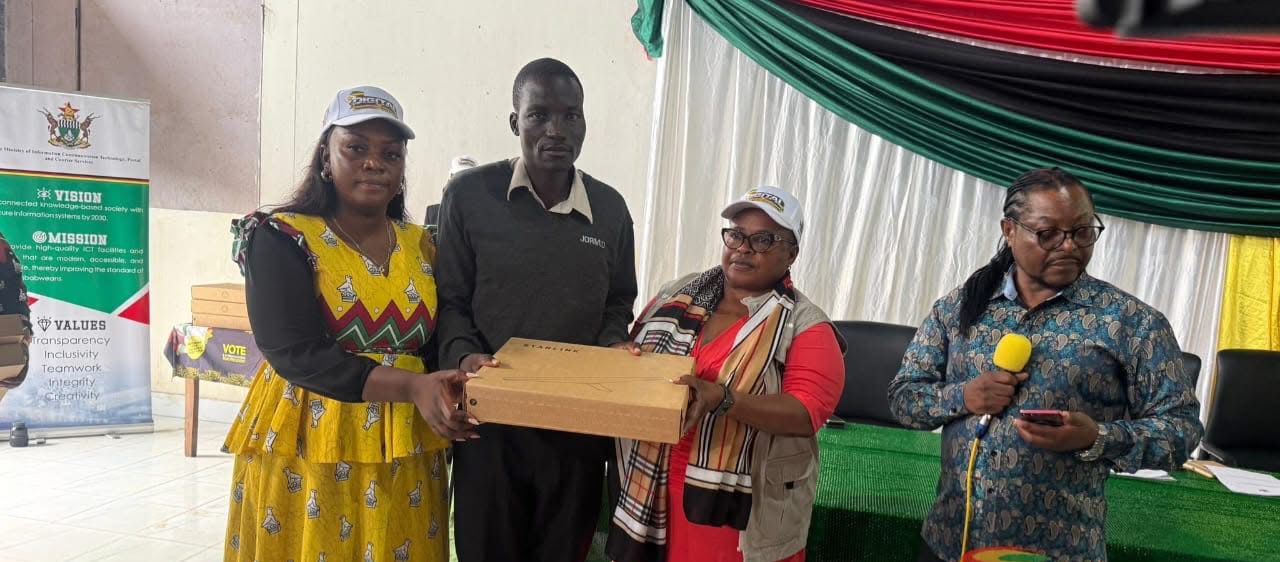
More than 2,000 youths in Hurungwe District, Mashonaland West Province, have received training in information and communication technology (ICT) short courses under the Government’s Digital Ambassadors Programme.
The initiative, spearheaded by the Ministry of Information Communication Technology, Postal and Courier Services, is designed to equip young people in remote and marginalised communities with essential digital skills while ensuring their participation in the country’s expanding digital economy.
Government officials say the programme forms part of Zimbabwe’s broader digital transformation agenda and comes ahead of the official launch of the National Artificial Intelligence Strategy scheduled for Friday.
ICT, Postal and Courier Services, Minister Tatenda Mavetera, said strengthening digital literacy among young people is key to advancing national technological development.
“For the country to achieve digital skills and digital literacy, we must start by empowering young people with basic ICT knowledge. These foundational digital skills lay the groundwork for advanced areas such as artificial intelligence and cybersecurity,” she said.
Mashonaland West Minister of State for Provincial Affairs and Devolution, Marian Chombo, said the programme is helping ensure rural communities benefit from the ongoing digital revolution.
“Programmes such as the Digital Ambassadors initiative are critical in ensuring that communities in Mashonaland West are not left behind in the digital revolution. By equipping young people with ICT skills, we are creating opportunities for innovation, employment and sustainable community development,” she said.
Beneficiaries of the programme say the training has provided them with practical knowledge in computer literacy, internet use and online entrepreneurship.
One trainee said the programme had opened new learning opportunities for youths from rural communities where access to digital infrastructure has traditionally been limited.
“Coming from a rural area where access to computers is limited, this programme has given us a great opportunity. We are now being provided with computers and internet access in our schools, which is helping us learn and practise digital skills,” the beneficiary said.
Another participant noted that the programme had expanded their understanding of the digital landscape.
“Through this training, we are not only learning how to use computers, but we are also being taught important areas such as cyber security, e-commerce and how to safely use the internet,” the trainee said.
Participants from rural communities said the programme was helping narrow the digital divide by bringing technology closer to schools and communities.
“For us in rural communities, this programme is very important because it is bringing technology closer to us. With computers and the internet now available in our schools, we are gaining digital knowledge that can help us in our education and future careers,” another trainee said.
Local leaders have welcomed the initiative, describing it as a critical step towards inclusive development and youth empowerment.
Hurungwe Central legislator, Richard Ziki said the programme was equipping young people with skills necessary to participate in a technology-driven economy.
“The Digital Ambassadors Programme is empowering our youths with critical ICT skills that will enable them to participate meaningfully in the digital economy while also creating opportunities for innovation and entrepreneurship in Hurungwe,” he said.
Hurungwe West legislator, Chinjai Kambuzuma said the initiative ensures rural communities are not left behind in the country’s digital transformation journey.
“Bringing digital skills training to rural communities ensures that no young person is left behind as the country moves towards a technology-driven future,” he said.
Meanwhile, 10 schools in Hurungwe have received internet connectivity through Starlink kits under the Presidential Internet Scheme, expanding digital access in rural learning institutions and enhancing technology-based learning.