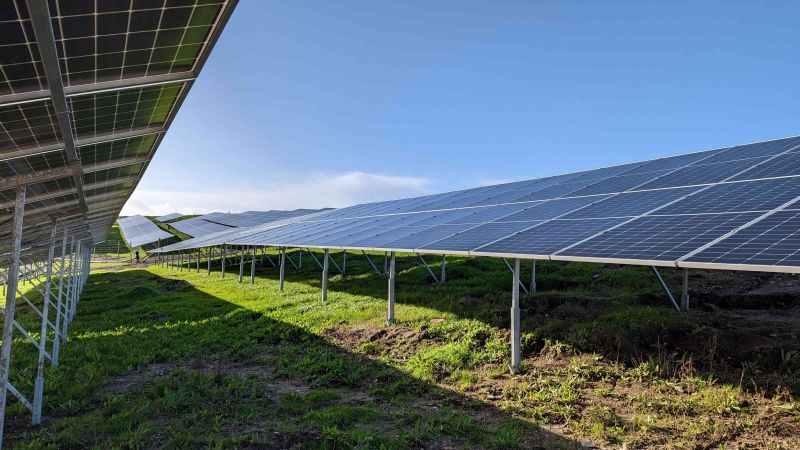
The National University of Science and Technology (NUST) has announced plans to establish a 5-megawatt (MW) solar photovoltaic (PV) farm at its Bulawayo campus, a project expected to contribute to Zimbabwe’s renewable energy generation while strengthening skills development in the energy sector.
Speaking at the 9th Southern African Renewable Heating and Cooling Training and Demonstration Initiative Conference held in Victoria Falls recently, NUST Vice-Chancellor Mqhele Dlodlo highlighted the university’s growing role in developing technical expertise for Zimbabwe’s energy industry.
“As a leader in STEM-oriented human capital development, NUST is enhancing skills for students and professionals while strengthening community engagement,” said Prof Dlodlo.
He noted that the university has already trained more than 800 technicians from the Zimbabwe Electricity Supply Authority (ZESA) across the country in areas such as electrification, solar installations and energy management.
Prof Dlodlo said the proposed solar farm and other initiatives align with the Government’s National Development Strategy 2, which identifies renewable energy as a key driver of industrial growth and sustainable development.
“Renewable energy is central to Zimbabwe’s development agenda, and as a university we are committed to supporting the country’s transition toward sustainable energy solutions,” he said.
NUST has been part of the SOLTRAIN programme since 2013, which promotes the adoption of solar thermal technologies across the Southern African Development Community (SADC) region.
Prof Dlodlo said the proposed 5MW solar PV project would not only generate clean energy but also serve as a practical learning and research facility for students and industry professionals.
“We are preparing to establish a 5MW solar PV farm at our Bulawayo campus and we invite independent power producers to partner with us in making this vision a reality,” he said.
He also emphasised the importance of interdisciplinary collaboration in advancing sustainable energy solutions, noting that projects such as net-zero (achieving a balance between amount of greenhouse gas emissions produced by human activity and the amount removed from the atmosphere) and energy efficiency are being integrated across faculties including Built Environment, Applied Sciences and Engineering.
“As a catalyst in the energy transition, NUST embraces these priorities wholeheartedly, confident that regional and global collaboration will accelerate progress toward affordable, reliable and modern energy for all,” he said.
The planned solar project complements Government efforts to expand renewable energy capacity and reduce reliance on traditional power sources.
Through policies such as NDS 2 authorities have been encouraging institutions, private investors and independent power producers to invest in clean energy projects to address Zimbabwe’s power shortages and promote sustainable development.