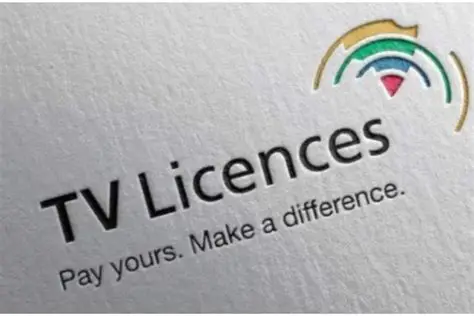
Debate over SABC’s funding model intensifies amid proposed legislative changes. (supplied )
South Africans are refusing to pay for TV licences, with the vast majority in arrears.
Even though the South African Broadcasting Corporation’s revenue from licence fees increased by 10.4% in the last financial year, 85% of all billed accounts remained unpaid.
The SABC reported improved revenue collection of R758m from licence fees, up from R687m in 2023/24, according to its latest annual financial statements.
The highest collection happened in the 2021/22 financial year, when R815m was collected, before this amount dropped to R741m in 2022/23.
“The SABC’s funding model and the future of the TV licence regime are currently under review as part of the broader legislative process involving the SABC Bill,” said SABC spokesperson Mmoni Ngubane.
Ngubane said the SABC has a contract with registered and compliant debt-collection agencies to assist in recovering outstanding TV licence fees.
“This is a standard practice aligned with the corporation’s mandate to collect revenue due under the Broadcasting Act,” Ngubane said.
She said the use of external agencies was necessary to manage the scale of outstanding debt.
“We only escalate matters to SABC Legal Services should litigation become necessary,” she said.
The SABC Bill proposed a mandatory household levy that would not be dependent on owning a TV set.
Media Monitoring Africa believes that the current licence model is not working.
The organisation’s director, William Bird, said with just around 8% of SABC funding coming from TV licences it was clear the model did not work.
Many households that rely most heavily on the SABC are low-income or unemployed households, which makes compliance with the TV licence system difficult.
“Where enforcement is minimal and where the value proposition is poor, even fewer are encouraged to spend their money on a TV licence,” Bird said.
He said a new model was long overdue.
“Realistically we need a new model. We then need to show the public the real value by paying, and we need to ensure payments are small so people can see a big impact with the money they pay,” Bird said.
The SOS Support Public Broadcasting Coalition’s Uyanda Siyotula said they believed that the SABC must get a substantial amount from the fiscus.
“The funding model will need to ensure that the public broadcaster is funded in a manner that allows it to fulfil its public mandate while maintaining independence and long-term sustainability,” she said.
Siyotula said the current TV licence model was no longer effective.
“Many households that rely most heavily on the SABC are low-income or unemployed households, which makes compliance with the TV licence system difficult, she said.