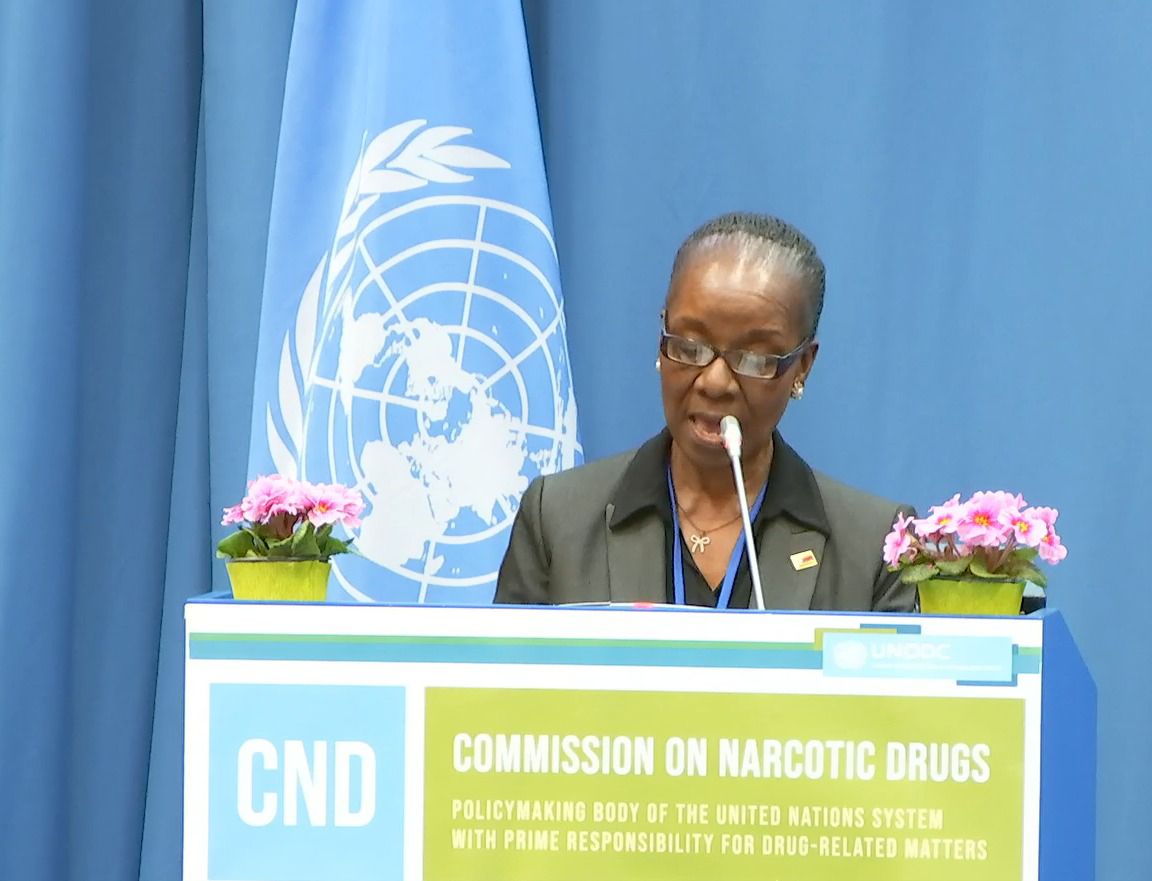
Zimbabwe has reaffirmed its commitment to combating illicit drugs and substances during the ongoing 69th Session of the United Nations Commission on Narcotic Drugs, pledging stronger collaboration with the international community to address the growing global threat of narcotics.
Representing the country at the high-level gathering in Vienna, Public Health Advisor to the President and Cabinet, Dr Agnes Mahomva, said Zimbabwe remains fully aligned with international drug control treaties while strengthening domestic strategies focused on reducing both the supply and demand of illicit substances.
“Over the past year, Zimbabwe has taken a comprehensive, multi-sectoral approach to curb the supply and demand of illicit drugs, provide treatment and rehabilitation services, and ensure the reintegration of drug and substance abuse survivors into society,” Dr Mahomva said.
“Efforts to combat drug trafficking intensified, resulting in the destruction of illegal drug bases, the confiscation of substantial quantities of illicit drugs, and the arrest of over 3 000 suspected drug suppliers each quarter.”
Dr Mahomva outlined key milestones achieved under the national anti-drug strategy, including strengthened law enforcement operations and the expansion of rehabilitation services across the country. She highlighted the importance of cross-border collaboration in disrupting trafficking networks.
“Collaboration with regional and international law enforcement agencies has proven crucial in intercepting cross-border drug traffickers and enhancing enforcement measures. The Medicines Control Authority of Zimbabwe strengthened its compliance inspections, resulting in reduced availability of illicit drugs and substances within our country,” she said.
She added that Zimbabwe has intensified demand-reduction programmes targeting young people through partnerships with religious institutions, private voluntary organisations, schools, tertiary institutions and community groups. Millions of citizens, including marginalised groups, have been reached through nationwide education and media campaigns.
Zimbabwe now has 14 fully operational rehabilitation centres, supporting a whole-of-Government and whole-of-society approach that includes services for incarcerated individuals.
Dr Mahomva also updated delegates on efforts to strengthen national legislation.
“To further reinforce the country’s legal framework, the Cabinet approved a draft bill for the establishment of the Drug and Substance Abuse Control Agency. This draft bill was gazetted by Parliament in October 2025, and nationwide stakeholder consultations are now in progress with the aim of finalising the legislation before year-end,” she said.
She reiterated Zimbabwe’s commitment to balancing drug control with the medical and scientific need for controlled substances.
“As I conclude, let me reiterate that Zimbabwe remains committed to playing its part, cooperating with the international community in confronting drug and substance abuse while ensuring availability and accessibility of controlled drugs for medical and scientific purposes.
“Our ongoing efforts demonstrate the nation’s commitment to addressing the drug problem at every level of society, leaving no one and no place behind,” she said.
The United Nations-led Commission on Narcotic Drugs session brings together global delegates to review international commitments and coordinate strategies aimed at addressing drug-related challenges worldwide