
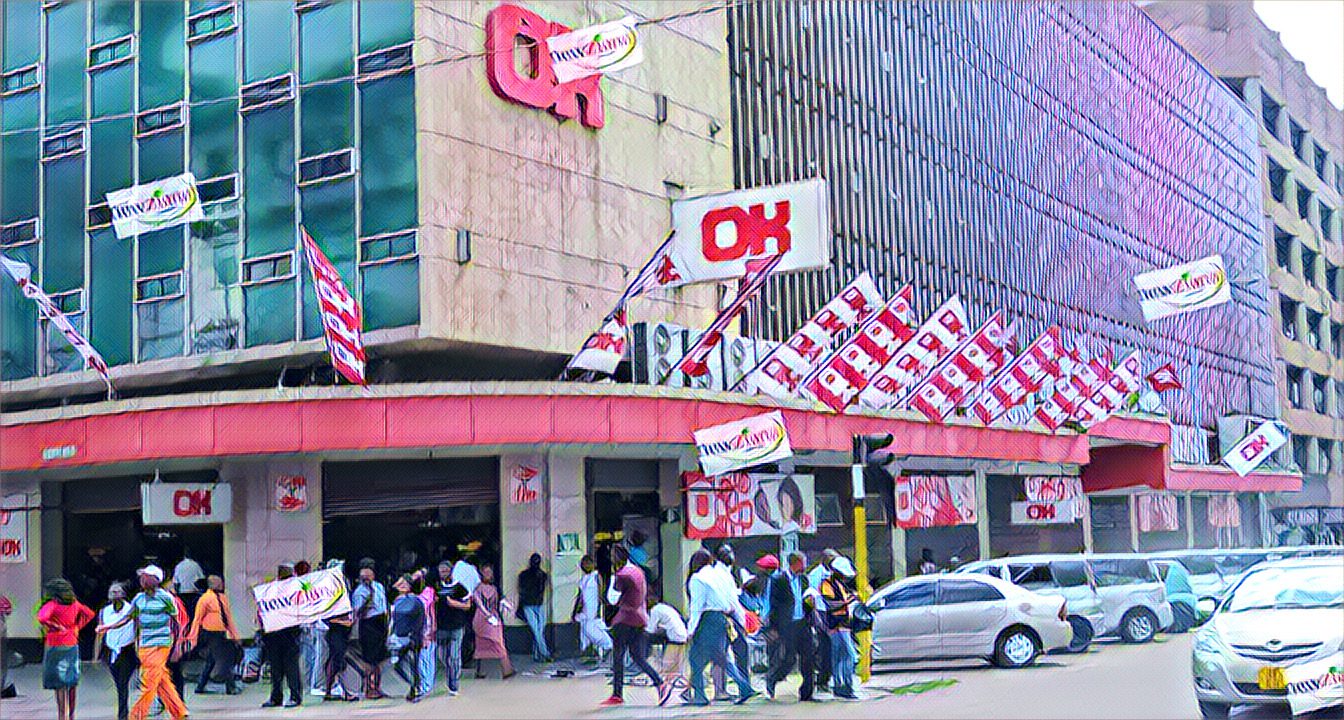
Leading retail giant OK Zimbabwe Limited has reported a staggering US$25 million loss for the financial year ending March 31, 2025, as revenue plunged by more than half in what chairman Herbert Nkala described as one of the toughest trading periods in the group’s history.
According to the company’s financial report, revenue fell 52 percent to US$245 million, a sharp decline Nkala attributed to a combination of economic instability, supply chain disruptions, exchange rate volatility, and intensifying competition from the informal sector.
“The decline is attributed to supply chain disruption, an unstable exchange rate—especially in the second half of the year—liquidity crunch in the economy, and heightened competition from the informal sector, compounded by exchange rate controls that distorted pricing,” said Nkala.
Zimbabwe’s formal retail industry has been under severe pressure, with regulated supermarkets struggling to compete against informal traders who transact largely in hard currency. The unstable exchange rate and shrinking consumer spending power have further eroded profitability across the sector.
Nkala revealed that OK Zimbabwe’s liquidity challenges exacerbated the crisis, crippling its ability to restock and maintain smooth operations.
“The Group failed to settle suppliers’ accounts on time, leading some to withhold deliveries while others demanded payment upfront,” he explained.
The resulting breakdown in supplier confidence led to empty shelves and a loss of customer trust, significantly weakening the retailer’s market position. Nkala admitted that the company’s operational capacity had been “negatively impacted,” reflecting the deep effects of the liquidity crunch.
Despite the grim financial results, OK Zimbabwe has launched a comprehensive restructuring programme aimed at stabilising operations and restoring growth. However, Nkala cautioned that the recovery would take time.
“Though the recovery of the Group has started, it will take some time to return to normal operations,” he said.
The company’s leadership remains hopeful that ongoing reforms — focused on improving supply chain efficiency, cost control, and customer retention — will gradually restore OK Zimbabwe’s position as one of the country’s leading retail brands.
OK kuzviitisa. Maboss airova bag. Poor management