Cricket in Zimbabwe has long been a story of survival, a flickering candle in a gale. But today, the flame burns with a new, progressive intent.
In a move that defies the tired convention of batting-heavy leadership, Zimbabwe Cricket has handed the keys of the castle to a man who earns his keep by running in and hitting the deck hard.
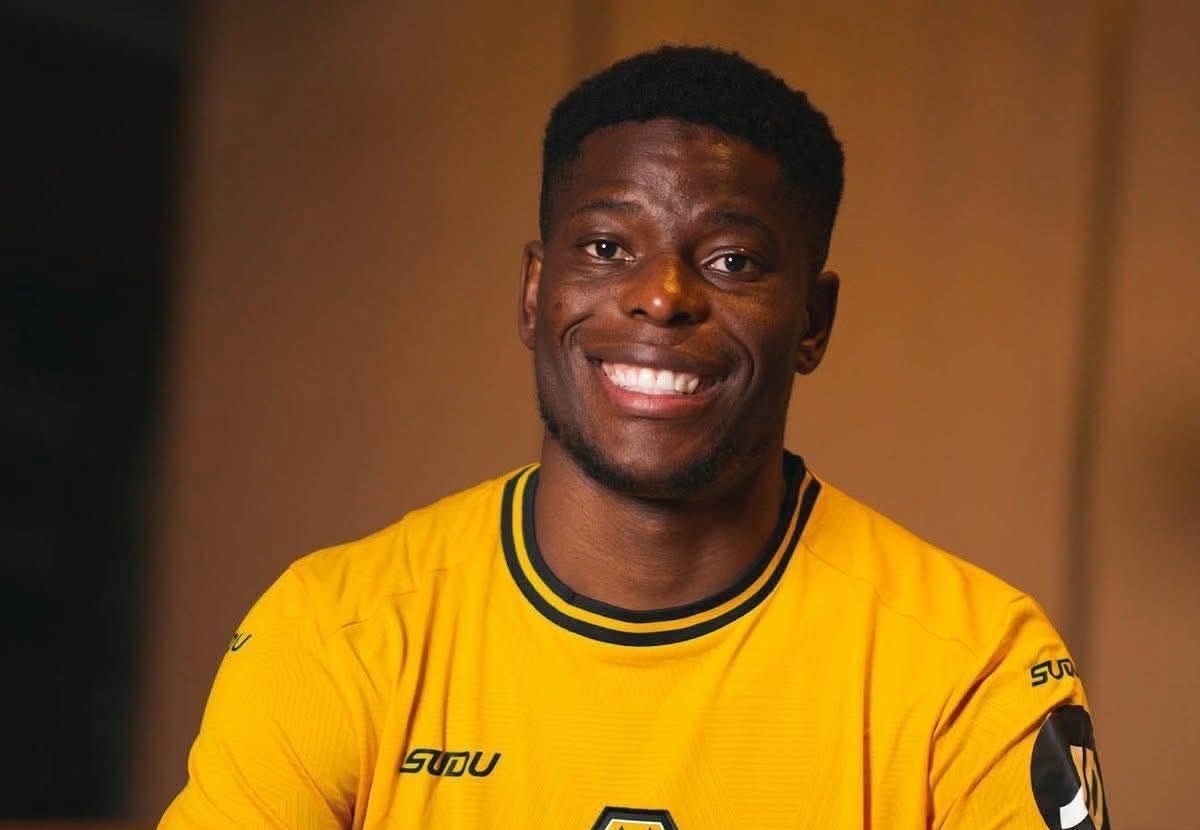
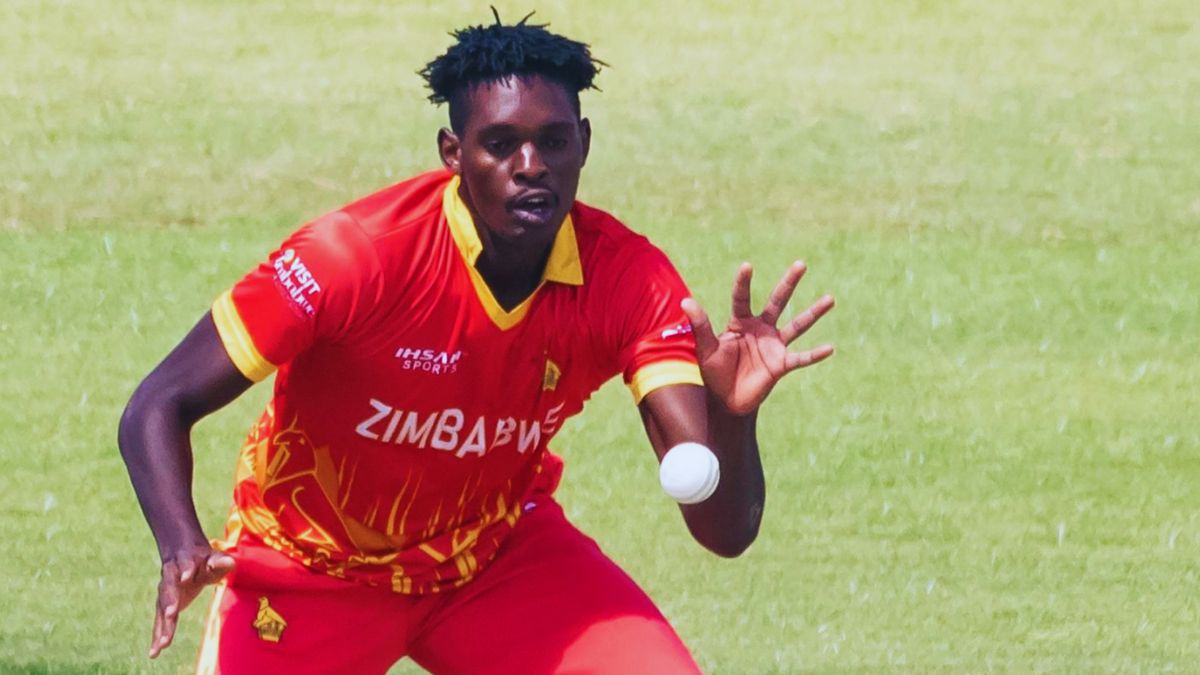
Richard Ngarava is the new captain for Tests and ODIs. It is a bold stroke.
For too long, the captaincy has been the preserve of the polished batsman, the man who stands at the non-striker’s end watching the world go by.
By elevating a left-arm paceman, Zimbabwe has embraced a modern reality: the bowler is no longer a mere laborer; he is the architect.
At his side, as his deputy, stands Brian Bennett, a youngster whose bat seems carved from lightning, all flash and crackle.
A fast bowler and a dashing batter; a quiet force and an exuberant talent. In this single, audacious selection, Zimbabwe Cricket has not merely appointed captains. It has issued a manifesto.
The New Vanguard
Ngarava, at 27, is in his prime and in the high-stakes theater of international cricket, the Takashinga product has emerged not merely as a participant, but as a protagonist.
His elevation to the captaincy is the logical conclusion of a period where he has evolved from a raw, gangly left-armer into a bowler of profound substance and growing guile.
The statistics tell a story of a man whose shoulders are already accustomed to heavy lifting.
In the past year, Ngarava has become the heartbeat of the Zimbabwean attack, delivering match-winning bursts that defy the odds.
His recent Test performance against Afghanistan, a masterful 5 for 37, was a clinic in sustained pressure and swing, proving he possesses the red-ball temperament to lead from the front.
In the one-day arena, he has been equally formidable, punctuated by a career-best 5 for 32 against Sri Lanka.
He is no longer just a “prospect”; he is a banker. With over 70 ODI wickets at an average hovering around 30, and the distinction of being the first Zimbabwean to reach 100 T20I wickets, he has earned his stripes in the dirt of the arena.
Zimbabwe has chosen him because he represents a rare blend of current excellence and future potential, a leader who understands that in the modern game, the best defense is a relentless, left-arm attack.
The Bowler as General
Historically, Zimbabwe has trod this path before, and occasionally looked to it’s bowlers to lead.
One thinks of Prosper Utseya, Mr. Dots, a master of the stifling spell whose crowning moment was leading Zimbabwe to a famous ODI victory against Australia in 2014 at Harare Sports Club, or Graeme Cremer, the leg-spinner who carried the side with a quiet, stubborn dignity, or Heath Streak, the lion-hearted all-rounder who remains the gold standard for Zimbabwean grit, or Brian Murphy to a degree in the ‘90s.
This move mirrors a growing global trend. Look at Pat Cummins, who has turned the Australian captaincy into a masterclass in calm authority, or Jasprit Bumrah, who has stepped into the role for India.
Pakistan has long entrusted its fate to the whims and wisdom of its speedsters, from Imran to Wasim to Shaheen.
Yet in the crucible of Zimbabwe, where resources are thinner and scrutiny just as fierce, the appointment of a strike bowler carries a different weight.
It is not a luxury, but a necessity. It says the attack, so often the vulnerable underbelly, will now be the beating heart.
Ngarava inherits a squad in transition
The squad Ngarava inherits is a fascinating mix. This is a team shedding its skin, moving from the dignified resilience of the old guard to the dynamic, forceful identity of the new.
Ngarava, by deed more than word, must be the bridge and the blueprint.
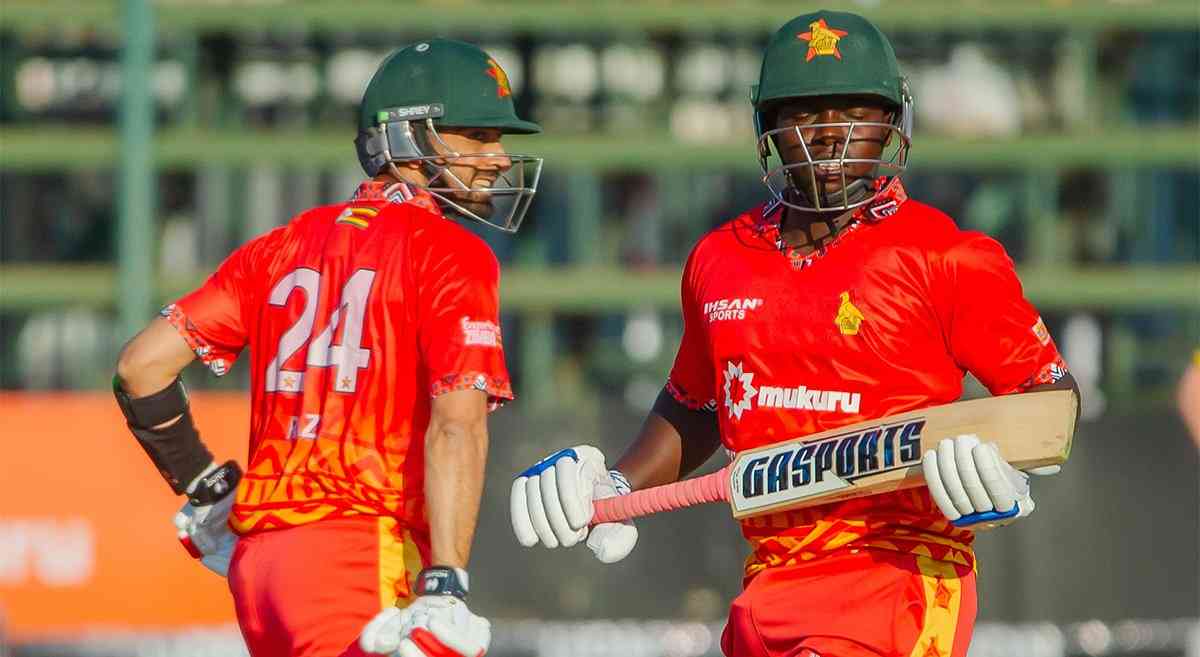
He has the “old guard” to lean on, the evergreen Sikandar Raza, a one-man rebellion, and perhaps Craig Ervine, who now relinquishes the heavy mantle of leadership.
No longer the man with the ultimate say, he returns to the ranks as an ordinary, card-carrying member of the group, where the currency is runs and the exchange rate is unforgiving.
At 40, his task is to prove that the light still burns bright enough to justify a spot in a team that is rapidly moving toward a younger, more frantic future. He must now play with the freedom of a man who has nothing left to prove, yet everything to play for.
With names like Blessing Muzarabani forming a lethal pace partnership with the captain, and young guns like Dion Myers, Tashinga Musekiwa and Tinotenda Maposa still finding their feet, the team is no longer a collection of aging stalwarts.
The road ahead
Ngarava’s baptism of fire is imminent, a schedule that reads like a prosecutor’s brief.
The diary for 2026 is thick with intent, a sequence of gazetted fixtures that will demand every ounce of his burgeoning tactical wit.
As far as the longer formats, April 2026 sees a tour of Pakistan, a three-match ODI series that serves as a brutal education in pressure.
Following this, the focus shifts back to the home soil of Zimbabwe in July 2026 for a substantial visit from Bangladesh, featuring two Tests and five ODIs.
For a bowling captain, these home Tests on familiar decks represent the ultimate opportunity to dictate terms rather than merely react to them.
Hovering over all of this is the great northern star of Zimbabwean cricket: the 2027 ICC Men’s Cricket World Cup.
To be a captain is one thing; to be the captain when your nation co-hosts the world’s premier event — alongside South Africa and Namibia — is quite another.
Ngarava is not just preparing for the next series; he is the custodian of a dream, building a side that must be ready to stand tall when the world arrives on Harare’s doorstep.
He has eighteen months to turn this “generation next” into a force capable of honoring that home soil.
Advance Zimbabwe fair.
But herein lies the genius, and the courage, of the gamble.
In choosing Ngarava, Zimbabwe has declared that its new identity will be built on raw, frontline resilience.
It will be a side that looks its opponent in the eye from the very first ball, that understands the currency of pressure, that wins through collective grit.
Bennett’s role is to ensure that grit is galvanised by gallus.
He is the embodiment of the freedom that comes from having nothing to lose, the x-factor that can turn a defensive grind into a winning charge.
The path ahead is strewn with rocks.
There will be days when the strain tells on Ngarava’s body, and days when Bennett’s youthful exuberance will tip into recklessness.
Critics will sharpen their knives at the first stumble. But for now, under the highveld sky, a powerful, poignant transition is complete.
They have passed from the calm, capable hands of Ervine to the calloused ones of Ngarava.
They have chosen not just a new leader, but a new symbol, a man of the people, of the struggle, of the front line.
In Richard Ngarava and Brian Bennett, Zimbabwe has bet on character over convention, on future over formality, on grit over grace.
And in the world of Zimbabwean cricket, for so long shrouded in twilight, such a decisive change is nothing less than a radical, glorious break of dawn.
The die is cast. Let the play begin.
H-Metro