
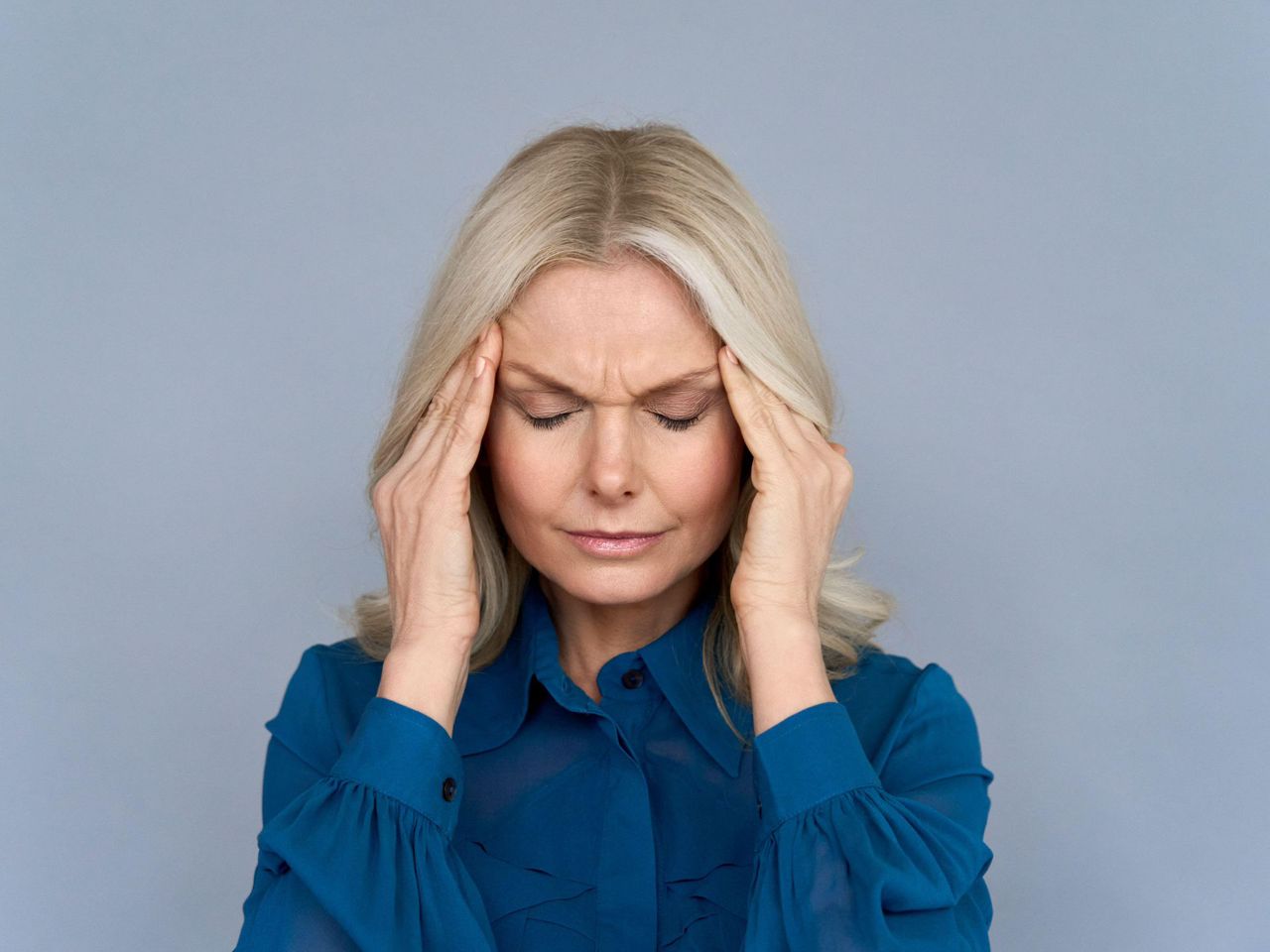
The menopause is linked to a loss of grey matter in the brain, which may help explain why women are more likely to suffer dementia than men, new research suggests.
Experts from the University of Cambridge carried out a study on 124,780 women to examine the effects of menopause on the brain and whether hormone replacement therapy (HRT) plays a role in preventing cognitive decline.
Links between the menopause and dementia are under the spotlight.
Links between the menopause and dementia are under the spotlight.
They found the menopause is linked to a loss of brain grey matter – which is vital for mental functions, memory, emotions and movement – and menopause can also bring on anxiety, depression and sleep problems.
As is already known, the menopause also has an impact on cognition (such as thinking, attention, language, learning and memory skills).
The study found that post-menopausal women who were not on HRT had slower reaction times than those who had not reached menopause yet or who were on HRT.
However, there were no significant differences between all these three groups when it came to performance on memory tasks.
The study, published in the journal Psychological Medicine, looked at women who were pre-menopause, post-menopausal who had never used HRT, or post-menopausal who had used HRT.
Women answered questions in areas such as sleep and whether they suffered depression and anxiety, and some took part in cognitive tests such as on memory and reaction times.
Around 11,000 women also underwent magnetic resonance imaging (MRI) scans so experts could look at their brain structure.
The average age of onset of menopause among the women was 49 and those on HRT were also around that age when they started treatment.
Post-menopausal women were more likely to report insomnia, getting less sleep overall and feeling tired, the study found.
Those on HRT reported feeling the most tired of all three groups, even though they slept the same amount as women not on HRT. All post-menopausal women, whether on HRT or not, said they were more tired than women who had not gone through it.
Menopause also affected cognition.
Dr Katharina Zuhlsdorff from the department of psychology at the University of Cambridge said: “As we age, our reaction times tend to get slower – it’s just a part of the natural ageing process and it happens to both women and men.
“You can imagine being asked a question at a quiz – while you might still arrive at the correct answer as your younger self, younger people would no doubt get there much faster.
“Menopause seems to accelerate this process, but HRT appears to put the brakes on, slowing the ageing process slightly.”
Researchers found significant reductions in volume of grey matter in those women who were post-menopausal.
In particular, these differences occurred in the hippocampus (which has a major role in learning and memory), the entorhinal cortex (essential for forming memories and spatial navigation) and the anterior cingulate cortex (which helps with attention and regulating emotions).
Professor Barbara Sahakian, the study’s senior author from the department of psychiatry, said: “The brain regions where we saw these differences are ones that tend to be affected by Alzheimer’s disease.
“Menopause could make these women vulnerable further down the line. While not the whole story, it may help explain why we see almost twice as many cases of dementia in women than in men.”
Michelle Dyson, chief executive of the Alzheimer’s Society, said women account for around two-thirds of people living with Alzheimer’s disease in the UK.
“And while we still don’t fully understand why they are more susceptible than men, it is thought that hormones may play a role,” she said.
“This large study adds to evidence showing how menopause impacts the brain, including physical changes such as loss of brain volume.
“But without long-term participant tracking, to check if they later develop dementia, we cannot be sure that these brain changes associated with menopause also increase dementia risk.
“There are steps that women – and men – can take today to reduce their risk of dementia and these include regular exercise, not smoking and reducing alcohol consumption.
“If you’re worried about yourself or a loved one, Alzheimer’s Society’s dementia symptoms checklist is a helpful first step in starting a conversation with your GP.”
Researchers also found women on HRT are more likely to suffer poor mental health but their analysis suggests they already had poorer mental health before being prescribed the medication.
Dr Christelle Langley, from the department of psychiatry, said: “Most women will go through menopause, and it can be a life-changing event, whether they take HRT or not.
“A healthy lifestyle – exercising, keeping active and eating a healthy diet, for example – is particularly important during this period to help mitigate some of its effects.”
Dr Louise Newson, a GP and women’s hormone specialist, said: “Many women report changes in memory and concentration around menopause, and this study suggests these symptoms may have a biological basis rather than being dismissed as ageing or stress, highlighting menopause as an important period for brain health where timely, individualised care matters.”