
The debate surrounding Constitutional Amendment Bill No. 3 (CAB3) has generated significant interest across Zimbabwe’s political landscape, with supporters and critics offering differing perspectives on its implications for governance, democracy and national development. While constitutional amendments naturally invite rigorous scrutiny, it is equally important to assess the proposed changes on their merits and within the context of Zimbabwe’s evolving democratic journey.
At its core, Constitutional Amendment Bill No. 3 seeks to refine and strengthen key governance institutions in a manner that responds to practical challenges that have emerged over time. Constitutions are living documents. They are not static instruments frozen in time but frameworks designed to evolve as societies grow, mature and confront new realities. Around the world, constitutional amendments are a common feature of democratic governance, reflecting the need for legal frameworks to adapt to changing circumstances.
One of the most notable aspects of CAB3 is its proposal to establish a dedicated Zimbabwe Electoral Delimitation Commission. This reform deserves serious consideration because it addresses a long-standing concern regarding the separation of responsibilities in the electoral process. Elections are among the most important democratic exercises in any nation, and the institutions responsible for administering them must be allowed to focus fully on their primary mandates.
Under the proposed amendment, electoral boundary delimitation would be handled by a specialised commission chaired by a judge of Supreme Court standing and supported by experts in law, governance, administration, demography and cartography. Such an arrangement reflects international best practice, recognising that delimitation is a highly technical exercise requiring specialised expertise.
Importantly, the proposal seeks to separate the management of elections from the drawing of electoral boundaries. This distinction enhances institutional clarity and allows each body to focus on its core responsibilities. By doing so, Zimbabwe would be strengthening the professionalisation of its electoral systems and promoting greater efficiency within its democratic institutions.
Another significant provision is the extension of the period between delimitation and elections from six months to eighteen months. This may appear to be a technical adjustment, but its democratic value should not be underestimated. Electoral boundaries often influence political competition, and allowing a longer period between delimitation and elections creates stability, predictability and transparency.
A longer interval provides political parties, candidates and voters with sufficient time to understand new boundaries and prepare accordingly. It reduces uncertainty and contributes to public confidence in the electoral process. In many respects, such a measure reinforces the principle that electoral contests should take place on a clearly established and widely understood playing field.
Beyond the electoral provisions, CAB3 also speaks to a broader objective of institutional strengthening. Effective governance depends not merely on the existence of institutions but on their capacity to perform their functions efficiently, independently and professionally. Constitutional reforms that improve institutional architecture can contribute significantly to long-term national stability.
Zimbabwe’s democratic development should not be viewed solely through the lens of elections. Democracy is also about the quality of institutions, the effectiveness of governance systems and the ability of constitutional structures to respond to the needs of citizens. Strong institutions create the foundation for economic growth, social cohesion and national progress.
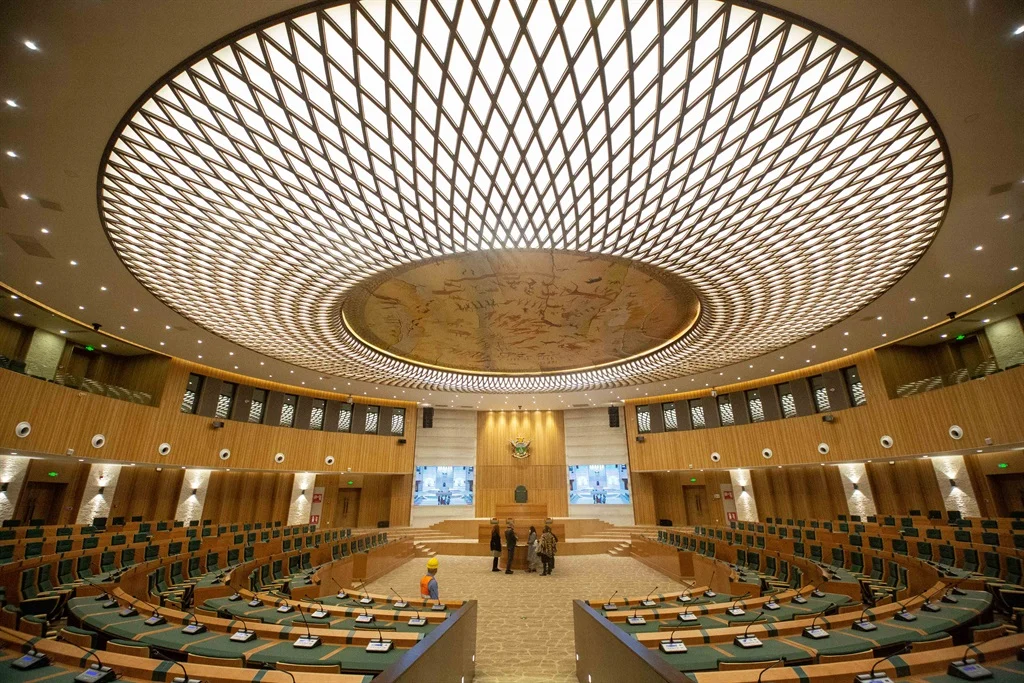
Supporters of CAB3 have also argued that the amendment process itself reflects democratic engagement. Parliamentary debates provide an opportunity for elected representatives to examine, question and refine proposed changes. The National Assembly serves as the people’s forum, where competing viewpoints are heard and where legislation undergoes scrutiny before adoption.
This parliamentary process is an important reminder that democracy involves deliberation, dialogue and decision-making through constitutional mechanisms. While disagreement is inevitable in any democracy, the existence of structured debate demonstrates the functioning of democratic institutions rather than their absence.
Another important consideration is Zimbabwe’s sovereign right to determine its constitutional future. Every nation develops governance systems that reflect its unique history, circumstances and aspirations. While international experiences can provide useful lessons, constitutional reforms must ultimately respond to domestic realities and national priorities.
Zimbabwe’s Constitution remains one of the most progressive legal frameworks on the African continent, containing extensive provisions on human rights, governance and accountability. Constitutional Amendment Bill No. 3 does not seek to replace this framework but rather to refine certain aspects of its implementation. Viewed in this context, the amendment represents an effort to improve institutional effectiveness while preserving the broader constitutional order.
Critics are entitled to express their concerns, and their participation enriches democratic discourse. Healthy democracies thrive when citizens actively engage in debates about governance and public policy. However, such discussions should remain grounded in objective analysis of the proposed provisions rather than assumptions or political rhetoric.
Ultimately, the success of any constitutional amendment should be measured by its capacity to strengthen institutions, improve governance and serve the interests of citizens. CAB3 presents an opportunity to enhance electoral administration, promote institutional specialisation and create greater certainty within Zimbabwe’s democratic processes.
As Parliament continues to deliberate on the Bill, Zimbabweans have an opportunity to reflect on the broader purpose of constitutional reform. The objective should not simply be change for its own sake, but the creation of governance systems capable of supporting national development, democratic stability and public confidence.
The future of Zimbabwe depends on strong institutions that can withstand political transitions, deliver effective governance and maintain public trust. Constitutional Amendment Bill No. 3 represents one contribution to that ongoing nation-building project. Whether viewed from a legal, political or developmental perspective, its central aim is to strengthen the machinery of governance and position Zimbabwe’s democratic institutions for the challenges and opportunities of the future.
A nation is not defined solely by the laws it adopts but by its willingness to continually improve them in pursuit of a better future. In that regard, Constitutional Amendment Bill No. 3 should be seen as part of Zimbabwe’s continuing effort to build resilient institutions, deepen democratic governance and lay a stronger foundation for generations to come.

Vanhu kungowawata zvavo on partisan lines asi kana wazogara wava wega, verenga what the Bill is proposing, you will see lots of advantages to the common man. Also vaya vari kuti Mnangagwa is doing it to benefit himself are forgetting that vakuru ava vari kuda just 2 additional years, nothing more. After that, the new law would benefit whichever president comes thereafter. You also stand an equal chance of benefitting from same in case you land the top job.
Constitutional Amendment Bill No. 3 should be assessed through an objective lens, focusing on its potential to strengthen governance efficiency, institutional effectiveness and national development.
Constitutional Amendment Bill No. 3 should be assessed through an objective lens, focusing on its potential to strengthen governance efficiency, institutional effectiveness and national development.
CAB3 is a bill far removed from the people it impacts.
CAB3 is a bill far removed from the people it impacts.