EU countries’ plans to send failed asylum-seekers to Rwanda risk fueling violent conflict and forced migration in Africa, according to the Democratic Republic of the Congo.
Rwanda stands accused of supporting rebel forces that have taken control of large areas of eastern Congo, resulting in thousands of deaths and hundreds of thousands being displaced, the United Nations has said.
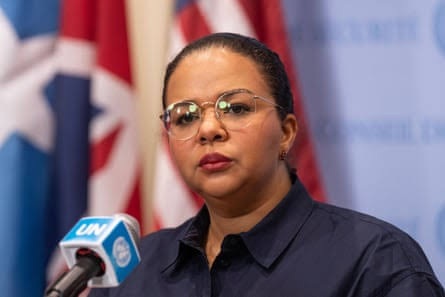
Kinshasa fears the new migration plan will allow Rwanda to funnel European money to the rebels and “divert attention from [the country’s] destabilizing role in the Great Lakes region,” according to Congo’s Foreign Affairs Minister Thérèse Kayikwamba Wagner.
“It is puzzling to see that a country that is at the heart, not just of instability, not just of conflict, but also of displacement and forced migration, is perceived to be a safe haven and … a credible partner to uphold international law,” Wagner told POLITICO.
“The issue here is that we have [EU] countries that have the means, the access, [and] the capacity to know better, making an informed choice to look the other way,” Wagner added, telling EU countries to “go back to their notes” and rethink the choice of partner.
The government of Rwanda did not respond to a request for comment.
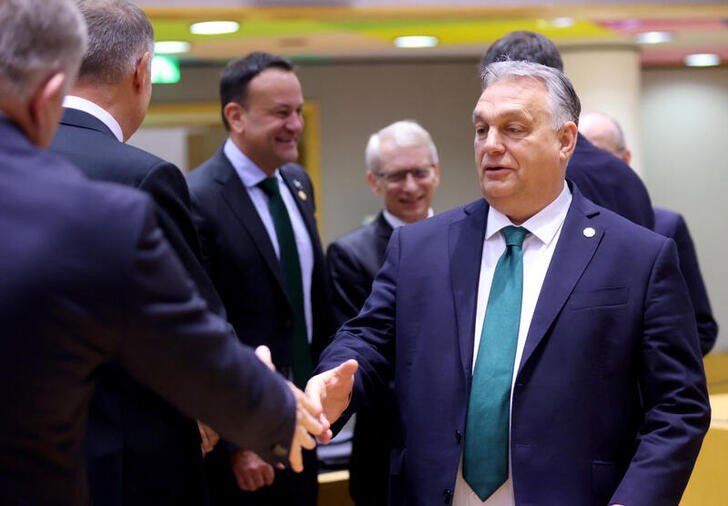
Last week, five countries — Austria, Denmark, Germany, Greece and the Netherlands — announced they will set up a deportation hub in Rwanda. While talks are ongoing, the five countries plan to start sending people to Rwanda in 2027. It’s part of a broader push by the bloc to gain greater control over who enters the EU — and who gets to stay.
EU legislation approved earlier this year allows countries to negotiate such deals, as long as they safeguard fundamental rights. The announcement led to an outcry from rights groups, which warned that Kigali’s human rights record should disqualify it from such a partnership.
Rwanda, besides having “a well-established record of repressing dissent,” also “provides critical support to and exercises overall control over the M23 armed group in eastern Congo,” NGO Human Rights Watch said this week.
M23 occupies large swathes of North and South Kivu provinces in eastern Congo, having ramped up hostilities in early 2025 with a major offensive to capture Goma, the capital of North Kivu. The violence has displaced hundreds of thousands and the fighting around Goma alone left thousands dead. “Rapes, gang rapes, violent assaults and killings of civilians are a common feature of M23’s modus operandi,” U.N experts said.
Kigali has repeatedly denied supporting the rebels, but the U.S., U.N. and EU have all called on Rwanda and its army to halt support for M23 and withdraw troops from Congo. Last month, the U.S. announced sanctions on Rwanda’s defense ministry and a financial institution over support for the armed group.
Because of the U.S. sanctions, “there is a need for currency to come into the country. And it’s very convenient that the [EU countries] will be filling that gap,” Wagner said. “Why invest in a country that is violating the territorial integrity of another country?”
“Our cooperation with Rwanda to establish a return hub has no bearing on the German government’s position regarding the conflict in eastern Congo,” said Christina Lewinsky, a spokesperson for German Interior Minister Alexander Dobrindt.
Denmark’s foreign affairs ministry said the country’s “position on the situation in the Democratic Republic of the Congo remains unchanged,” and pointed to a statement dated Oct. 30 by the International Contact Group for the Great Lakes region (of which Denmark is a member) calling for a “lasting and peaceful resolution” to the conflict.
Governments of Austria, Greece and the Netherlands didn’t respond to requests for comment.
Denmark and Greece are both non-permanent members of the U.N. Security Council, which in a resolution last year demanded that Rwanda’s defense forces stop supporting M23, and also called on Congo’s military forces to halt support for armed groups.
Announcing the partnership with Rwanda, ministers from the five EU countries repeatedly stressed that the protection of people sent to the country would remain a key priority and that the hub would be in line with EU and international law. Rwanda, they said, “has established itself as a reliable and responsible partner in addressing the global challenges of migration and forced displacement.”
Rwanda’s Interior Minister Vincent Biruta took a similar line at a migration conference in Vienna last week. “Human rights in Rwanda are respected and granted to everyone and specifically to refugees who choose to come to our country,” he said, hitting back at protests by NGOs against the return hub deal. He stressed that his country already hosts thousands of refugees, including from Congo and Burundi.
Congo’s Wagner said her country houses thousands of Rwandan refugees who “have not felt safe to return,” adding that those numbers “dwarf the number of refugees that are hosted by Rwanda.”
politico.eu