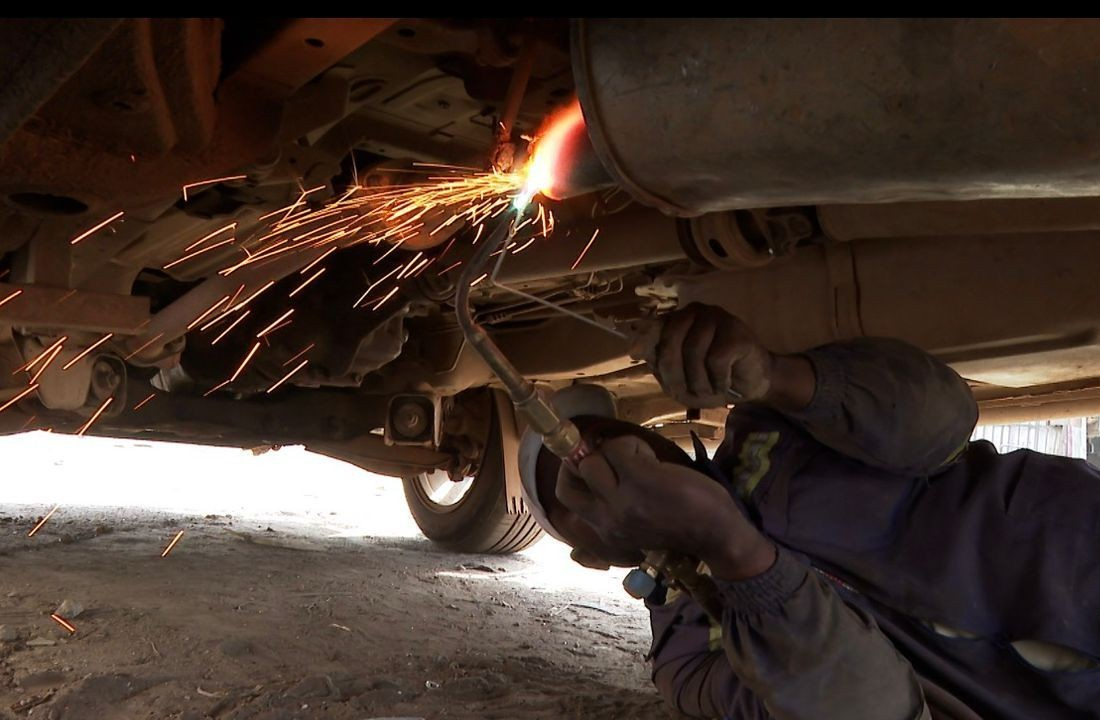
Concern is rising over the dangerous use of calcium carbide by small-scale welders in the Gazaland Industrial Area of Highfield, Harare, with experts warning that the cost-cutting method poses severe health and safety risks.
In the busy industrial zone, many welders have resorted to using calcium carbide stones directly as a substitute for acetylene gas when cutting or repairing metal, a practice driven largely by economic hardship.
Engineer Pedzisai Tapfumneyi, Chief Executive Officer of Verify Engineering, warned against the growing trend, stressing that the practice could have devastating consequences.
“We want to warn the nation to desist from using calcium carbide stones directly because it results in respiratory problems. Most people are using canisters where they put the calcium carbide stones and close those canisters physically. They are using these to cut metals. The system they are using, which is much cheaper for them, is very dangerous. In many cases, it has resulted in explosions,” he said.
Tapfumneyi noted that since the commissioning of the company’s acetylene plant in Mutare in 2021, local production has helped reduce prices and made safer alternatives more accessible.
For most operators, affordability is the deciding factor.
“Acetylene gas is too expensive for us. We are doing small jobs. Calcium carbide is cheaper. It allows us to work and feed our families,” said one welder.
Some admitted they were unaware of the long-term health implications.
“To be honest, I did not know about the dangers. Sometimes after work, I feel dizzy, but I thought it was normal because of the smoke,” another welder said.
A third welder acknowledged the risks but emphasised the struggle for survival.
“We have no choice. We know it’s not safe, and sometimes these canisters can explode, especially if too much carbide is added. We are just trying to survive.”
Health experts highlight that when calcium carbide reacts with water, it produces acetylene gas but also releases toxic byproducts such as phosphine, which can pose severe health risks. Long-term exposure has been associated with respiratory illnesses, lung damage and nervous system disorders, while improper handling dramatically increases the risk of explosions.
The growing dependence on calcium carbide among small-scale welders underscores the urgent need for safety education, affordable alternatives and stronger support for informal manufacturers.