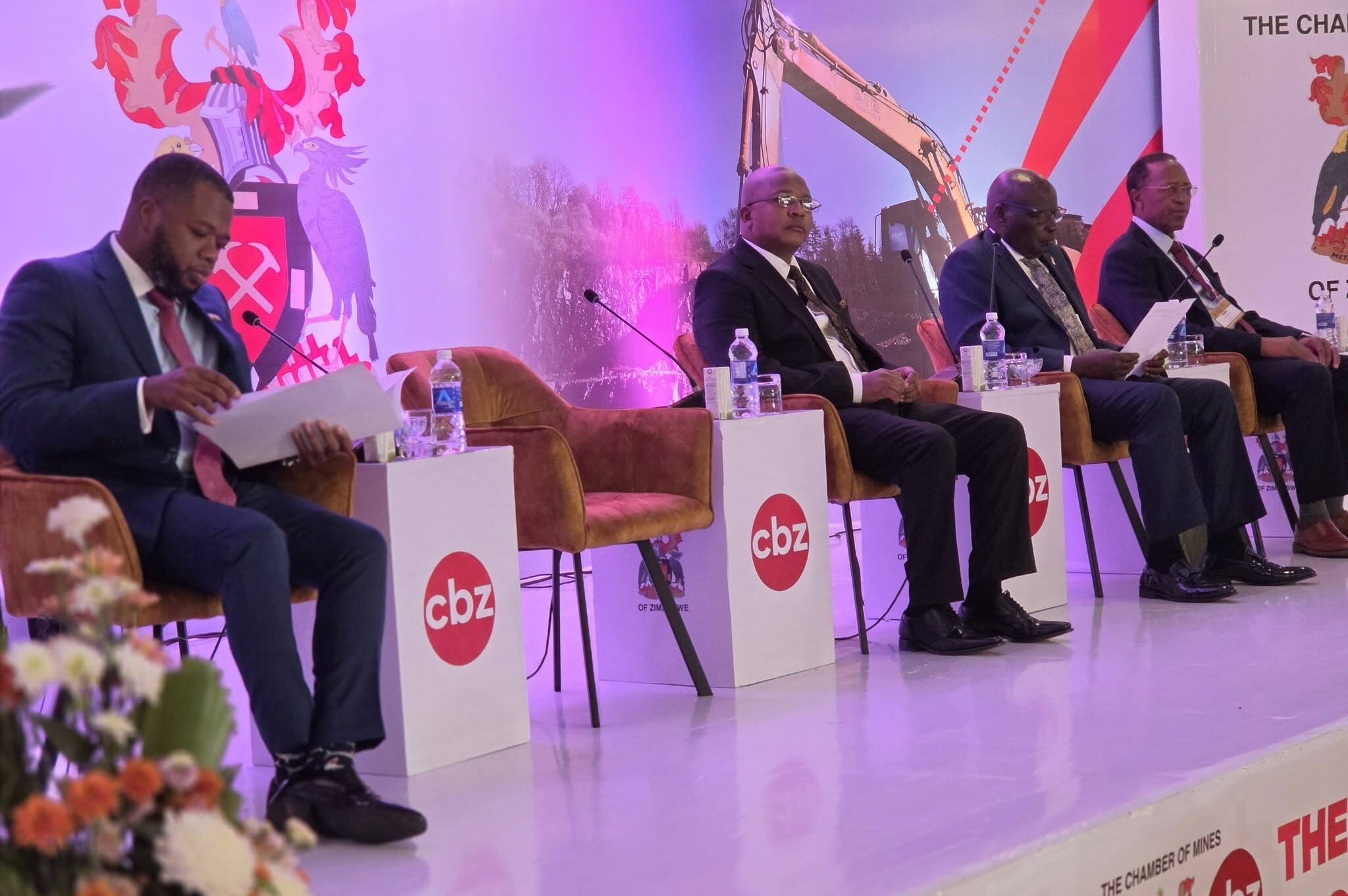
The 2026 Chamber of Mines of Zimbabwe’s Annual Mining Conference and Exhibition has officially rolled into life, bringing together industry leaders, policymakers and investors to deliberate on strategies to sustain growth in a sector projected to generate more than US$8 billion in export earnings this year.
Speaking to this publication, the Chamber of Mines of Zimbabwe, Chief Executive Officer, Dr Isaac Kwesu said the mining industry remained resilient despite operating in a difficult environment.
“During the period under review, the mining industry growth slowed down to 7.3%, compared to 12.9% recorded in 2024, weighed down by high-cost structures characterised by high electricity tariffs and suboptimal royalties, foreign currency shortfalls, delays in payment of ZiG for surrender portions of export proceeds, fragile power supply and capital shortages,” said Dr Kwesu.
Despite the challenges, Dr Kwesu noted that the sector achieved record export earnings of US$7.3 billion in 2025, up from US$5.9 billion in 2024, largely on the back of soaring gold prices and the recovery in platinum group metals prices.
“The surge in export proceeds was largely driven by sterling gold prices, which surged by 43% in 2025, while PGM prices also rebounded by an annual average of 37%,” he said.
Looking ahead, Dr Kwesu expressed optimism over the industry’s prospects.
“In the outlook, the mining sector is projected to grow by 7% in 2026 on the back of new and ongoing expansion projects across mineral sectors. Mineral prices are generally anticipated to remain firm, with mineral export earnings expected to surpass US$8 billion in 2026,” he said.
The Chamber’s review shows that gold output rose by 31% to 50,514 kilograms in 2025, while coal production increased by 26%. Overall average capacity utilisation improved to 88% from 84% in 2024 and is expected to rise further to 95% this year.
“Notwithstanding the challenges, the mining industry capacity continued to be undermined by systematic factors that include power outages, foreign exchange shortfalls and capital shortages. In the outlook, average capacity utilisation is expected to increase to 95% in 2026, benefiting from anticipated production ramp-up across all mineral subsectors,” Dr Kwesu said.
The four-day conference, which has drawn stakeholders from across the mining value chain, will conclude tomorrow with exhibitions, business-to-business engagements and networking sessions aimed at fostering partnerships and unlocking new investment opportunities, bringing down the curtain on one of the country’s premier mining gatherings.