President Emmerson Mnangagwa has called on African countries to harness their vast natural resources, youthful population and expanding markets to accelerate economic transformation and achieve greater economic independence.
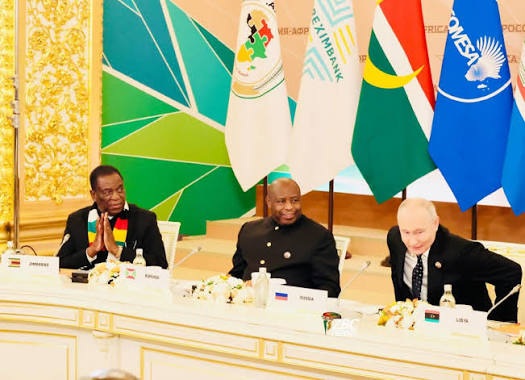
Addressing the third Russia-Africa Summit plenary session in Moscow, yesterday, President Mnangagwa said the continent had enormous economic potential which, if properly utilised, could position Africa as a major player in the global economy.
“Africa must wake up to its immense potential. We are blessed with vast natural resources, the world’s youngest and most energetic population, and a rapidly expanding market. It is time to fully leverage these assets to drive our own development and secure economic independence,” said President Mnangagwa.
The President said African countries could draw valuable lessons from development partners such as Russia, particularly in strengthening their economic capabilities and reducing over-reliance on external support.
“Drawing lessons from our partners like Russia, Africa must move away from over-reliance and instead build resilient, self-sustaining economies,” he said.
President Mnangagwa said prioritising intra-African trade would enable countries to connect their markets, expand economic opportunities and improve the continent’s participation in global commerce.
“By prioritising intra-African trade, we can seamlessly connect our markets and strengthen our collective participation in international trade,” he said.
The President reaffirmed Zimbabwe’s commitment to Africa’s economic transformation through innovation, regional cooperation and industrialisation, saying the continent was ready to take a more prominent role in the global economy.
“Zimbabwe and Africa are ready to innovate, integrate, industrialise, and claim our rightful place on the global stage,” he said.
His remarks underscore the importance of African countries pursuing coordinated development strategies, strengthening regional markets and building productive economies capable of competing internationally.