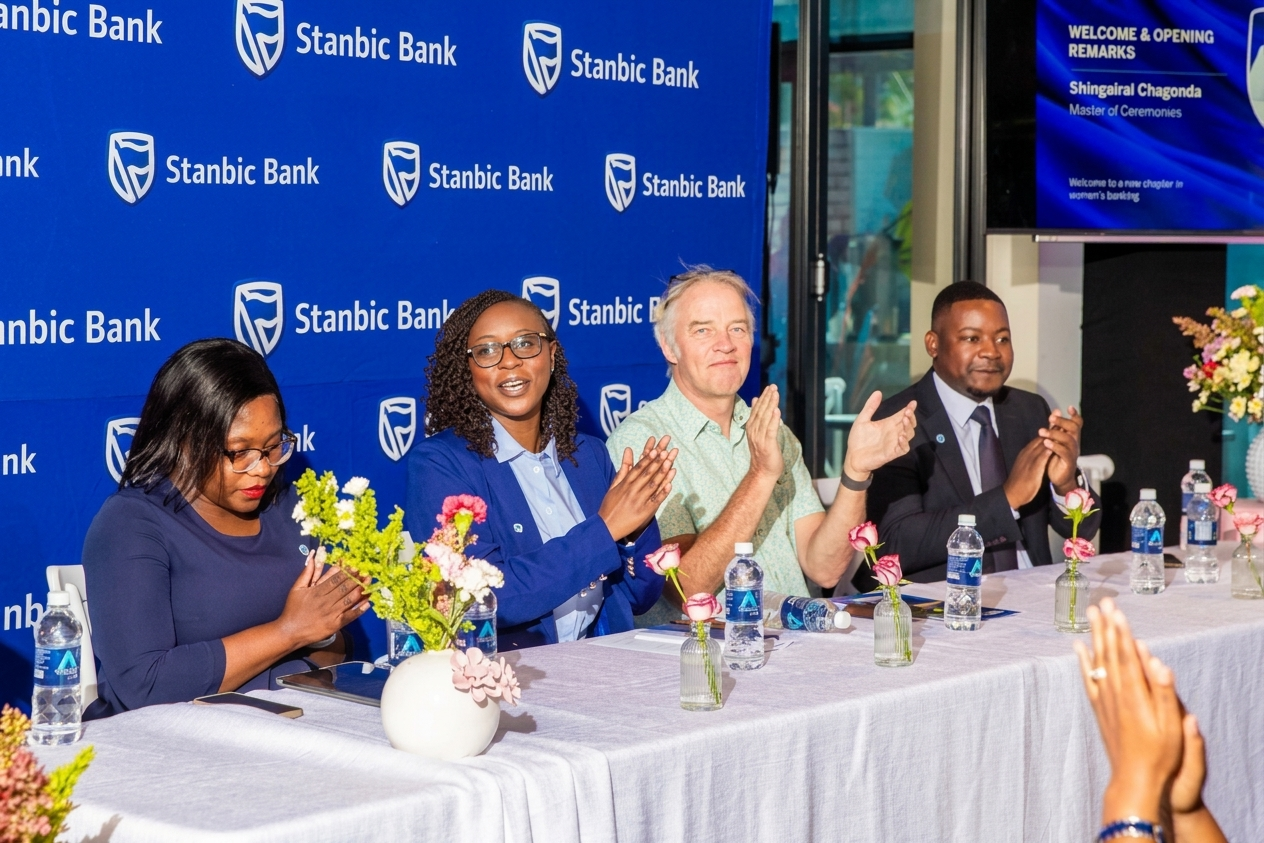
Stanbic Bank Zimbabwe has launched the Evolve Account for Women, a financial product aimed at expanding access to banking services and strengthening the financial security of women across different socio-economic groups.
The account, introduced in partnership with Plan International Zimbabwe, is designed to support women, particularly those operating small businesses in the informal sector, by providing accessible banking services and opportunities to grow their enterprises.
In a speech read on his behalf at the launch, recently, Stanbic Bank Chief Executive, Solomon Nyanhongo, said the initiative recognised the significant contribution women make to families, businesses and local economies.
“Across our communities, women are running market stalls, baking for households and businesses, tailoring clothes, operating salons, farming poultry, catering for events and moving goods across borders …yet they continue to face barriers to accessing formal financial services, with conventional banking requirements and products often failing to accommodate their circumstance,” said Nyanhongo.
He noted that income patterns among small-scale entrepreneurs were not always compatible with existing banking structures, and opening an account alone was insufficient to support business growth, hence the decision by the bank to come up with the Evolve Account.
“The Evolve Account has been deliberately structured around everyday needs, with a daily cash withdrawal limit of US$200, daily point-of-sale transactions of up to US$1,000 and a maximum account balance of US$2,000,” Nyanhongo explained.
He said customers whose businesses grew beyond the account’s prescribed limits would be assessed and assisted in transitioning to banking solutions suited to their expanding needs.
Nyanhongo said the account was not intended to limit women’s financial ambitions but to provide an entry point into a broader, long-term banking relationship.
He added that sustainable enterprise development required more than access to finance, stressing the importance of financial knowledge, confidence, business networks and market opportunities.
“That is why our partnership with Plan International Zimbabwe is central to this proposition. Through this partnership, customers will be able to access financial literacy, business and digital skills training, vocational development, basic legal knowledge, market linkages, vendor networking forums, support for community savings groups and guidance on formalising their businesses,” he said.
Plan International Zimbabwe Country Director, Peter van Dommelen, said the organisation was excited about the initiative and its potential to address socio-economic challenges, including child marriages and teenage pregnancies.
He said the account had been developed through consultations with young women, allowing their experiences and financial needs to inform its design.
“When young people help make the decisions, the solutions are better because they are built on lived experience. What young women told us about documents, collateral and the risks of saving at home has now shaped how a major bank designs its products. That is evidence changing practice, and it is the kind of change we want to see across the financial sector,” said van Dommelen.
He said the initiative demonstrated the value of collaboration between the private sector and civil society in developing solutions that respond to the needs of young women.
Van Dommelen said Stanbic Bank brought financial expertise, products, systems and reach, while Plan International Zimbabwe contributed its established community networks, understanding of the challenges facing young women and relationships with Government ministries and other stakeholders.
“Together, we are offering more than a bank account. Alongside the Evolve Account, young people will have access to financial literacy, business skills, legal knowledge, market linkages, digital skills and vocational training,” said van Dommelen.
Stanbic Bank Head of Product, Jahannes Dondo, said the bank had engaged women operating various small businesses, including vendors, bakers, tailors, caterers, hairdressers, poultry farmers and cross-border traders, to understand their banking requirements and develop a product responsive to their needs.
This launch comes barely a week after parliamentarians called for increased budgetary support for women’s economic empowerment and MSME development at the 2027 Parliamentary Pre-Budget Seminar in Bulawayo, including the recapitalisation of the Zimbabwe Women’s Microfinance Bank through a proposed five percent prescribed asset status to boost financing for women-led enterprises.