
ZESA Holdings is stepping up efforts to attract private-sector investment into the electricity sector as it seeks to mobilise about US$2,4 billion required to rehabilitate and strengthen the country’s ageing power transmission and distribution infrastructure.
The power utility is introducing measures to lower the cost of connecting to the national electricity grid, including reducing selected fees and levies by up to 73%, in a move aimed at encouraging investment in power generation, mining and manufacturing.
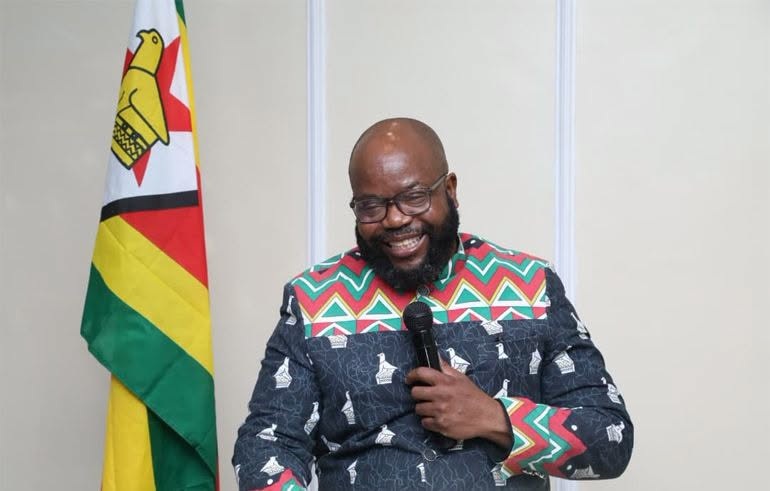
Speaking at the 2026 Zimbabwe Institute of Strategic Thinking (ZIST) Annual Conference in Victoria Falls, recently, ZESA senior manager for electricity trading and operations, Engineer John Diya, said the utility had assessed the condition of the national grid and identified major infrastructure gaps requiring urgent attention.
“We have done an assessment of the status of the electricity grid. We have taken note of where we had redundancy and redundancy is no longer there. Where we need two lines and we just have one line, where poles are falling and so on. We require about $2,4 billion to actually spruce up the network in that regard,” he said.
The required investment will go towards replacing ageing equipment, rehabilitating electricity infrastructure and restoring backup capacity in sections of the network where alternative transmission lines are no longer available.
To encourage participation by independent power producers (IPPs) and other investors, ZESA has halved Grid Impact Assessment fees and reduced generator connection application charges by up to 73%.
Demand connection application fees have also been reduced by up to 61%, while administration fees on transmission connections have been cut by 20%. The utility has additionally introduced the deferral of connection fees, including those for net-metering.
Eng Diya said the reforms were part of efforts to create an enabling investment environment in line with Vision 2030 and the National Development Strategy 2 (NDS2).
“In terms of self-assessment, whether we are happy or whether we are on course or not, I would declare that we are on course to meet Vision 2030 expectations guided by the NDS2. I think it is quite evident we are on course on different plans,” he said.
ZESA is also facilitating private-sector participation through power purchase agreements, use-of-system agreements, banking arrangements and virtual net metering. The arrangements allow independent producers and businesses, including mines with their own generation facilities, to participate in the electricity supply system.
Eng Diya attributed part of the deterioration in infrastructure to historical electricity tariff arrangements in which local-currency charges were not adjusted in time to keep pace with inflation.
He said tariffs had declined from about 9,8 US cents to roughly two US cents per kilowatt-hour, leaving the utility operating at a loss and limiting its ability to finance maintenance and network upgrades.
Meanwhile, ZESA is introducing digital systems to improve customer service, including a self-service portal, Geographic Information System tools and a 24-hour fault-reporting and response facility through its 704 Contact Centre.
On electricity supply, Eng Diya said the utility had made significant progress in reducing load shedding and was working to sustain the improvements.
“The first and foremost one was to do with load shedding. That one I think we have made very significant strides in eliminating load shedding. We are going to continue to reinforce the action plans that we are running to ensure that we maintain that position,” he said.
He also pointed to the proposed Hwange-Mukuni interconnection between Zimbabwe and Zambia, which is expected to be financed by a local bank, as an example of growing confidence in ZESA’s ability to meet its financial obligations.
The project is expected to strengthen regional electricity connectivity and improve the movement of power between the two countries, complementing broader efforts to expand infrastructure and attract investment into the energy sector.