
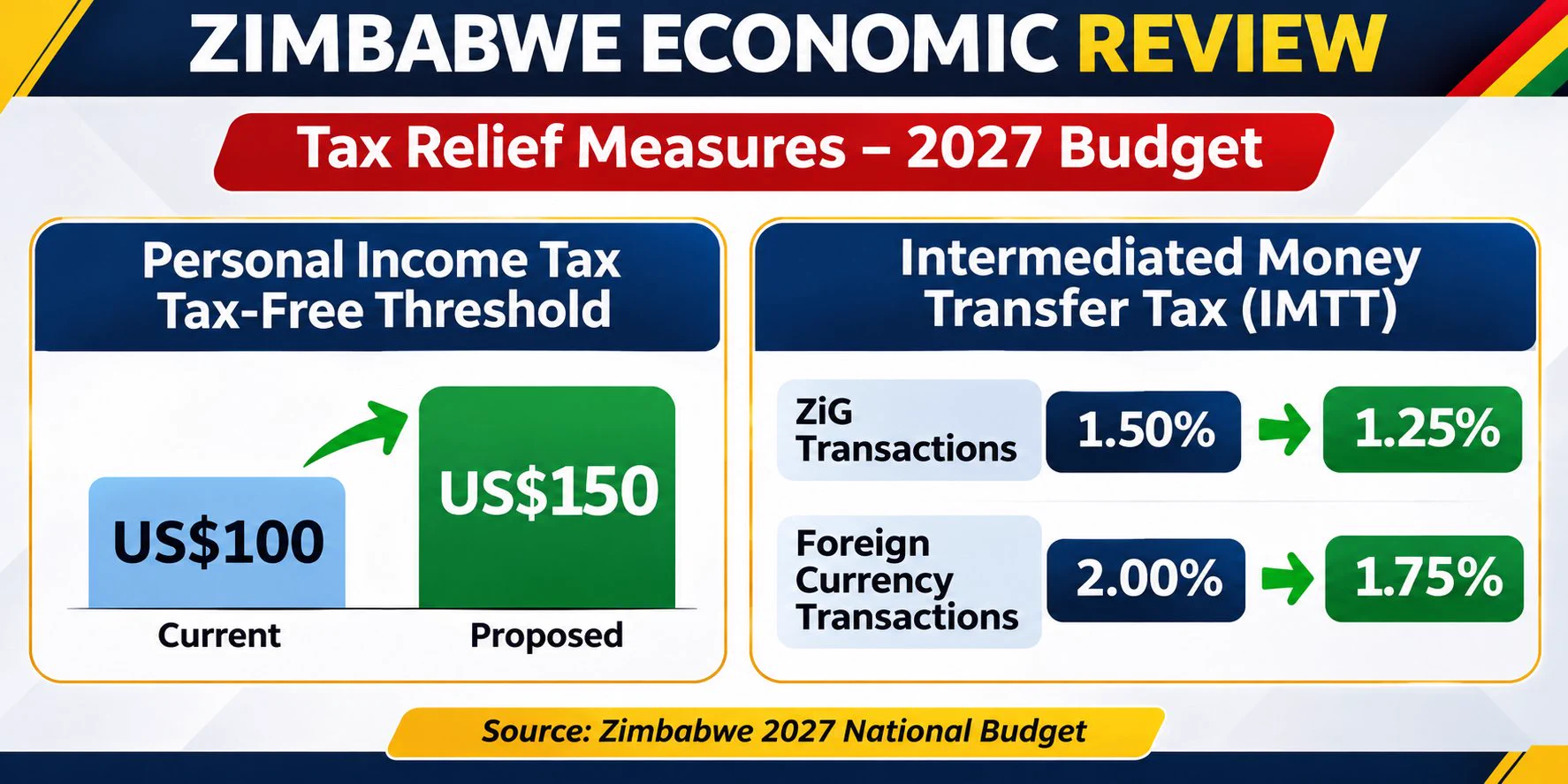
The 2027 National Budget has delivered relief to workers and businesses through an increase in the Pay-As-You-Earn (PAYE) tax-free threshold and reductions in the Intermediated Money Transfer Tax (IMTT), measures expected to improve disposable incomes and lower the cost of electronic financial transactions.
Presenting the Budget in Parliament, yesterday, Finance Minister, Professor Mthuli Ncube proposed raising the monthly PAYE tax-free threshold from US$100 to US$150, exempting employees earning below the new threshold from income tax.
The adjustment will also see the 40% top PAYE tax band applying to monthly incomes exceeding US$3 000, with the measures expected to return approximately US$81 million to taxpayers’ pockets.
Businesses and consumers will also benefit from reduced IMTT rates, with the charge on local currency transactions declining from 1,5% to 1,25%, while the rate on foreign currency transactions will fall from 2 percent to 1,75%.
The adjustments build on previous reforms introduced by Government to ease the cost of financial intermediation, encourage the use of local currency and improve the efficiency of the formal financial system.
Professor Ncube said earlier interventions included reducing IMTT on ZiG-denominated transactions from 2% to 1,5%, allowing the tax to be claimed as a deductible business expense and expanding the definition of financial institutions to include microfinance institutions.
“Following these reforms, the effective tax burden declined to approximately 1 percent on ZiG-denominated transactions and 1,5 percent on foreign currency-denominated transactions.
“In order to consolidate these gains and further reduce the cost of financial intermediation, I propose to further review the IMTT rates,” he said.
The latest changes are expected to reduce the cost of electronic payments, improve transaction efficiency and encourage more businesses and individuals to conduct transactions through formal financial channels.
Government will, however, require companies claiming IMTT as a tax-deductible expense to demonstrate to the satisfaction of the Commissioner-General of the Zimbabwe Revenue Authority (ZIMRA) that their declared quarterly gross revenues are adequately reconciled with deposits passing through the formal financial system.
Professor Ncube said the revised rates would maintain preferential treatment for ZiG transactions, strengthening incentives for the use of the local currency while reducing the overall cost of digital payments.
“Although the measures are expected to result in revenue forgone of approximately US$100 million, lower transaction costs should encourage greater use of formal payment platforms, enhance transaction traceability, and facilitate the formalisation of economic activities,” he said.
The tax adjustments form part of the 2027 National Budget’s broader measures to improve the operating environment, support household incomes and promote economic formalisation.