
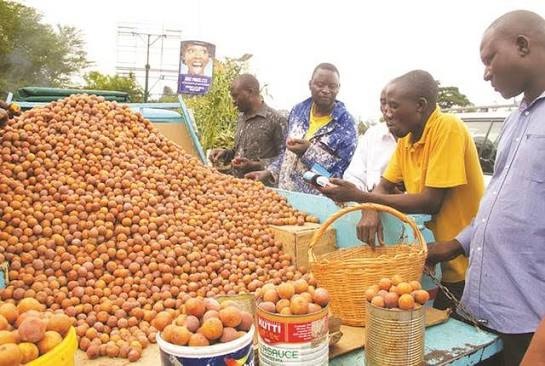
The Government has warned members of the public against the unauthorised commercial exploitation of wild fruits and other forest produce, with Permanent Secretary for Information, Publicity and Broadcasting Services, Nick Mangwana, clarifying that there is no new Mazhanje licence.
In a statement posted on his official X account, Mangwana said the Communal Land Forest Produce Act [Chapter 19:04] had been in force for decades, adding that the recent 30-day notice was intended to facilitate compliance with existing legislation.
“There is no new Mazhanje Licence. The Communal Land Forest Produce Act [Chapter 19:04] has been in place for decades,” he said.
Mangwana explained that Section 4 of the Act allows people living in communal areas to harvest wild fruits and other forest produce for their own and their families’ consumption, but prohibits commercial selling under that provision.
“Section 4 allows people on communal land to harvest wild fruits and forest produce for their own and their family consumption, but they must not sell it,” he said.
He noted that the provisions cover indigenous fruits such as mazhanje, matamba and nhengeni, and, strictly speaking, madora as well.
On commercial activities, Mangwana said Section 5 of the Act provides for written licences for the commercial exploitation of forest produce in the areas covered by the legislation.
“Any commercial exploitation such as collecting, processing, or selling requires a written licence,” he said.
He said the distinction was between harvesting for household consumption and engaging in commercial activities, which require regulation to protect natural resources.
“Eat with your family, that is your right. But once you start selling for commercial gain it affects conservation and regeneration and regulation becomes necessary,” Mangwana said.
He further highlighted the importance of proper handling of forest produce, from harvesting to storage and transportation, saying regulation of commercial trade helps ensure that products reaching consumers are handled properly.
Emphasising that the measures did not introduce a new tax or permit, Mangwana said the 30-day notice was simply an enforcement and compliance window for commercial traders.
“The Act has been in force for decades. The recent 30-day notice is simply enforcement and a compliance window for commercial traders, not a new tax or a new permit,” he said.
The public has therefore been urged to distinguish between harvesting wild fruits for household consumption and commercial exploitation, which must comply with the applicable legal requirements.