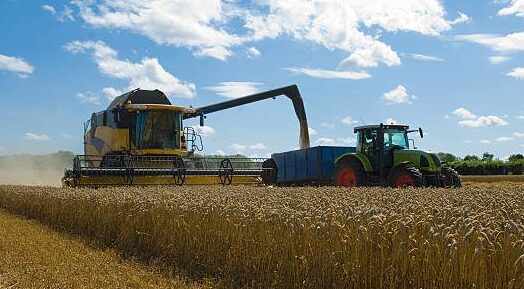
Cabinet has approved the 2026 Winter Production Plan aimed at boosting wheat, barley and Irish potato output while strengthening food security and rural industrialisation.
During today’s Post Cabinet Briefing in Harare, Minister of Information, Publicity and Broadcasting Services, Soda Zhemu, said Cabinet considered and approved the plan.
“The 2026 Winter Production Plan is a key part of the Agriculture Food Systems and Rural Transformation Strategy Two (AFSRTS 2), and serves as the sectoral implementation framework within the broader context of the National Development Strategy Two,” Minister Zhemu said.
Zhemu said the plan seeks to advance national development through targeted production of key strategic crops during the winter season.
“The Plan aims to support national development by focusing on wheat, Irish potatoes, and barley production.
Building on the successes of the two previous seasons and record wheat production in 2025, the Plan promotes rural industrialisation through value addition across the entire agricultural value chain,” he added.
Minister Zhemu added that Government has identified significant land under irrigation to support the winter cropping programme.
“Accordingly, the available area for winter irrigation is estimated at 256 958 hectares, with 140 500 hectares designated for the production of wheat, Irish potatoes, and barley.
Specifically, wheat will be cultivated on 125 000 hectares, barley on 6 500 hectares, and Irish potatoes on 9 000 hectares,” he added.
He said the wheat production target is expected to exceed national consumption requirements.
“The Wheat Plan aims to produce 662 500 metric tonnes, surpassing the national annual requirement of 615 000 metric tonnes.
Furthermore, barley production is projected to rise to 45 500 metric tonnes, while Irish potatoes production is projected to reach 243 850 metric tonnes,” said Zhemu.
Zhemu said financial and operational support mechanisms will also be closely monitored.
“Financial support mechanisms encompassing farmer payments, financing and insurance; operational efficiency factors like mechanisation, coordination and contract farming, marketing and monitoring and evaluation will be tracked,” he said.
Zimbabwe has intensified winter cropping programmes in recent years to reduce reliance on wheat imports and strengthen national food security.
The country recorded a bumper wheat harvest in 2025, enabling it to meet most of its domestic requirements, with the winter cropping programme remaining a key component of the Government’s agricultural transformation agenda under the National Development Strategy 2.