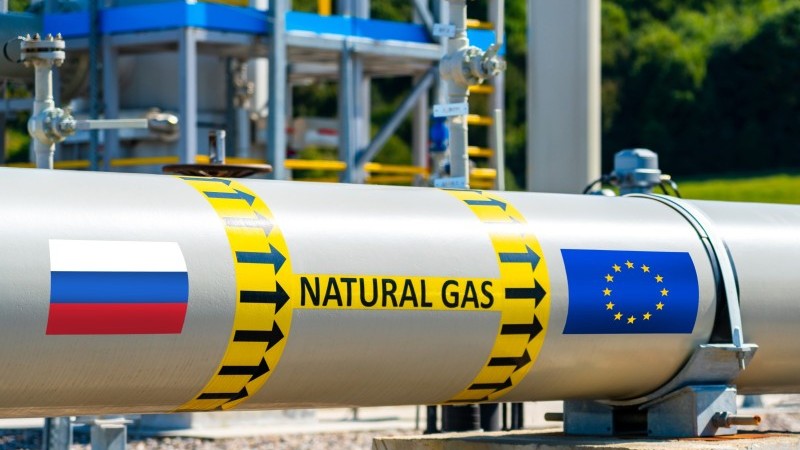
The European Union has agreed to wean itself off Russian gas for good. After a deal struck in late 2025, its governments gave final approval to a stepwise ban early in 2026.
Spot-market Russian liquefied natural gas will be barred once the rule takes effect this year. Russian pipeline gas is to be phased out by 30 September 2027.
The aim is to end the leverage that energy gave Moscow over Europe. It also leaves a hole in European supply that someone else must fill.
The phase-out is gradual by design. Short-term contracts end first, while longer deals are given until 2027 to wind down, to avoid a price shock.
Why African gas exports stand to gain
Africa is one of the nearest places with both the gas and the geography to help. Its producers sit on the Atlantic and Indian Ocean shipping routes that feed Europe and Asia.
North Africa is the obvious first mover. Algeria already pipes gas directly to southern Europe and, with Egypt and Libya, accounting for about two-thirds of the continent’s output.
Further south, exporters can act as swing suppliers. They can send cargoes east or west depending on where prices are highest, giving Europe a flexible new source.
Proximity helps on cost. A cargo from Algeria or Nigeria reaches European terminals faster and more cheaply than one from the Gulf or the United States.
Where the gas is
The resource base is large. Africa holds an estimated 620 trillion cubic feet of proven gas reserves, spread from the Mediterranean coast to the Indian Ocean.
Two basins stand out. The Rovuma Basin off Tanzania and Mozambique holds about 129 trillion cubic feet, while Nigeria’s Niger Delta holds roughly 113 trillion.
New projects are already arriving. The Greater Tortue Ahmeyim field off Senegal and Mauritania started up in 2025, alongside Congo’s LNG expansion and the restart of Mozambique’s stalled plants.
Egypt adds processing muscle. Its liquefaction plants can chill gas piped from neighbours into LNG for export, turning the country into a regional hub.
The catch
The opportunity is real but slow to capture. Gas projects take years to design, finance and build, so new supply will not reach Europe overnight.
Security is another hurdle. Mozambique’s northern gas fields sit near an insurgency that once forced work to stop, and investors price that risk in.
Africa also faces stiff competition. The United States and Qatar are expanding their own LNG exports and chasing the same European buyers.
A balancing act at home
African governments do not only want to export. Many need the same gas to generate power and feed industry at home, where hundreds of millions still lack reliable electricity.
That tension shapes every deal. Selling cargoes abroad earns hard currency, but diverting gas to domestic use can do more for jobs and growth.
The smartest producers will try to do both. They aim to use export revenue to build the pipelines and plants their own economies need.
Power shortages sharpen the dilemma. With some 600 million Africans still lacking electricity, every cargo sent abroad is gas not burned at home.
What to watch
The first signal will be investment decisions. Final approvals for new LNG trains and pipelines would show that producers believe the European demand is durable.
The second is contracts. Long-term supply deals with European buyers would lock in the opening rather than leave it to volatile spot cargoes.
For outside investors, African gas has moved up the agenda. Europe’s break with Russia has handed the continent a market it did not have to win on price alone.
A contest among suppliers
Europe is not waiting passively. Its buyers are signing deals with the United States, Qatar and others, so African producers must move quickly to claim a share.
Chinese and Gulf money is also in play. State firms and sovereign funds are weighing stakes in African gas, adding another layer to the contest.
That competition could work in Africa’s favour. Rival suitors tend to mean better terms for the countries holding the reserves.
Frequently asked questions
What did the EU decide on Russian gas?
The EU agreed to ban spot-market Russian LNG once the rule takes effect in 2026 and to phase out Russian pipeline gas by 30 September 2027. The goal is to cut Europe’s energy reliance on Russia.
Which African countries could gain?
Algeria, Egypt and Libya are the largest exporters and supply Europe directly, while Nigeria, Mozambique, Tanzania, Senegal and Mauritania hold major reserves. Together they could send more gas to Europe over time.
How much gas does Africa have?
Africa holds an estimated 620 trillion cubic feet of proven gas reserves. The Rovuma Basin off Tanzania and Mozambique holds about 129 tcf and Nigeria’s Niger Delta about 113 tcf.
What stands in the way?
Gas projects take years to build and need large investment, and some sit in insecure areas. African suppliers also compete with the United States and Qatar for European buyers.