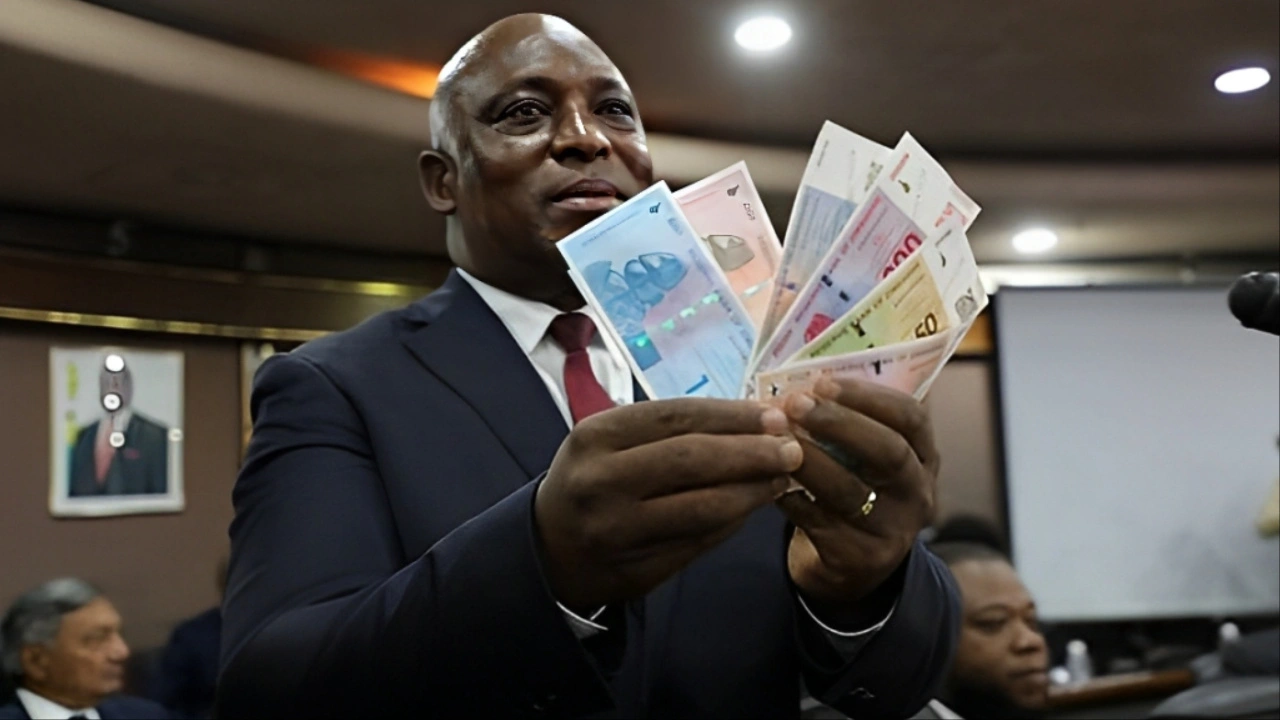
Zimbabwe’s transition to a mono-currency regime will be determined by prevailing market and economic conditions rather than a predetermined date.
In a statement yesterday, Reserve Bank of Zimbabwe Governor Dr John Mushayavanhu said Government’s approach under the Second National Development Strategy (NDS2) was to create the economic conditions necessary for a sustainable currency transition, with stability, reserves and an efficient foreign-exchange market forming key benchmarks.
“The transition to a mono-currency will be market-led and based on economic conditions, not a predetermined date,” Dr Mushayavanhu said.
He said the country had made progress in stabilising inflation and improving the management of foreign currency, but more work was required to build sufficient reserves to support the transition.
“The key conditions under NDS2 include sustained macro-economic stability, adequate foreign-currency reserves and an efficient foreign-exchange market,” he added.
The Governor said foreign-currency reserves remained below the targeted level of three to six months of import cover, with current reserves standing at approximately 1.7 to 1.8 months of import cover.
“The reserves are currently at about 1.7 to 1.8 months of import cover, which is below the targeted three to six months.
The level of reserves remained an important consideration because adequate foreign-currency buffers would strengthen the economy’s capacity to withstand external shocks and support confidence during any currency transition,” Mushayavanhu added
Mushayavanhu also urged banks to reconsider restricting loan maturities to 2027, arguing that lending decisions should reflect the market-led nature of the planned currency transition rather than assumptions based on a fixed deadline.
“The shift to a mono-currency is no longer being approached as an event tied to a specific date, giving financial institutions greater scope to structure credit facilities according to prevailing economic conditions,” the Governor added.
Meanwhile, the approach draws lessons from Zimbabwe’s previous experience with currency changes, particularly the return to a mono-currency in 2019.
The subsequent foreign-currency shortages contributed to significant payment challenges, highlighting the risks associated with undertaking a currency transition without adequate foreign-exchange buffers.
Under the current framework, RBZ is therefore prioritising macro-economic stability, reserve accumulation and the efficient functioning of the foreign-exchange market before moving towards a mono-currency.