Government is considering further reductions to the Intermediated Money Transfer Tax (IMTT) as Treasury explores alternative revenue sources,
In a statement, yesterday, Finance Minister, Professor Mthuli Ncube, said Government was considering further cuts to the tax while seeking alternative ways of raising revenue to sustain public expenditure and national development programmes.
“Government is considering further reductions to the Intermediated Money Transfer Tax (IMTT) while identifying alternative revenue sources,” Prof Ncube said.
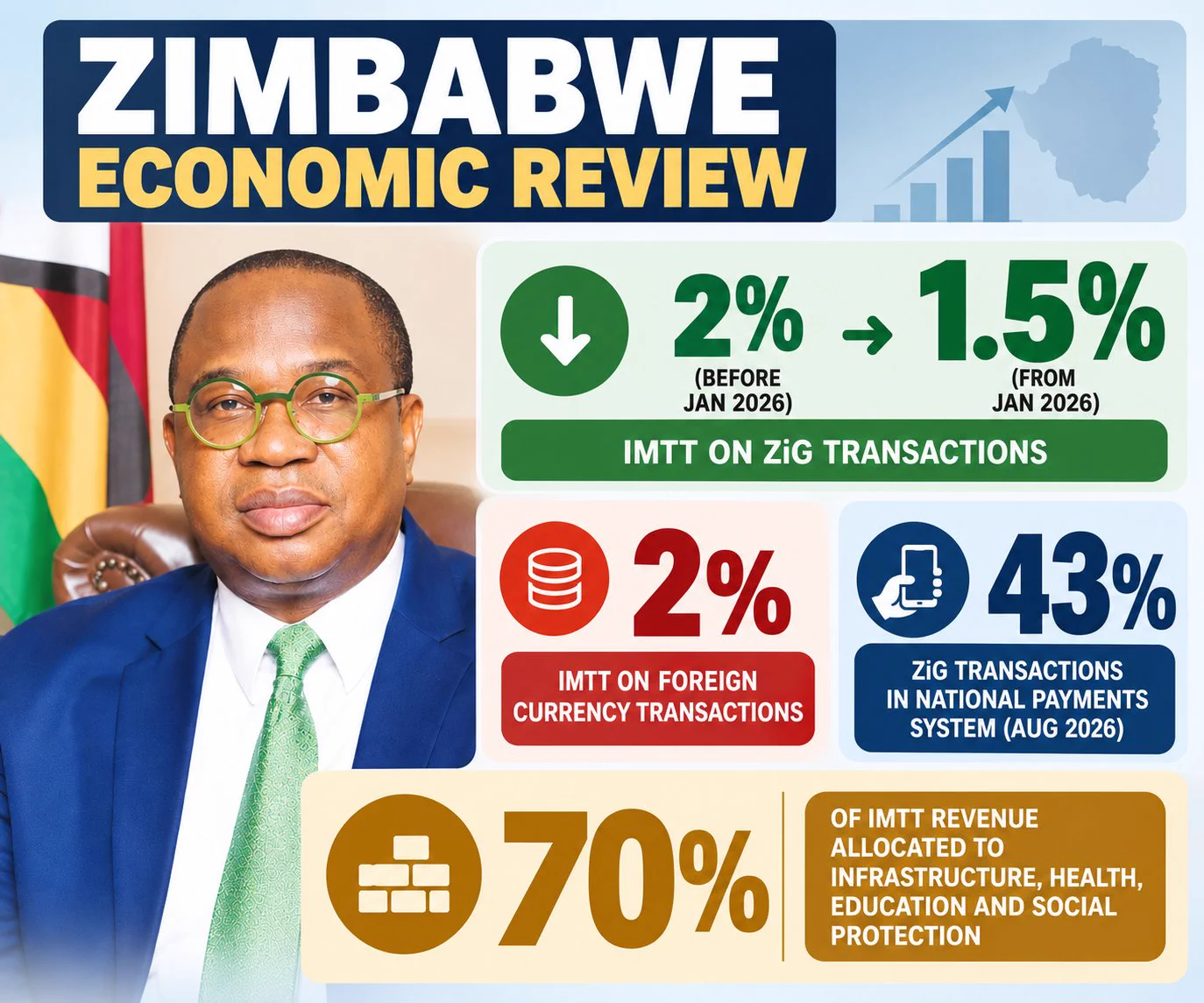
The proposed reduction comes after Treasury lowered the IMTT on transactions conducted in Zimbabwe Gold (ZiG) from 2% to 1.5% in January 2026, while transactions in foreign currency continue to attract a 2% tax.
“The IMTT on ZiG transactions was reduced from 2% to 1.5% in January 2026, while foreign currency transactions remain taxed at 2%,” Prof Ncube said.
The review comes as the use of the local currency continues to grow within the country’s national payments system, with ZiG transactions accounting for 43% of payments by August 2026.
“ZiG transactions accounted for 43% of payments through the national payments system by August 2026,” he said.
The increasing share of ZiG transactions highlights the currency’s growing role in domestic payments as Government considers measures to ease the cost of transferring money while maintaining revenue collection.
Treasury has also indicated that revenue collected through the IMTT is being channelled towards essential public services and development projects, with more than 70% allocated to infrastructure, health, education and social protection.
“Over 70% of IMTT revenue has been allocated to infrastructure, health, education and social protection,” Prof Ncube said.
The IMTT reduction will significantly lower the cost of transacting for low-income earners and informal traders doing small transfers daily. It also promotes the use of the ZiG, encourages financial inclusion by lowering bank charges thereby encouraging people to keep money in the bank instead of under the mattress.
Furthermore, the allocations support Government efforts to improve public infrastructure, strengthen healthcare and education services, and provide assistance to vulnerable groups.