
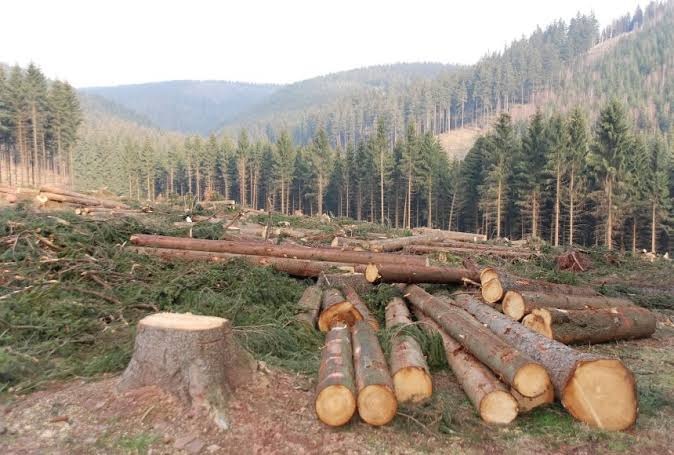
As the world prepares for the 31st Conference of the Parties (COP31) to the United Nations Framework Convention on Climate Change, scheduled to take place in Antalya, Türkiye, from 9 to 20 November 2026, the need to protect forests must remain a central consideration in Zimbabwe’s climate change response.
For a country whose economic activities, agricultural productivity, water resources and rural livelihoods are closely connected to the natural environment, deforestation is no longer simply an environmental concern but an important national development issue.
Zimbabwe’s forests are valuable natural assets that support biodiversity, regulate the climate, protect water catchment areas and sustain communities. However, increasing pressure from agricultural expansion, fuelwood consumption, tobacco curing, mining, settlements and uncontrolled veld fires continues to threaten these ecosystems.
The Forestry Commission’s forest information system estimates that forests covered approximately 61.04 percent of Zimbabwe’s land area in 2020, representing about 23.9 million hectares. This natural wealth requires deliberate protection if it is to remain available for future generations.
The challenge is particularly significant given the country’s reliance on natural resources to support economic activities. In many rural communities, firewood remains an important source of household energy, while commercial activities such as tobacco production also depend heavily on wood for curing.
Agricultural expansion and the demand for land for settlements and other economic activities further increase pressure on existing woodlands. These competing demands demonstrate why addressing deforestation requires a comprehensive approach that balances economic development with environmental sustainability.
The tobacco industry provides an important example of the relationship between economic production and forest conservation. While tobacco remains an important contributor to agricultural exports and foreign currency generation, traditional curing methods that depend on firewood place considerable pressure on indigenous woodlands.
The challenge, therefore, is not to undermine agricultural production but to promote more sustainable methods that allow the sector to continue contributing to the economy without compromising the country’s environmental resources.
Zimbabwe’s efforts to address this challenge must increasingly focus on alternative energy sources, including biomass-efficient technologies, solar energy and other sustainable curing solutions.
Supporting farmers to adopt environmentally friendly technologies, alongside strengthening sustainable woodlot programmes, would help reduce dependence on indigenous forests while safeguarding agricultural livelihoods.
Beyond tobacco production, household energy consumption remains another important driver of forest loss. Many communities continue to depend on firewood for cooking and heating, particularly in areas where access to affordable and reliable electricity remains limited. Consequently, the fight against deforestation must be accompanied by efforts to expand access to clean and affordable energy.
Investment in renewable energy, particularly solar power, presents opportunities to address both energy insecurity and environmental degradation.
Expanding decentralised solar systems, supporting clean cooking technologies and promoting energy-efficient household solutions can reduce pressure on forests while improving the quality of life in rural communities. This demonstrates that environmental protection must be integrated into broader development programmes rather than treated as an isolated responsibility of the forestry sector.
The consequences of deforestation extend beyond the disappearance of trees. Forests play an important role in protecting soils against erosion, maintaining water cycles, regulating temperatures and supporting biodiversity. Their destruction can expose agricultural land to degradation, increase sedimentation in rivers and dams, and weaken the natural systems that sustain farming communities.
At a time when Zimbabwe is working to strengthen food security and improve agricultural productivity through irrigation development and climate-smart farming, protecting forests and water catchment areas becomes particularly important.
The relationship between forests and climate resilience also makes this issue relevant to Zimbabwe’s broader development ambitions under Vision 2030. A climate-resilient economy requires productive agricultural systems, reliable water resources, sustainable energy and protected ecosystems. Forest conservation contributes to all these priorities by strengthening the natural foundations upon which economic development depends.
It is against this background that COP31 presents an important opportunity for Zimbabwe to advance its forest conservation agenda. The international climate conference provides a platform for countries to strengthen cooperation, mobilise climate finance, exchange technologies and accelerate the implementation of existing climate commitments.
For Zimbabwe, participation should include advocating for greater international support towards sustainable forestry, land restoration and community-based conservation programmes.
Importantly, Zimbabwe already has a policy framework that recognises the importance of protecting its forests. The National Forest Policy of 2023 identifies agricultural expansion, overreliance on fuelwood, forest fires, illegal settlements in gazetted forests and mining among the direct causes of forest degradation and biodiversity loss. It also highlights the need to strengthen forest institutions, improve enforcement and promote sustainable utilisation of forest resources.
Furthermore, Zimbabwe’s Nationally Determined Contribution 3.0 recognises sustainable forest management as an important component of its climate change mitigation and adaptation efforts.
The country has identified measures to reduce deforestation, strengthen forest protection and explore opportunities for emissions reduction through forest-related carbon projects. This provides a foundation upon which the country can build stronger partnerships and attract investment into sustainable forestry.
However, the effectiveness of these commitments will depend on their implementation. Strengthening environmental regulations, improving monitoring systems and ensuring that those responsible for illegal tree cutting and forest destruction are held accountable should remain important priorities.
Equally, communities living close to forests must be involved in conservation programmes because they are directly affected by environmental degradation and are essential partners in protecting natural resources.
Reforestation and afforestation programmes should also receive greater attention. Tree planting initiatives must go beyond commemorative events and become sustained national programmes supported by adequate resources, community participation and proper monitoring.
Greater emphasis should be placed on planting indigenous tree species because they support local biodiversity and are adapted to Zimbabwe’s ecological conditions. Protecting existing forests must, however, remain as important as establishing new woodlands, since mature natural ecosystems cannot simply be replaced by newly planted trees.
Climate financing will be critical in supporting these interventions. Zimbabwe requires resources to expand sustainable energy alternatives, rehabilitate degraded land, strengthen forestry institutions and support communities transitioning towards environmentally sustainable livelihoods. COP31 should therefore provide an opportunity to advance discussions on accessible climate finance and partnerships that respond to the practical needs of developing countries.
The protection of forests must also be recognised as a shared responsibility involving Government, the private sector, traditional leaders, farmers, communities and individuals. Economic operators should adopt responsible environmental practices, while communities should be encouraged to participate in sustainable resource management. Environmental education, particularly among young people, can further strengthen a culture of conservation and responsibility.
Ultimately, Zimbabwe’s participation in COP31 should be guided by the understanding that climate action must produce tangible benefits for the country’s people and economy. Protecting forests is not opposed to development; rather, it is essential to ensuring that development remains sustainable and that economic progress does not come at the expense of future generations.
As the country advances towards its Vision 2030 aspirations, safeguarding its forests must become an integral part of its development priorities. COP31 offers an opportunity to strengthen international partnerships, mobilise resources and reinforce national commitments towards environmental sustainability. The responsibility now is to translate these commitments into practical action that protects Zimbabwe’s natural heritage, strengthens climate resilience and secures a sustainable future for generations to come.