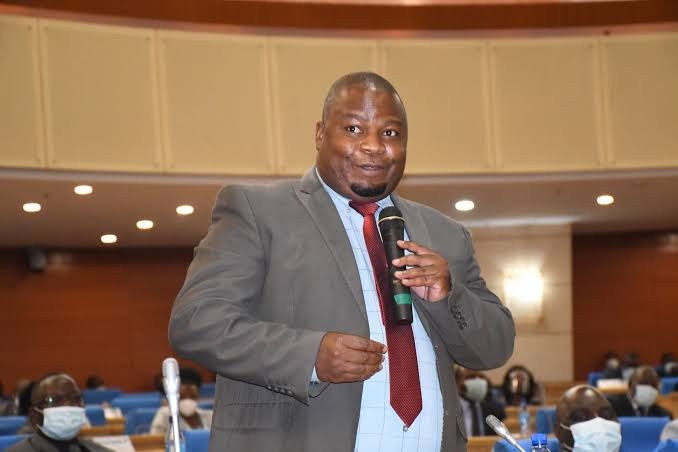
Malawian opposition politician Kondwani Nankhumwa, has warned that the country’s fragile economic recovery is in danger, blaming soaring debt, forex shortages and poor budget management.
Nankhumwa, president of the People’s Development Party (PDP), said the postponement of Parliament’s Mid-Year Budget Review had robbed citizens and lawmakers of the chance to scrutinise spending when they need it most.
The growth forecast has taken a hit. The 2026/27 budget projected 3.8 per cent growth this year, but that has been cut to 2.8 per cent.
Nankhumwa blames forex shortages, inflation, fuel disruption, high fertiliser costs and erratic power supply.
“The public deserves a clear account of how the budget is being implemented and what government intends to do where performance falls short,” he said.
Nankhumwa says Malawi has flunked the “four Fs” test of forex, fuel, fertiliser and food.
He asked how expensive vehicles still get into a country short of foreign currency, and urged the government and the Reserve Bank to investigate preferential access to forex and weak exchange controls.
Inflation eased to 19.4 per cent in September, down from 20 per cent the month before.
He welcomed the dip but said prices remain well above last year’s level, and urged the government to publish contingency plans for weather shocks and food shortages before the lean season.
On revenue, domestic receipts rose 32.3 per cent to K1.69 trillion in the first quarter, and non-tax income jumped more than tenfold.
Nankhumwa wants Treasury to explain whether that reflects one-off deals, reclassification or accounting adjustments before it is hailed as success.
He also says spending is dominated by recurrent costs, with little domestic development money spent in the first quarter, leaving infrastructure and constituency projects in limbo.
The debt figures are the most alarming. Total public debt stood at K24.33 trillion by December 2025, of which K16.01 trillion was domestic.
Nankhumwa says the lack of updated 2026 figures makes proper scrutiny impossible.
Interest alone swallowed about 38 per cent of domestic revenue in the first quarter, and wages and interest together consumed more than two-thirds of government income.
He also accuses state-owned enterprises of draining taxpayers through repeated bailouts, guarantees and losses, and says restructuring plans will fail unless political interference in appointments ends.
“Hard-working Malawians are being let down by poor service delivery,” he said, calling for merit-based appointments.
Nankhumwa concluded that Malawi’s problems stem mainly from policy and governance failures, not external shocks.
“The country needs leadership willing to account for its choices and change course where those choices are failing,” he said.
Nyasa Times