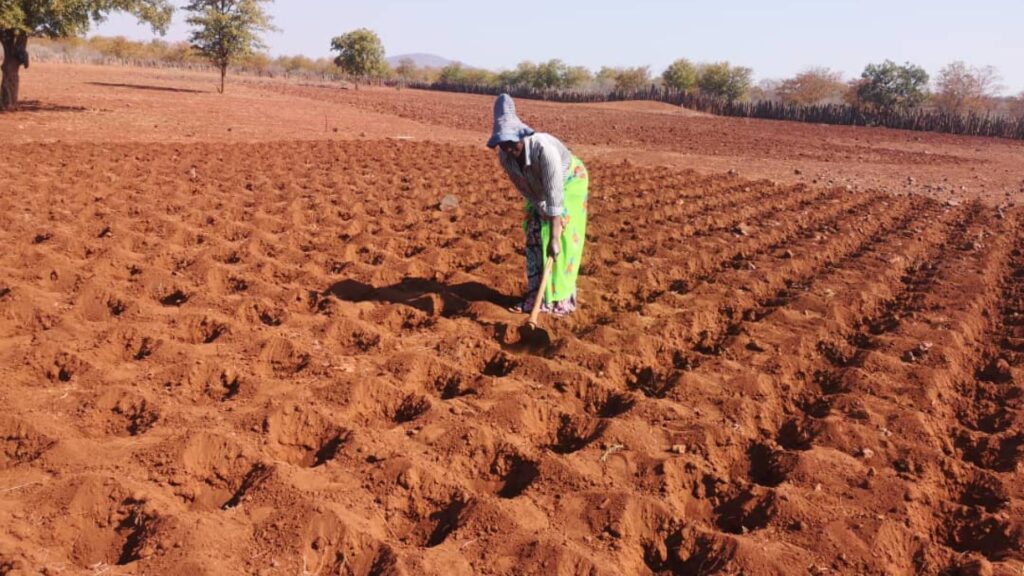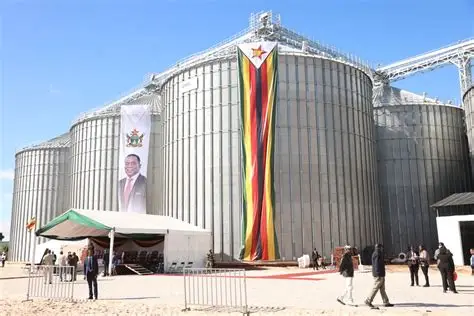

Government is strengthening grain reserves, expanding irrigation and rolling out drought mitigation measures ahead of the 2026/2027 agricultural season as the country prepares for a projected strong El Niño phenomenon.
Speaking during yesterday’s post-Cabinet media briefing in Harare, Information, Publicity and Broadcasting Services Minister, Dr Zhemu Soda, said Cabinet had received an update on the 2026/2027 Summer Plan incorporating the Drought Mitigation Plan, presented by Agriculture, Mechanisation and Water Resources Development Minister, Dr Anxious Masuka.
“Government is taking proactive measures to strengthen national preparedness in the face of the unfolding strong El Niño phenomenon. The focus is on ensuring food security, protecting livestock and cushioning communities against the anticipated effects of drought,” he said.
Dr Soda said Government was targeting a 600 000 metric tonne Strategic Grain Reserve by October 2027, using new artificial intelligence-powered silos to enhance grain storage capacity.
“As at November 9, 2026, the Grain Marketing Board held 365 688 metric tonnes of grain under the Strategic Grain Reserve. The Agricultural Rural Development Agency has contributed over 90 percent of the intake,” he said.
He said the Presidential Gratitude Grain Collection initiative, which encourages households to contribute 10 kilogrammes of grain, had collected 8 678 metric tonnes, representing a 19 percent increase compared to last year.
On preparations for the summer cropping season, Dr Soda said 14 971 621 Pfumvudza/Intwasa plots had been established, representing 93,3% of the target.
“Government is also strengthening drought preparedness at grassroots level, with 914 Ward Drought Mitigation Centres established out of 1 527 rural wards,” he said.
Irrigation development had reached 308 969 hectares, with 119 068 hectares earmarked for maize production this summer.
Dr Soda said the country had also harvested 676 473 metric tonnes of wheat from 129 860 hectares, at an average yield of 5,2 tonnes per hectare.
However, livestock remained vulnerable, with 2 248 498 cattle, representing 38,9 % of the national herd, projected to be at risk from drought.
“Livestock protection remains a critical component of the drought mitigation strategy,” he said, adding that the Presidential Poultry and Goat Schemes had distributed 3 543 705 chicks and 6 897 goats.
He said Government was strengthening early warning systems, farmer communication and extension services, working with the private sector to ensure effective implementation of the summer plan.
The measures are aimed at safeguarding agricultural production and national food security.