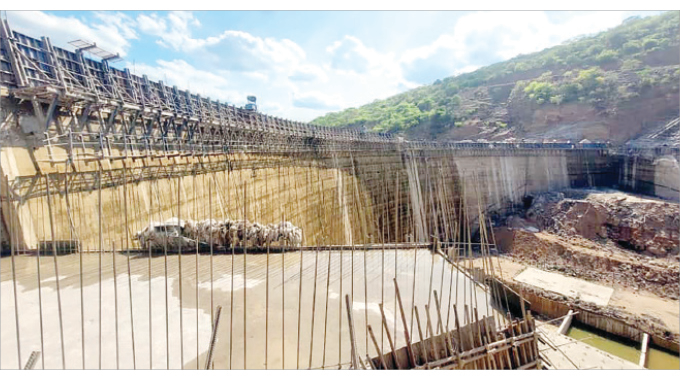
BULAWAYO’S quest for a lasting solution to the city’s water challenges has taken a significant step forward, with preliminary construction works underway at the US$81.3 million Cowdray Park Water Treatment Plant, a key component of the Gwayi-Shangani Dam water supply project.
Contractors have started establishing the site, with initial works including fencing and the construction of accommodation for workers and resident engineers. The project, once fully funded, is expected to be completed in 12 months.
Agriculture, Mechanisation and Water Resources Development Minister Dr Anxious Masuka said the technical groundwork was in place, but funding remained critical to delivering the project.
“Funding is always a challenge, but from the technical level, we are prepared as the ministry,” he said.
He appealed to Treasury to honour its planned commitments, saying the treatment plant could be completed within a year if adequate resources were made available.
“It will take us a year to complete this plant if we receive the financing from Treasury as planned,” Dr Masuka said.
The Government has already released an initial US$1.23 million to the Zimbabwe National Water Authority (ZINWA) to accelerate preliminary activities.
ZINWA Water Quality Manager Thulani Sibanda confirmed receipt of the first tranche, expressing optimism that the funding would assist in advancing work at the site.
“I can confirm that we have received the first tranche of funding for this project. We have received about US$1.23 million. This is going to accelerate all the work that is supposed to be done here at this site,” he said.
Once completed, the treatment plant will process 240 megalitres of water daily, exceeding Bulawayo’s current demand of approximately 165 megalitres.
Dr Masuka said the infrastructure had been designed to provide sufficient capacity for the city’s future water requirements, with treated water conveyed over 10 kilometres to Magwegwe for redistribution.
“The pipeline is coming at 240 megalitres a day. The treatment works are at 240 megalitres a day. So then we convey 10 kilometres to Magwegwe, and from there redistribute into the city. At any stage, we will have three days’ supply,” he said.
The facility is part of the wider Gwayi-Shangani Dam water supply scheme, which is expected to provide Bulawayo with a more reliable water source by the 2028/2029 period.
“We expect that Bulawayo and Gwayi-Shangani will have enough water by 2028 or 2029 if the funding comes as promised,” Dr Masuka said.
While the long-term project progresses, Government is also working to strengthen existing supplies from Nyamandlovu, with plans to increase pumping capacity from the current 20 megalitres to between 25 and 27 megalitres daily.
Solar backup systems are also being incorporated to improve the reliability of pumping operations.
Beyond increasing water availability, Government wants the project to address the additional pressure that increased supply could place on wastewater infrastructure.
Dr Masuka said engineers had been instructed to incorporate wastewater management into the final designs.
“I have requested the engineers not just to look at the water into Bulawayo, but also to look at how we are going to deal with the wastewater that’s generated as a result of this,” he said.
He added that the expanded designs would be discussed with the City of Bulawayo to ensure a comprehensive approach to water and wastewater management.
With preliminary works underway and the first funding tranche released, the project marks progress towards improving water security for Bulawayo, with continued funding expected to determine the pace of implementation.