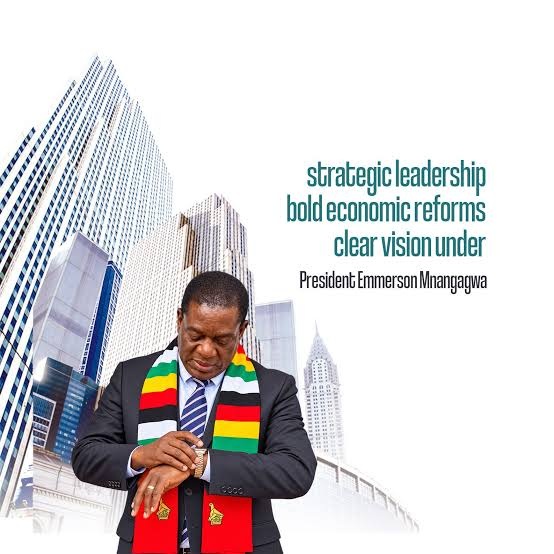
Zimbabwe’s financial sector reforms and anti-corruption measures are expected to strengthen the investment climate and accelerate sustainable economic growth, President Emmerson Mnangagwa has said.
Addressing the 399th Ordinary Session of the Zanu PF Politburo in Harare, on Wednesday, the President said the operationalisation of the Financial Sector Development Strategy would enhance financial inclusion, mobilise domestic savings and channel resources towards productive sectors.
He said the strategy was critical in ensuring that financial resources supported key economic activities, including agriculture, manufacturing and infrastructure development.
“It is commendable that the Financial Sector Development Strategy was launched and is now operational. This is envisaged to broaden financial inclusion, mobilise domestic savings and direct resources towards productive sectors, including agriculture, manufacturing and infrastructure development,” he said.
President Mnangagwa informed that the National Anti-Corruption Strategy would complement the financial sector reforms by promoting transparency, accountability and good governance while strengthening efforts to combat corruption.
“Additionally, the current National Anti-Corruption Strategy seeks to enhance transparency, accountability and good governance, as we further curb corruption, at all levels,” he said.
He highlighted that the two initiatives were expected to foster a predictable and conducive business environment capable of attracting investment and supporting long-term economic growth.
On the subject of foreign policy, President Mnangagwa reaffirmed Zimbabwe’s commitment to sovereignty, peaceful coexistence and mutually beneficial international cooperation.
He cited his recent participation at the Russia-Africa Summit, where he held discussions with Russian President Vladimir Putin, as an important platform for strengthening bilateral relations.
“Through that platform, we re-affirmed the longstanding friendship between our two sister countries founded on solidarity and sovereign equality,” he said.
The President further emphasised the importance of engaging Zimbabweans living abroad, describing the diaspora as a strategic resource for national development.
He said diaspora remittances were projected to surpass US$3 billion by the end of the year, adding that the Government was seeking to harness the financial resources, expertise, knowledge and networks of citizens abroad to support sustainable investment and development projects.
The President encouraged farmers, manufacturers, entrepreneurs and small businesses to increase production, adhere to regional quality standards and take advantage of expanded market opportunities beyond Zimbabwe’s borders.