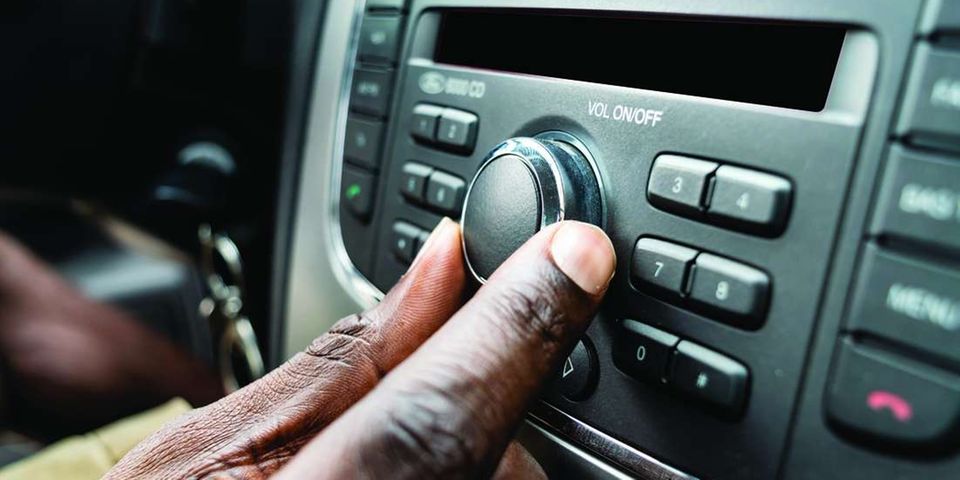
The Zimbabwe Broadcasting Corporation (ZBC) raised more than US$13 million from motor vehicle radio licences in the first half of last year, with the funds channelled towards upgrading broadcasting infrastructure, improving content production, and enhancing training programmes, legislators have been told.
Information, Publicity and Broadcasting Services Minister Dr Zhemu Soda said Government was ready to review car radio licence fees if the public felt they were no longer sustainable, in line with President Mnangagwa’s directive to streamline permits, fees and licences across economic sectors to improve the ease of doing business.
Dr Soda made the remarks in the National Assembly, on Wednesday, while responding to questions from lawmakers. Emakhandeni-Luveve legislator Discent Bajila had sought clarity on how much revenue had been collected from vehicle radio licences.
“The total revenue collected from radio licencing fees during the period is US$13,6 million, of which 20 percent was United States Dollar, while 80 percent was local currency converted at the interbank rate,” said Dr Soda.
“Revenue from ZBC radio fees boosts public radio access by expanding terrestrial infrastructure through Transmedia and advancing Zim-digital Phase 2 for superior signal reach.
“Funds also support BAZ community stations and ZIFTESA provincial content hubs. This adds an income stream to fill past revenue shortfalls caused by low compliance. The funds enable us to reach the programming, including local content production and the 10 new film hubs that are being established.”
He added that the money had also supported staff training and the procurement of broadcasting equipment.
“The money that is collected by ZBC from licences is divided. Madam Speaker, 10 percent goes to the Broadcasting Authority of Zimbabwe (BAZ), 20 percent goes to Transmedia and those wind-store transmitters,” he said.
“The 10 percent that is taken by BAZ is where the money for community radio stations is taken from, the equipment, the awareness and the support that is given to them.”
Dr Soda said licence collections and related projects were ongoing, highlighting major progress across the country.
He cited several examples of development funded by the proceeds.
“There are a lot of projects. Another example is Maphisa, where the Independence celebrations will be held. There has been a transmitter which was established and the coverage is 80km radius. This is one of the examples for which the money is being used, but many projects are being realised from the funds that are being collected,” he said.
He added that the country currently has 177 radio transmitters as part of migration from analogue to digital broadcasting.
“The US$13,6 million that I have just referred to is not enough to complete all 177 radio transmitters. Apart from radio transmitters, we are also transforming the 36 television transmitters, which are being worked on from analogue to digital transmission and also for the provision of set-top boxes.
“So, to say US$13,6 million was collected and does not seem to have shown its usefulness, that is not correct.”
Dr Soda said significant progress had been made in expanding national coverage.
“We intend that in all the areas as we speak, our radio reception is at 81 percent throughout the whole country. We do not doubt that some pockets still have poor transmission.
“As we get to the end of 2026, the plan is to get to 85 percent coverage of the whole country, and as we get to 2030, we promise that we will have covered 100 percent of the whole country through funds that are being collected as radio licences.”
He added that the Government had already reduced radio and television licence fees and was prepared to apply the same to motor-vehicle radio licences.
“The President directed the Government to expedite the elimination of excessive regulations and punitive administration costs imposed by Ministries and Government agencies.
“As a result, ZBC under the Government directive significantly reduced radio and television licence fees via Statutory Instrument 203A of 2025, which took effect from the 15th of January 2026.
“This reform responds to public complaints about high fees, such as the US$100 for household television licences, aiming to boost compliance and ease of doing business costs.
“New rates payable in local currency at market rates include household TV reduced from US$100 to US$24, urban radio from US$10 to US$5, business sound US$50, business television US$100, and vehicle sound or television US$30 per term.
“Our listening Government will continue to review fees in line with the ease-of-doing-business mantra, which has been adopted,” he said.