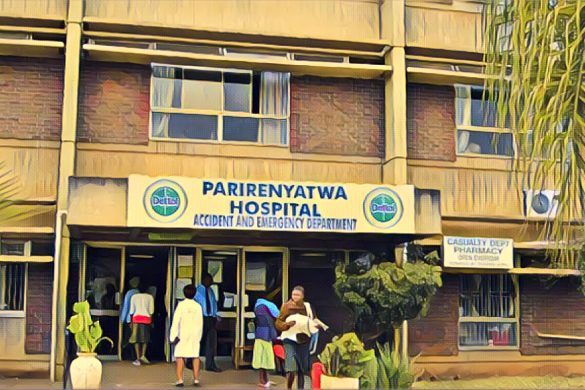
The refurbishment of the main hospital building at Parirenyatwa Group of Hospitals has begun, marking the most extensive rehabilitation of the country’s largest referral health centre since its opening as Andrew Fleming Hospital nearly 70 years ago.
The project is being carried out in three phases covering student accommodation, maternity facilities and the 1 400-bed main hospital.
Presently, the first phase, focusing on the refurbishment of Adlam House, the nurses’ residence, and surrounding infrastructure, is 95 percent complete, while the second phase, targeting Mbuya Nehanda Maternity Hospital, is now 25 percent complete.
The residence, which had deteriorated to the point of accommodating only 40 student nurses out of a possible 353, has since been transformed.
The revamp includes the installation of eight new boreholes, a 30 000-litre water tank and a 120-kilowatt solar system, along with a swimming pool for recreation.
Renovations of the Mbuya Nehanda Maternity Hospital will include removal of old floors and ceilings, plumbing repairs and upgrades to patient reception areas, nurseries and infection control systems.
The third and most extensive phase will focus on the 1 400-bed main hospital block.
Artisans and engineers are currently conducting a full assessment to determine priority areas and design a phased approach that will allow the facility to remain operational during the renovations.
In an interview with The Sunday Mail, Health and Child Care Minister Dr Douglas Mombeshora said works were progressing well.
“Refurbishment of Parirenyatwa is being done in three phases,” he said.
“The first phase involved the refurbishment of the nurses’ residence, which is called Adlam House, and the surrounding infrastructure. That one is almost 95 percent complete. I think they are just polishing up, but all the work has been done.”
He said the second phase, which is underway, will see the overhaul of the Mbuya Nehanda Maternity Hospital.
“The work has just started,” said Dr Mombeshora.
“They are in the process of removing the old floors, the old ceilings, repairing the plumbing. There is still quite a lot of work to be done. I would say they are about 25 percent at this stage.”
The physical work, Dr Mombeshora said, had not yet started at the main hospital, but assessments of the planned renovations were at an advanced stage.
“Then the third one is the main hospital,” he added.
“For the main hospital, we are at the stage of making assessments.
“That is a very huge hospital, and we are planning on how we will have to do the work in phases because we cannot close the whole hospital, which has 1 400 beds.
“We can say the work has started but the real knocking down of the walls and things like that has not yet started.”
The Parirenyatwa modernisation programme is expected to serve as a blueprint for other public health institutions and forms part of a wider national exercise to rehabilitate critical health infrastructure to improve service delivery.
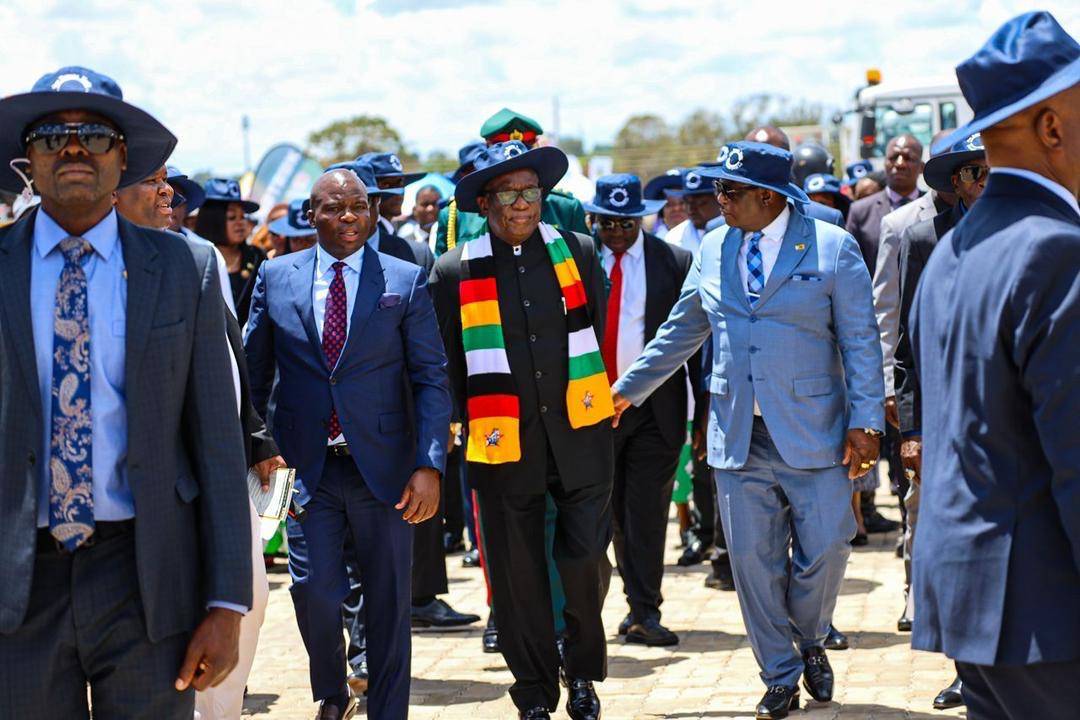
Earlier this year, President Mnangagwa made an unannounced tour of Parirenyatwa Group of Hospitals, where he expressed concern over its dilapidated state and directed the authorities to expedite refurbishment.
Posting on his X (formerly Twitter) account last week after handing over 10 state-of-the-art ambulances to all provinces, the President reaffirmed the Government’s commitment to prioritising public healthcare.
“Today, I had the distinct honour to preside over the handover of 10 brand-new state-of-the-art ambulances that will be deployed across all 10 provinces,” President Mnangagwa said.
“This milestone reaffirms the Second Republic’s unwavering commitment to prioritising public healthcare, modernising health facilities and ensuring that no place and no citizen is left behind.”
Medical and Dental Private Practitioners of Zimbabwe Association president Dr Johannes Marisa welcomed the hospital refurbishment project.
“Upon completion, there is set to be an increase in confidence among patients in their healthcare system, which is the first step to healing and recovery,” he said.
“There is also set to be improved healthcare services and retention of staff because some medical personnel are leaving due to the deterioration of infrastructure.
“So, basically, all this will lead to a reduction of morbidity and mortality rates. We applaud the Government, and we hope this exercise cascades to all healthcare centres across the country.”
The Government recently signed several landmark cooperation agreements with Belarus for, among other things, the reconstruction of central hospitals, procurement of state-of-the-art medical equipment and establishment of local health technology manufacturing partnerships.
The deals, signed during President Mnangagwa’s official visit to Minsk in May, are expected to complement domestic efforts.
Sunday Mail