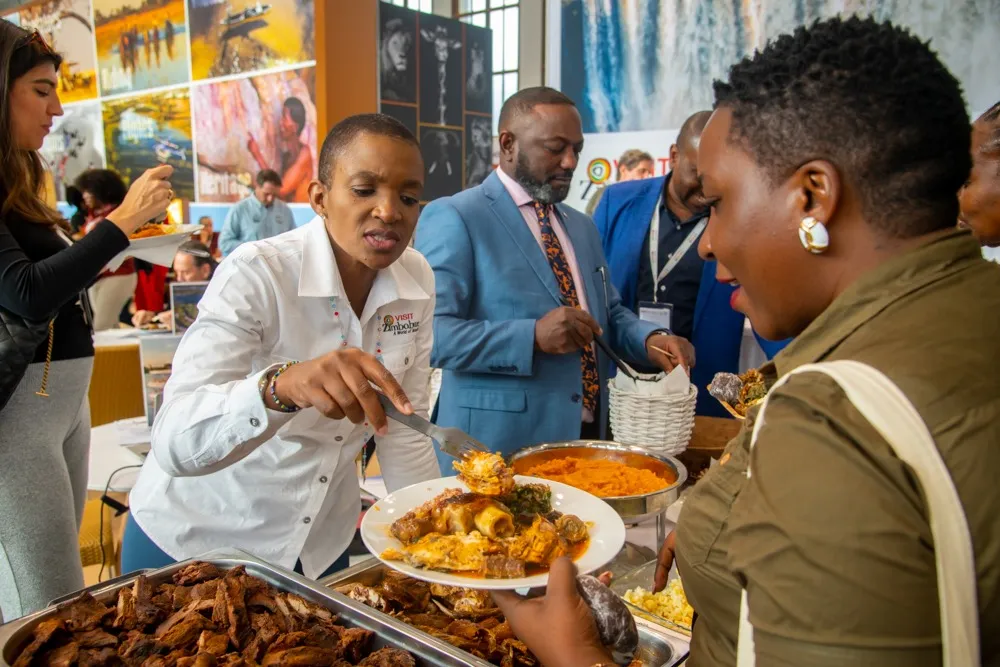
Cabinet has approved the Zimbabwe Gastronomy Tourism Strategy, (2026-2030), a policy framework that aims to position Zimbabwe as a competitive and sustainable tourism destination by 2030.
Speaking during yesterday’s Post Cabinet Media Briefing, Minister of Information, Publicity and Broadcasting Services, Dr Soda Zhemu, said Cabinet had endorsed the strategy.
“Cabinet approved the Gastronomy Tourism Strategy, as presented by the Acting Chairperson of the Cabinet Committee on Economic Development and Minister of Local Government and Public Works, Honourable D. Garwe,” Dr Zhemu said.
He said Cabinet had identified gastronomy tourism as a priority high-value tourism product capable of accelerating Zimbabwe’s tourism growth while promoting the country’s unique cultural identity.
“Cabinet highlights that Gastronomy Tourism has been designated a priority high-value product to accelerate Zimbabwe’s transformation into a competitive and sustainable tourism destination by 2030.
Zimbabwe’s gastronomy has emerged as a transformative force in the global tourism landscape, positioning the country as a hub of traditional culinary excellence. Rooted in Ubuntu, the tradition of sharing meals is a symbol of care and hospitality, uniting communities and generations,” he said.
Dr Zhemu said gastronomy tourism offered a practical and scalable pathway for delivering socio-economic benefits across communities and sectors.
“To this end, the Zimbabwe Gastronomy Tourism Strategy (2026-2030) provides a structured policy framework to guide the development, coordination and institutionalisation of gastronomy tourism across the tourism value chain,” he said.
He said the strategy seeks to develop contemporary culinary expertise and innovation, establish gastronomy tourism as a catalyst for inclusive economic growth, diversify authentic culinary experiences and preserve Zimbabwe’s cultural food heritage.
“The guiding principles include preserving culture and heritage while fostering innovation, promoting inclusivity through empowering women, youth and persons with disabilities, strengthening partnerships among Government, the private sector, research institutions, academia and communities, and promoting sustainable practices that will drive economic growth for future generations,” said Dr Zhemu.
He added that under the strategy’s contemporary culinary expertise pillar, Government would expedite the establishment and operationalisation of the National Tourism (Culinary Arts) Academy in Victoria Falls to address skills gaps in professional culinary arts, food presentation, sustainable sourcing and gastronomy tourism management.