
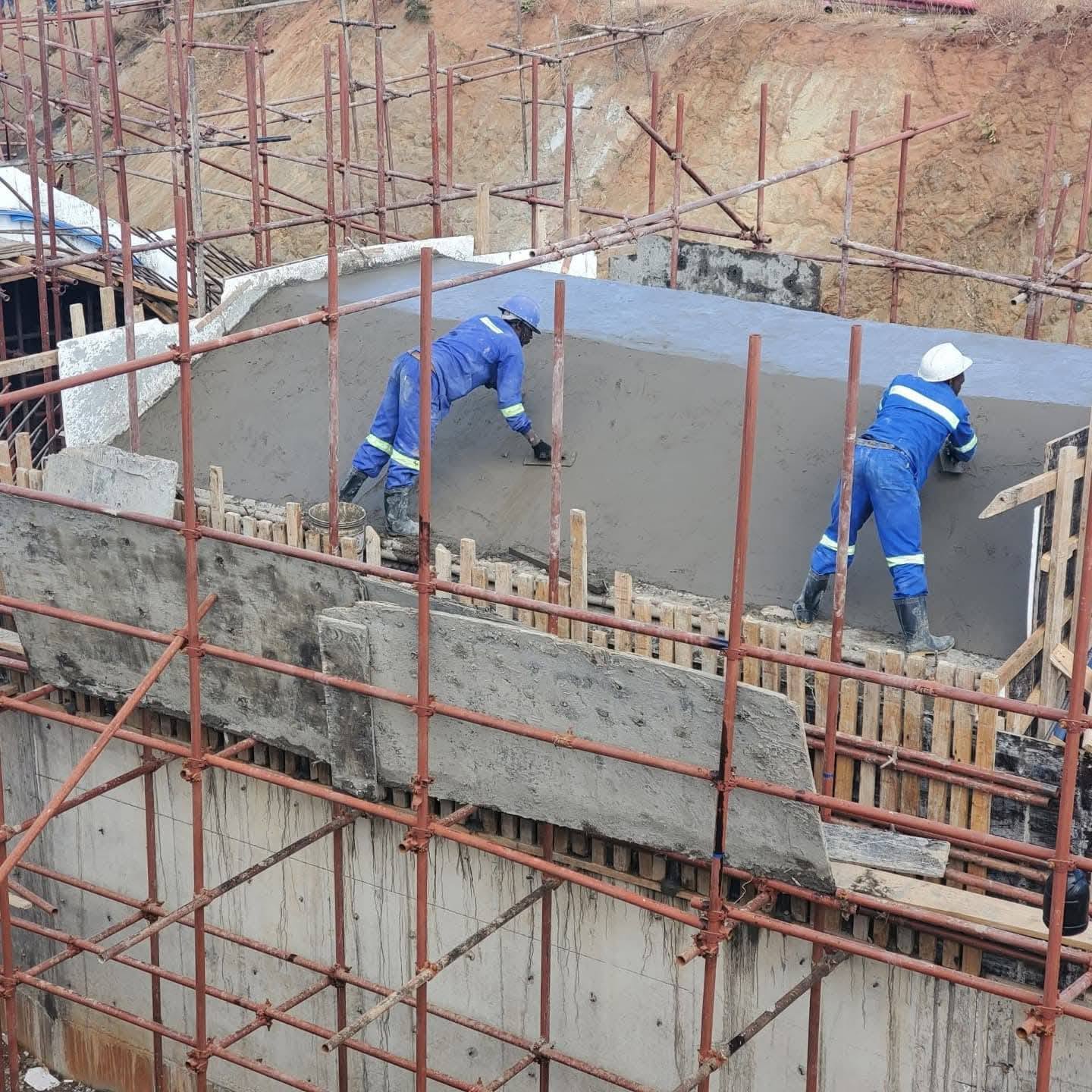
Construction of the multi-million-dollar Kunzvi Dam is gaining momentum, with the flagship project expected to significantly boost water security for Harare and surrounding districts while supporting irrigation, electricity generation and rural economic development.
During a media tour of the construction site, Assistant Resident Engineer, John Tangayi, said the dam, located about 14 kilometres South of Juru Growth Point on the Nyagwe River, would rank among Zimbabwe’s largest inland reservoirs once completed.
“The dam will have a storage capacity of 158.4 million cubic metres of water, making it one of the country’s major inland reservoirs,” he said.
Tangayi said the reservoir would deliver a dependable annual yield of about 70 million cubic metres, providing a reliable water source even during periods of below-normal rainfall.
The Government-owned project is being implemented by Makomo Engineering under the supervision of the Zimbabwe National Water Authority (ZINWA).
Construction began in October 2001 with an estimated cost of US$108.2 million, but the budget has since risen to about US$133 million following the inclusion of a resettlement programme for displaced families and the relocation of graves.
Once complete, the dam wall will stand at 50.2 metres high and impound water to a maximum depth of 45 metres. The reservoir will cover nearly 985 hectares and extend approximately 8.5 kilometres upstream, drawing water from a 730-square-kilometre catchment.
In addition to the main dam wall, the project includes a 130-metre concrete spillway, outlet works incorporating a reinforced concrete intake tower linked to 1 000mm steel pipelines, and a balancing dam on the Nora River, where construction is already underway.
Engineers are also finalising plans for a mini-hydropower station that will generate electricity from the dam, while the 14-kilometre Njiru-Kunzvi access road is being upgraded to improve connectivity and stimulate local economic activity.
Government has also introduced a new resettlement model under which displaced families are being provided with newly built houses instead of cash compensation.
“In the past, affected families were simply compensated financially after valuation of their properties. However, that system presented several challenges. Under this project, Government is constructing replacement homes for the affected families to ensure a smoother and more sustainable resettlement process,” Tangayi said.
Of the planned 435 houses, 268 have already been completed, while 90 residential stands were allocated this week to pave the way for construction of the remaining homes.
The project also includes a US$500 000 programme to exhume and rebury 534 graves that will be submerged when the reservoir is commissioned.
“The chiefs here said they did not want the graves to be inundated by the dam. They requested that they be exhumed and reburied,” Tangayi said.
Beyond securing water supplies for Harare, Kunzvi Dam will anchor a 500-hectare irrigation scheme, supply a water treatment plant serving Musami Mission, Juru, Goromonzi and surrounding communities, and support village business units aimed at improving rural livelihoods.
Once completed, the project is expected to play a key role in Zimbabwe’s long-term strategy to strengthen water security, enhance agricultural production, improve food security and accelerate rural industrialisation.


job well done indeed, kudos to the government for its continued focus on infrastructure development