
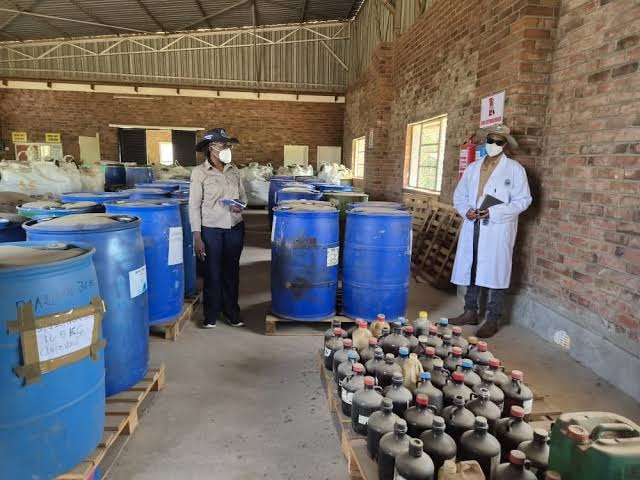
The Environmental Management Agency (EMA) has established a national storage facility for obsolete pesticides in Gwanda.
EMA warned that the continued reuse of empty pesticide containers for domestic purposes remained a major concern, with some communities using plastic containers and metal drums that previously held chemicals to store water, food and other household supplies.
“Empty pesticide containers are not ordinary household containers and should never be reused for domestic purposes. Even after they have been emptied, chemical residues may remain on their surfaces and pose a risk to human health,” EMA said.
The agency said such practices could expose people to harmful substances, particularly where containers were used to store drinking water or food. Children and other vulnerable members of communities could face additional risks through accidental contact with contaminated containers.
“Communities must understand that washing an empty pesticide container does not necessarily make it safe for domestic use.
These containers should be handled responsibly and managed through appropriate waste disposal systems to prevent accidental exposure to hazardous chemicals,” EMA added.
EMA urged farmers, agrochemical users and members of the public to take responsibility for preventing chemical contamination by keeping pesticides in their original containers, observing handling instructions and ensuring that expired products are not used or discarded carelessly.
“Protecting the environment from hazardous chemicals requires cooperation from everyone. Farmers, retailers and households must play their part by ensuring that obsolete pesticides and empty chemical containers are not diverted for unsafe uses or released into the environment,” the agency said.
The Gwanda facility provides an important step towards ensuring that obsolete pesticide containers are collected and stored under controlled conditions while appropriate arrangements are made for their safe management and disposal.