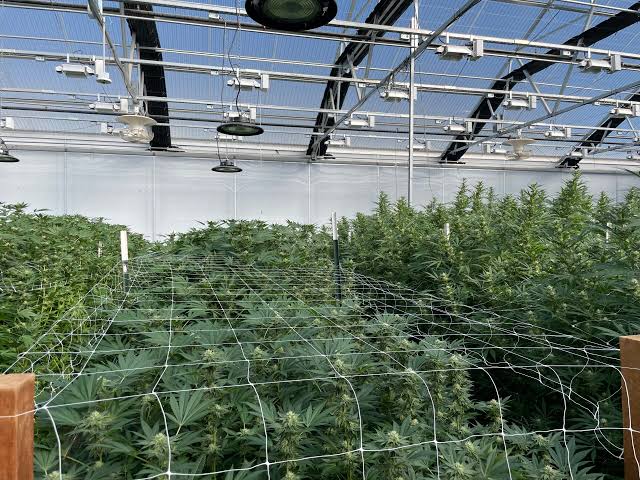
Zimbabwe could generate new industries and investment opportunities by developing a local value chain around industrial hemp, (a variety of the cannabis plant grown mainly for industrial use) with the crop capable of producing fibre, construction materials, paper, food products and cosmetics.
Zimbabwe Industrial Hemp Trust Investment and Business Development Manager, Tafadzwa Dutoit Nyamande said the country should shift its focus towards the commercial and industrial applications of hemp rather than its illegal or recreational use.
Speaking at the 14th Annual National Agribusiness Conference held at the ongoing 2026 Harare Agricultural Show, Nyamande said hemp had significant economic potential because different parts of the plant could be processed into products for the agricultural, manufacturing, construction and consumer sectors.
“Hemp is not just about the plant itself, but about what we can produce from it,” he said.
The plant provides fibre and cellulose for various industrial applications, while its grain can be processed into food products and oil. Other components can also be used in cosmetics and herbal products.
Nyamande said hemp could also support Zimbabwe’s construction industry, noting that the country already had proof of concept for buildings constructed using hemp-based materials.
The crop’s residual material could further be processed into soil-enhancement products, fertiliser and biochar, allowing producers to extract additional value from material that would otherwise be discarded as waste.
Nyamande said the Trust was developing a blueprint for establishing hemp-processing facilities in Zimbabwe as part of efforts to build a domestic value chain.
He said the immediate priority should be to establish basic crushing and separation facilities close to farmers to reduce transportation costs and facilitate local processing.
Nyamande also called for collaboration among farmers, researchers, manufacturers and other stakeholders to develop suitable machinery, standard operating procedures, moulds and other equipment locally.
Such an approach, he said, would allow Zimbabwe to move beyond primary hemp production and establish a domestic industrial value chain capable of creating jobs, attracting investment and generating new products.
The development of a local hemp-processing industry would also support the Government’s broader drive to promote value addition, beneficiation and industrialisation by increasing the contribution of agriculture to manufacturing and creating new economic opportunities.