Government has launched a 60-day one-stop formalisation drive to integrate informal traders into the regulated economy while providing them with decent and legally designated trading spaces.
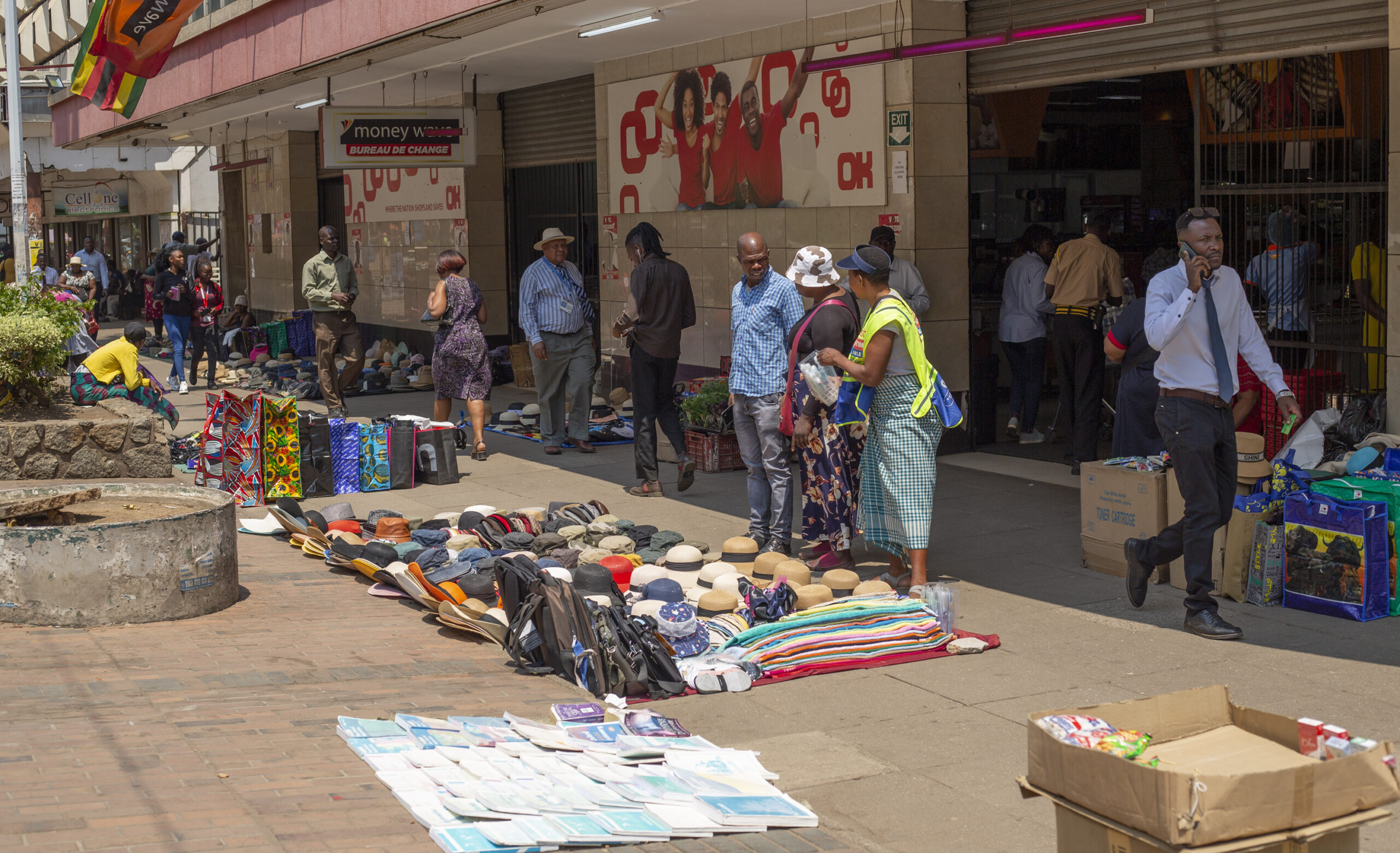
The initiative, being implemented in partnership with the City of Harare and other stakeholders, forms part of broader measures to address illegal vending, improve urban cleanliness and restore order in the capital.
The programme follows Government’s recent launch of the “Chenesa Harare Final” operation targeting illegal vending in the central business district and undesignated suburban areas.
The clean-up was introduced after vendors were given a seven-day ultimatum to vacate illegal trading sites amid concerns over blocked public pathways, littering and deteriorating sanitation.
Information, Publicity and Broadcasting Services Minister Dr Zhemu Soda said Cabinet had approved a comprehensive approach to informal vending based on four pillars that is to Legislate, Provide, Formalise and Enforce.
“In line with the Vision 2030 objectives and minimum service delivery standards of smart and orderly cities consistent with a prosperous upper-middle income society, Cabinet approved the proposed measures to address informal vending and associated activities in the Harare central business district,” he said.
Under the programme, 100 identified vending sites across Harare’s suburbs will be serviced with essential infrastructure, including potable water, ablution facilities, lighting, shelters, waste-management systems and storage facilities.
Government will also facilitate the development of a modern satellite market on the outskirts of the central business district to accommodate traders currently operating in congested areas.
“A new modern satellite market for traders will be developed on the periphery of the CBD. A 60-Day One-Stop Formalisation Drive will be launched in liaison with the City of Harare and all the relevant stakeholders,” Dr Soda said.
A Harare Vendors Council will also be established to facilitate co-management of trading sites and help resolve disputes between vendors and authorities.
Formalised traders will be linked with financial institutions to improve access to working capital and support the growth of their businesses.
Meanwhile, a CBD Urban Management Command chaired by the City of Harare will oversee efforts to “Clear, Clean, Keep” the capital orderly.
Government is also expediting the Municipal Police and Courts Bill, which is expected to strengthen enforcement of municipal by-laws and facilitate the establishment of Municipal Courts.
Local Government and Public Works Minister Daniel Garwe said the 30-day amnesty announced for vendors to regularise their operations applied to areas outside Harare.
“It refers to all other cities that is Bulawayo, Gweru, Kwekwe and other cities and rural district councils. Harare is in full swing, clean-up process and we are not going to disrupt that,” he said.
Minister Garwe said the clean-up in Harare had already covered about 60 percent of targeted areas, with authorities moving vendors into existing designated trading facilities as additional infrastructure was being developed.
He stressed that the Government was not seeking to eliminate vending, but to ensure that the sector operated in an organised and sustainable manner.
“We are not saying no to vending. That is not the idea. But we are saying yes to organised development,” he said.
The Minister said all 92 local authorities had formal vending spaces, although many remained underutilised as traders continued operating from undesignated locations.
He also said night vending remained prohibited because local authorities currently lacked the infrastructure and security arrangements necessary to support it.
“In terms of the facilities that we have at the moment, we don’t have a single city that is ready for night vending. Until at such a time that we put those facilities in place, night vending remains banned,” he said.
To make formal trading more affordable, Government reduced proposed monthly charges at designated markets from US$100 to US$45 following consultations with traders.
Traders will also receive a six-month payment-free period as authorities seek to encourage more informal operators to move into the formal economy.