President Emmerson Mnangagwa has called on African countries to accelerate investment in skills development, technology and industrial training to drive value addition, strengthen economic sovereignty and reduce the continent’s dependence on external expertise.
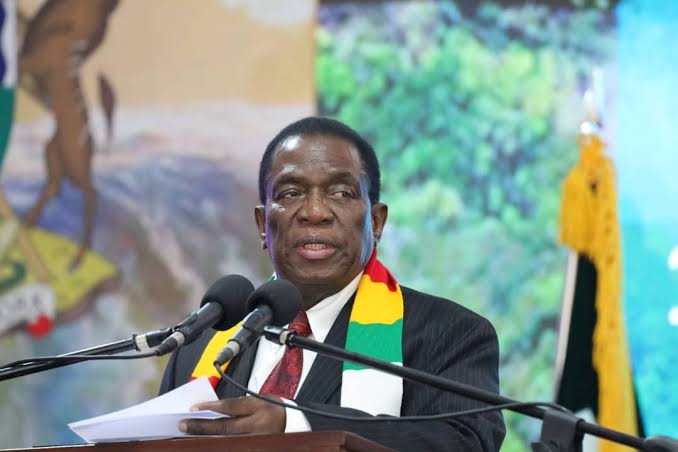
Officially opening the African Union (AU) Africa Skills Week at the Harare International Conference Centre (HICC), yesterday, President Mnangagwa said Africa needed to shift from theoretical education.
“Africa needs to shift from theoretical education towards practical skills that support industrialisation, productivity and sustainable economic growth,” he said.
President Mnangagwa added that Africa’s vast mineral resources, including lithium, platinum, nickel, cobalt and rare earth elements, should be processed locally to maximise their contribution to economic development.
“Under Agenda 2063 and the Action Plan for the Accelerated Industrial Development for Africa, local mineral beneficiation and value addition is now an urgent necessity. Our continent’s vast reserves of minerals … should never be extracted and exported as primary raw commodities. This counterproductive legacy should end,” he said.
He further called for stronger regional cooperation to establish centres of excellence that would equip African workers with the skills required to support industrialisation, modernisation and the continent’s transition to green energy.
President Mnangagwa also urged member states to accelerate implementation of the African Continental Qualifications Framework to facilitate workforce mobility and ensure that skills development contributes to regional economic integration.
He advised that the changing global economic landscape, particularly advances in artificial intelligence (AI) and other emerging technologies, required African countries to continuously adapt their education and training systems to meet evolving labour-market demands.
“Africa cannot be left behind and must remain fluid by embracing current trends, best practices and new technologies. Our efforts under the skills transformation agenda must, therefore, continue to be responsive, adaptive and forward-looking,” he said.
President Mnangagwa called for information and communications technology and AI literacy to be integrated into education systems at all levels, while urging countries to equip young people with competencies in software engineering, data analytics, precision manufacturing and automated systems maintenance.
He said Africa also needed to strengthen its green skills base to respond to the growing global imperative of climate resilience and sustainable industrial development.
The President reiterated that the Africa Skills Week marked an important opportunity for member states to bridge the gap between continental policy commitments and implementation at national level.
He called for a decisive shift towards practical, industry-relevant training that enables young people to contribute directly to production, innovation and value creation.
Meanwhile, Delegates from 46 AU member states are attending the week-long event, which seeks to strengthen policy coordination, foster partnerships and advance skills development as a foundation for industrialisation, value addition and sustainable economic transformation across Africa.