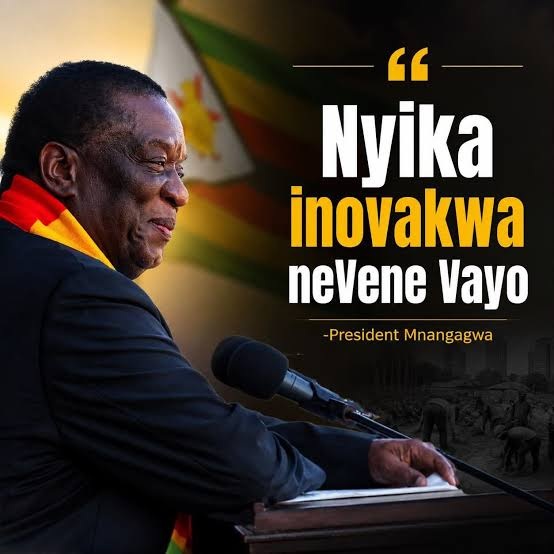
President Emmerson Mnangagwa’s development philosophy, “Nyika inovakwa nevene vayo/Ilizwe liyakhiwa ngabanikazi balo”, has found resonance in Russia, where a senior Kremlin official has urged African countries to strengthen domestic production, pursue technological independence and build strategic partnerships to overcome economic challenges.
Deputy Chief of the Executive Office of the President of the Russian Federation, Maxim Oreshkin made the remarks during an engagement with participants at the Russia-Africa Media Forum, where he was asked how countries such as Zimbabwe could navigate Western sanctions.
Mr Oreshkin said sanctions should be treated as a challenge requiring countries to strengthen their productive capacities and diversify economic partnerships rather than abandon their development ambitions.
“Sanctions do not impede you if you believe in yourself and believe in moving forward. Looking at Russia today, those who declared sanctions have also suffered losses, including disrupted markets and higher energy costs,” he said.
He said Russia had responded to economic pressure by expanding domestic production, developing local technological solutions and diversifying its trading relationships.
“Sanctions are not a problem; they are a challenge. They can make a country more resilient,” Mr Oreshkin said.
His remarks reflect key elements of President Mnangagwa’s Nyika inovakwa nevene vayo philosophy, which places Zimbabweans, domestic resources and local productive capacity at the centre of national development.
Mr Oreshkin said sanctions imposed on Russia had accelerated efforts to reduce dependence on foreign technology and develop home-grown solutions.
“Sanctions made us pursue technological independence. They have pushed us to strengthen our economy through our own solutions,” he said.
Russia has pursued import substitution and redirected some energy exports towards Asian markets since Western sanctions intensified following the escalation of the Ukraine conflict in February 2022. However, reliance on imported technology remains a challenge for its economy.
For Zimbabwe, the discussion highlighted the importance of strengthening domestic industries while using international partnerships to access technology, investment, expertise and export markets.
Mr Oreshkin identified agriculture, food security and energy as potential areas for deeper cooperation between Russia and African countries, saying such partnerships should prioritise technological development and joint production.
“We want to promote sovereignty and technology,” he said.
He urged African businesses to pursue direct partnerships with Russian companies, stressing that cooperation should be based on jointly implemented projects rather than expectations of financial assistance alone.
“What we are looking at is the joint implementation of projects. We mean joint work, so it is important not simply to count on money from Russia. Local companies have to look for partners,” Mr Oreshkin said.
The remarks underscore the role of domestic initiative in national development, with international cooperation providing opportunities to strengthen local production, expand technological capacity and create value from resources.
For Zimbabwe, this approach also aligns with the Government’s stated objective of building a more productive and self-reliant economy through greater utilisation of local resources, industrialisation and mutually beneficial international partnerships.