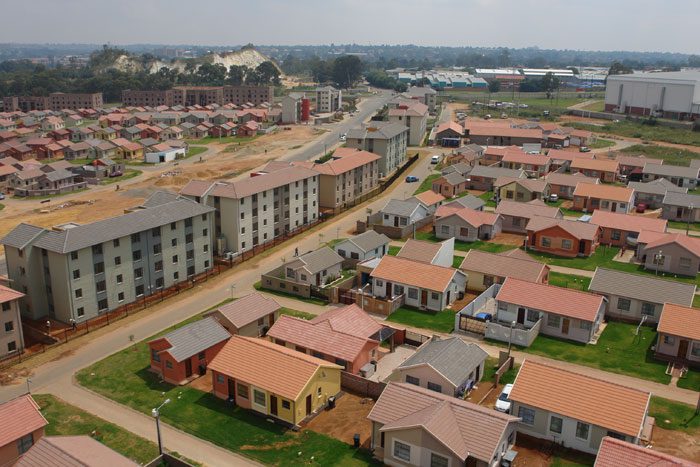
Government has approved the adoption of the User Pays Principle to regularise housing projects and promote fairness, sustainability, and security of ownership in urban settlements across the country. The model will see beneficiaries of Government housing programmes paying for the full development costs of their properties including the value of land, servicing, and related infrastructure expenses.
Speaking during a Post-Cabinet Media Briefing today in Harare, Minister of Information, Publicity and Broadcasting Services, Dr. Jenfan Muswere, said the policy, endorsed by Cabinet this week, primarily targets beneficiaries of the Garikai/Hlalani Kuhle Programme, many of whom were settled on privately owned or State land without formal title.
“Under the new framework, Government will facilitate negotiations between indigenous and other private landowners and the beneficiaries, this will enable residents to purchase their land directly over an agreed period, ensuring fairness to both landowners and settlers,” said Dr. Muswere.
A notable case under this initiative is the Whitecliff Farm in Harare, where about 11,000 families have been settled. Dr. Muswere revealed that Government and Eddies Pfugari Estate have agreed on US$44 million as compensation for the 1,065.7-hectare property, paving the way for the regularisation process and the issuance of title deeds to residents.
Dr. Muswere said the User Pays Principle brings a host of benefits to communities and local authorities alike.
“Beneficiaries will now have security of tenure as they will be issued with title deeds under the Presidential Title Deeds Programme, significantly increasing the value of their properties. The model will also ensure access to basic services, promote orderly and properly planned settlements, and help reduce criminality through formalised urban planning,” he said.
He added that local authorities and the Government would also benefit through the collection of rates and levies, generating additional revenue to improve service delivery.
“The model will be replicated nationwide, especially in areas where Garikai/Hlalani Kuhle beneficiaries built homes on private or illegally occupied State land. An Inter-Ministerial Committee has already been established to oversee and coordinate the project’s implementation,” he said.
Meanwhile, Dr. Muswere also briefed the media on progress in lithium beneficiation, following an update from Prospect Lithium Zimbabwe, which operates the Arcadia Lithium Mine in Goromonzi.
“Prospect Lithium Zimbabwe is investing US$400 million in the construction of a Lithium Sulphate Plant, the first of its kind in Zimbabwe and Africa. This project will position Zimbabwe at the heart of global value chains in the clean energy transition,” he said.
The plant, incorporating cutting-edge technology, will process lithium sulphate, a vital input in battery manufacturing and other industrial uses. It consists of three production lines, each designed to process 500,000 metric tonnes of concentrate annually.
“The first production line is scheduled to start operations in January 2026, with the remaining two expected to come on stream by April 2026. Once operational, the plant will produce 80,000 metric tonnes of lithium sulphate per year, create over 1,000 jobs, and generate US$320 million in annual revenue,” said Dr. Muswere.
Dr. Muswere concluded by noting that both the User Pays housing initiative and lithium value addition projects reflect the Second Republic’s commitment to inclusive development, empowerment, and industrialisation in line with Vision 2030.
“These strategic programmes are transforming lives, strengthening communities, and building a prosperous Zimbabwe where every citizen benefits from national development,” he said.