
Zimbabwe’s push to strengthen energy self-sufficiency has gained fresh momentum, with GreenFuel’s ethanol production operations, in Chisumbanje, showing significant progress in reducing the national fuel import bill. Through increased ethanol blending now at 15 percent, the country is saving millions in foreign currency while expanding local agricultural and industrial activity.
GreenFuel operates two major estates, one in Chisumbanje and another in Middle Sabi, with 300 hectares currently under sugarcane and 40 000 hectares set aside for further expansion. Of that vast allocation, only 8.5 hectares have been fully utilised so far, creating substantial room for growth.
Speaking during a media tour, at the Chisumbanje ethanol plant, yesterday, GreenFuel Public Relations Manager, Ms Merit Rumema, clarified long-standing concerns about land conflicts between the company and local communities. She explained that misunderstandings emerged when the investor partnered with ARDA, as some families had occupied parts of the land for more than a decade.
“When the investor came in partnership with ARDA that is when conflict started because some community members had been on the land for over ten years. However, consultations were conducted through the Chief and the Rural District Council,” said Rumema.
She emphasised that GreenFuel has since implemented an inclusive approach to land use through corporate social responsibility initiatives.
“As part of our CSR, we agreed that for every 1 000 hectares developed, 100 hectares will go to the community under irrigation schemes. Population growth, however, means communities continue to need more land,” she added.
On the production side, the company has made major strides in improving water efficiency. Previously reliant on flood irrigation, GreenFuel now uses niflux and drip irrigation, achieving yields of 170 tonnes per hectare. Water is drawn from Osborne Dam, situated nearly 300 km away. Although friction once existed with ZINWA due to losses along the canal, the two parties have resolved the issue through the installation of new metering systems.
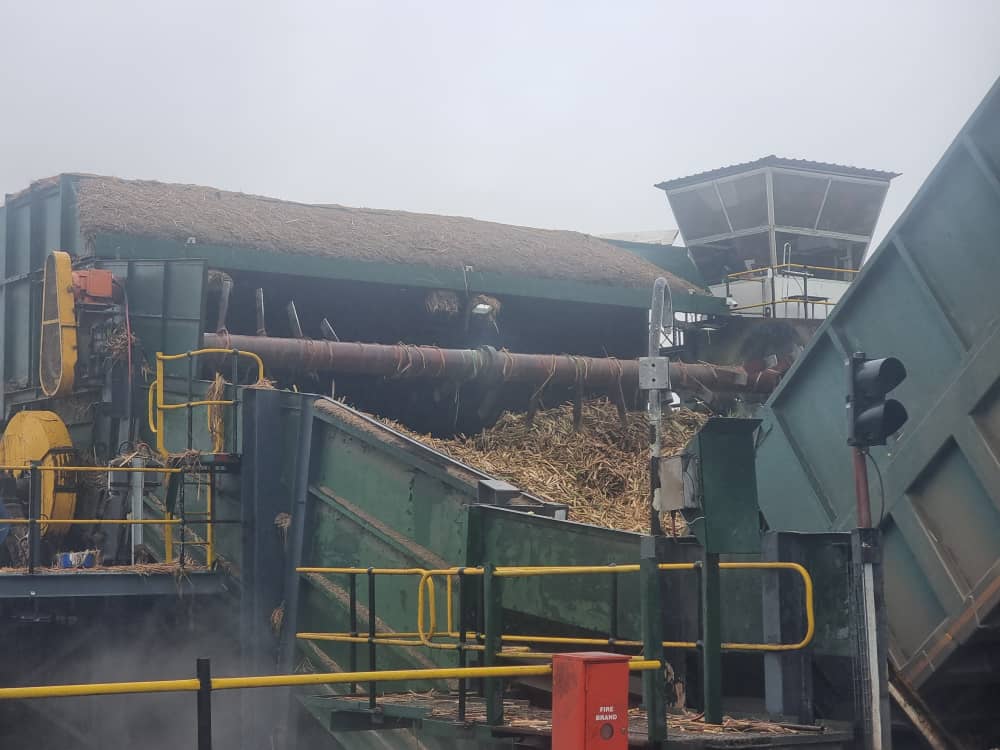
In terms of harvesting and processing, Engineer Simbarashe Bvirakare revealed that the plant is gearing up for impressive output.
“This year our production target is 120 million litres, following the 100 million litres produced in 2024. At full capacity, we produce 600 000 litres per day, with one tonne of cane yielding about 85 litres,” he said.
Powering the operations is GreenFuel’s own bagasse-powered electricity station, which generates more than 2 megawatts, making the plant partially energy self-sufficient.
With expanded sugarcane plantations, improved irrigation technologies, and strengthened community relations, Zimbabwe’s ethanol programme continues to chart a path toward cleaner energy, industrial growth, and a reduced fuel import bill.