
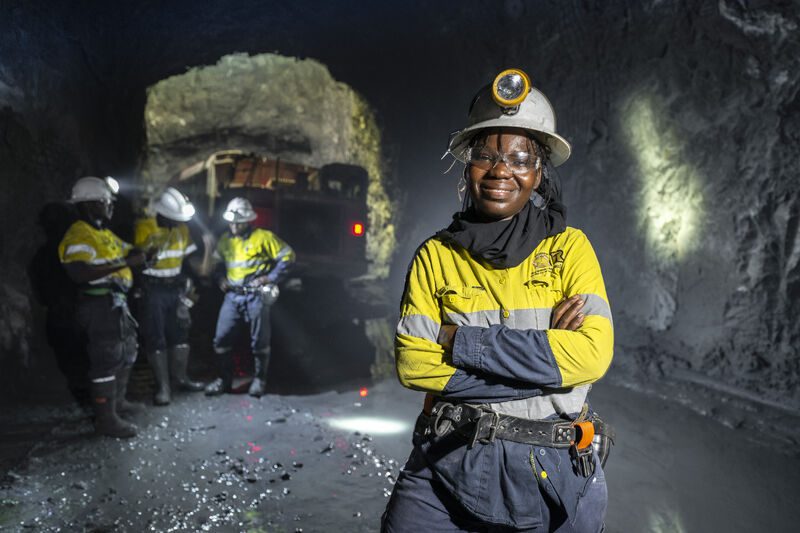
Government has reiterated its commitment to promoting women’s participation in the mining sector, celebrating their achievements at the second Annual Women in Mining Awards, held last Friday.
Speaking at the event, Chief Director at the Ministry of Women Affairs, Community and SME Development, Lilian Matsika Takaendesa, emphasised the need to remove barriers to women’s full involvement in mining.
“When you exclude more than 52 percent of the population from building the nation, you cannot build a nation. That is why we are committed to ensuring women participate fully across the mining value chain,” she said. “Women have historically faced structural, cultural, and financial barriers, but the government is working tirelessly to dismantle these obstacles. Gender equality is not just about women; it is about working hand in hand with men as partners and supportive change agents to ensure no one is left behind.”
Launched last year by Women Empowerment in Mining Zimbabwe (WEMZ), the Women in Mining Awards recognise women excelling in exploration, extraction, value addition, environmental management, and policy advocacy, highlighting their growing role in a traditionally male-dominated industry. The awards also honour men and institutions that champion gender-inclusive practices in the sector.
Organisers said this year’s edition exceeded expectations, with nominees recognised in categories including operational excellence, mentorship, innovation, and community impact.
The founder of WEMZ, Chiedza Chipangura said she was inspired by the strong turnout.
“Seeing so many women come together, sharing their successes and challenges, was truly inspiring. This awards platform is a reminder that together, we are unstoppable. We will continue to mentor, support, and empower women at every level of the mining value chain, breaking barriers, claiming leadership, and shaping the future of Zimbabwe’s mining sector,” she said.
Beyond recognition, the event also served as a platform to encourage more women to enter mining and to urge the sector to dismantle structural barriers that have historically limited participation. Despite progress, structural, cultural, and financial obstacles continue to hinder full female participation, underscoring the need for ongoing government and sectoral support.