Venezuela was thrown into turmoil after the nation’s Supreme Court directed Vice President Delcy Rodriguez to assume the role of interim president, following the dramatic kidnapping of President Nicolás Maduro by U.S. forces in Caracas and his transfer to New York to face criminal charges.
In an urgent ruling issued on Saturday, the Constitutional Chamber said Rodriguez would take over the presidency to “guarantee continuity of government” while judges begin crafting the legal framework required to safeguard the continuity of the state, the administration of government, and the defense of sovereignty in light of Maduro’s “forced absence.”
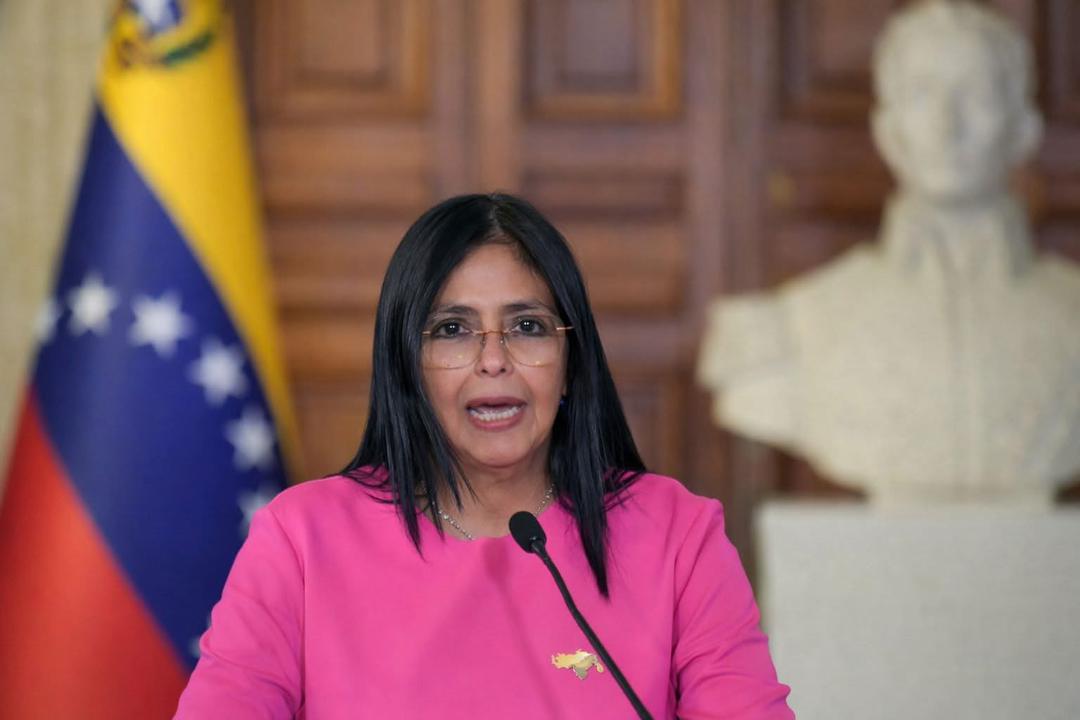
Rodriguez, 56, a Caracas-born lawyer, has served as vice president since 2018. A longtime loyalist of the late Hugo Chávez and Maduro, she has held several senior posts, including foreign minister. At the moment of Maduro’s abduction, she was also serving as Minister of Petroleum. Rodriguez has been under U.S. and EU sanctions for years, widely seen by Western governments as a central pillar of the Maduro administration.
The U.S. operation—an unprecedented raid in the heart of Caracas—saw American forces seize Maduro to place him on trial for drug-trafficking and weapons-related charges. President Donald Trump later declared that Washington would “run” Venezuela until a transition was implemented.
Rodriguez reacted sharply, demanding Maduro’s immediate release and insisting that Venezuela “will never return to being the colony of another empire” or “slaves” to foreign powers. Nevertheless, she signaled a conditional openness to dialogue, saying Caracas was prepared to pursue “respectful relations” with Washington.
Trump claimed that Rodriguez had communicated with U.S. Secretary of State Marco Rubio, suggesting she appeared willing to cooperate with the United States. Meanwhile, Rodriguez also spoke with Russian Foreign Minister Sergey Lavrov, who conveyed firm solidarity with Venezuela in the face of what Moscow described as armed aggression.
Venezuelan leaders have repeatedly rejected U.S. allegations linking the government to the drug trade, arguing that the charges are politically motivated and designed to justify regime change.